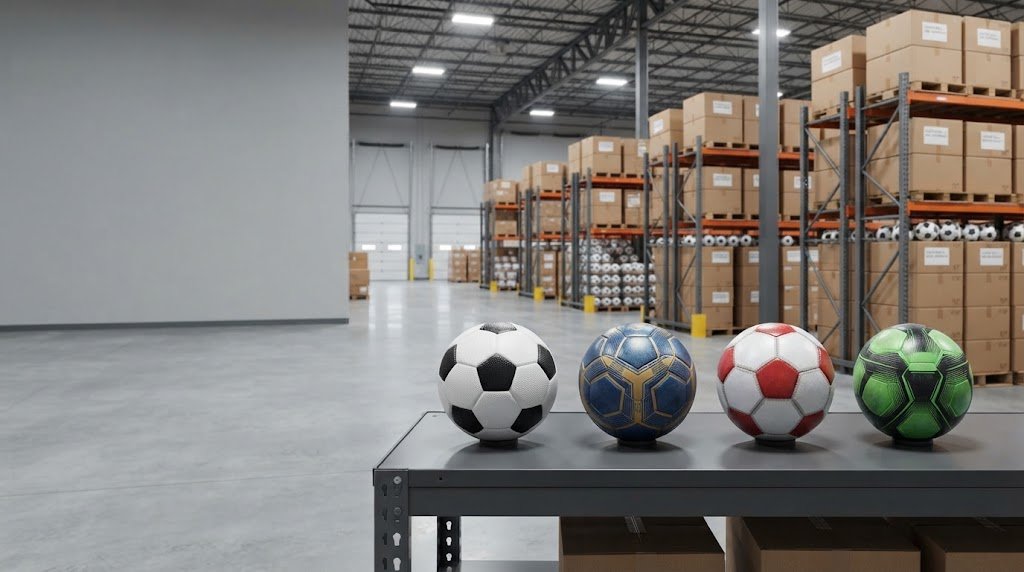
Buying wholesale soccer balls is a practical choice for football clubs, academies, schools, sports retailers, distributors, and other organizations that need footballs in large quantities. Instead of buying individual balls from a retail store, businesses can order directly from a supplier or manufacturer and choose products that match their needs.
However, buying in bulk requires careful planning. Price is important, but it is not the only factor to consider. Ball size, construction, materials, durability, customization, and supplier reliability can all affect the value of a wholesale order.
This guide explains what to consider when buying soccer balls in bulk and how to choose products that fit your requirements.
Why Buy Wholesale Soccer Balls?
The main advantage of wholesale purchasing is the ability to buy a larger quantity at a business-focused price.
Football academies, for example, may need dozens of balls for daily training. A sports retailer may need a steady supply of footballs for customers. A distributor may need hundreds or thousands of units for different markets.
Buying in bulk can make inventory management easier. It can also reduce the need for frequent small orders.
Another advantage is product consistency. When an organization purchases footballs from the same supplier, it can maintain similar specifications across different orders.
For clubs and businesses, wholesale purchasing can therefore be useful for both regular use and resale.
Who Buys Soccer Balls in Bulk?
Wholesale soccer balls are used by many types of organizations.
Football Clubs
Clubs need footballs for training sessions, youth teams, camps, and matches. Buying in bulk helps them keep enough equipment available throughout the season.
Soccer Academies
Academies often work with players from different age groups. They may need several ball sizes and different types of footballs for their training programs.
Sports Retailers
Retail stores need footballs that they can sell to customers. They may stock training balls, match balls, youth footballs, and premium products.
Distributors
Sports distributors purchase footballs in larger quantities and supply them to retailers, clubs, schools, and other organizations.
Schools and Community Programs
Schools and community football programs may also purchase balls in bulk for physical education classes, tournaments, and regular activities.
Choosing the Right Soccer Ball Size
Size is one of the first things to consider when placing a wholesale order.
Size 5 is the standard full-size soccer ball. It is widely used by adults and older youth players.
Size 4 is smaller and is commonly used in youth football programs.
Size 3 is designed for younger children and beginner-level activities.
The correct size depends on the age group and the rules of the football program. If you are buying for an academy with several age groups, you may need more than one size.
Training Balls or Match Balls?
The intended use should guide your purchase.
Training balls are designed for regular practice. They need to handle repeated use and are often chosen for their durability and value.
Match balls are made for competitive football. They can have more specific requirements for weight, size, construction, and performance.
If the footballs will be used in an organized competition, check the competition requirements before placing your order.
For everyday academy or club training, a durable training ball may be more suitable than a premium match ball.
Understanding Soccer Ball Construction
The construction of a football affects its feel, durability, and performance.
Machine-Stitched Balls
Machine stitching is commonly used for training and recreational footballs. It allows manufacturers to produce large quantities efficiently.
Hand-Stitched Balls
Hand stitching involves joining the panels by hand. This method is used for various types of footballs and can provide specific playing characteristics.
Thermally Bonded Balls
Thermal bonding uses heat and pressure to join the panels. This process can create a smooth surface and consistent panel connections.
Each construction method has its own characteristics. Therefore, buyers should choose according to the intended use rather than selecting a construction method based on price alone.
What Materials Are Used?
Modern soccer balls usually have an outer surface made from synthetic materials.
Polyurethane and PVC are common options. The material can affect the ball’s feel, durability, and resistance to different playing conditions.
The internal bladder is also important. It helps the ball hold air and maintain its shape.
When comparing suppliers, ask about the outer material, bladder, and overall construction. A supplier should be able to provide clear product specifications.
Custom Wholesale Soccer Balls
Some buyers need more than standard footballs. They want products that represent their club or business.
Custom wholesale soccer balls can include a club logo, company name, team colors, special graphics, or other branding elements.
This option is popular among football clubs, academies, sports brands, and retailers.
For example, a football academy can order balls with its own logo and colors. A sports company can also develop a private-label football range for retail sales.
Before production begins, buyers should review the artwork carefully. A sample can also be useful for large custom orders.
How to Choose a Wholesale Soccer Ball Supplier
Choosing the right supplier is just as important as choosing the football itself.
Start by checking the supplier’s product range. Make sure it offers the sizes, construction methods, and quality levels you need.
Next, ask about the minimum order quantity. Custom products may have different requirements from standard footballs.
You should also ask about samples. A sample allows you to check the actual product before committing to a large order.
Production capacity is another important factor. If you need hundreds or thousands of footballs, the supplier should be able to handle the order within the required timeframe.
Finally, discuss packaging and shipping before confirming the order.
What Affects Wholesale Soccer Ball Prices?
Wholesale pricing depends on several factors.
These include:
- Order quantity
- Ball size
- Materials
- Construction method
- Product quality
- Custom printing
- Logo customization
- Packaging
- Shipping
A basic training football and a premium match football will not have the same production cost.
For this reason, buyers should request quotations based on exact specifications. Comparing two suppliers is only useful when the products have similar requirements.
Tips Before Placing a Bulk Order
Before placing an order, make a clear list of your requirements.
Decide how many footballs you need and which sizes are required. Then choose the type of football and construction.
If you need custom branding, prepare your logo and artwork in a suitable format.
Ask the supplier for a detailed quotation. Check the product specifications, MOQ, production time, packaging, shipping, and payment terms.
For a large order, consider requesting a sample first. This gives you an opportunity to check the product before full production begins.
Conclusion
Buying wholesale soccer balls can be a practical solution for clubs, academies, retailers, distributors, schools, and sports businesses.
The right football depends on how it will be used. Training programs may need durable balls, while competitive teams may require match-specific products. Retailers and sports brands may also benefit from custom or private-label footballs.
Before choosing a supplier, compare more than price. Check the ball size, materials, construction, customization options, quality, MOQ, production capacity, and shipping arrangements.
With clear requirements and a reliable manufacturing partner, businesses can purchase soccer balls in bulk while maintaining consistent product quality and supply.