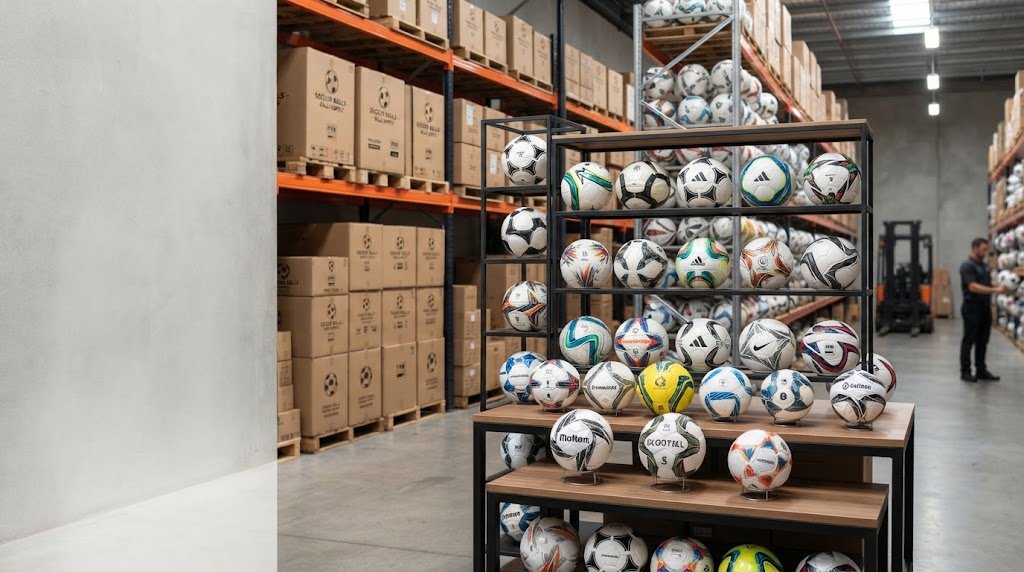
Finding the right soccer ball supplier is important for clubs, academies, retailers, distributors, schools, and sports brands. A reliable supplier can provide consistent quality, competitive prices, and steady product availability.
However, not every supplier offers the same level of quality or service. Some focus on low-cost products, while others specialize in professional soccer balls, custom designs, or large bulk orders.
Before placing an order, buyers should understand what to look for in a soccer ball supplier. Product quality, manufacturing capacity, customization, minimum order quantity, pricing, and delivery all matter.
What Does a Soccer Ball Supplier Do?
A soccer ball supplier provides footballs to businesses and organizations that need products in larger quantities. The supplier may work directly with a manufacturer or operate as a distributor.
Many suppliers offer different types of soccer balls. These can include training balls, match balls, youth soccer balls, promotional balls, and custom soccer balls.
A good supplier should also provide clear product specifications. These may include ball size, weight, materials, construction method, bladder type, and available colors.
Who Needs a Soccer Ball Supplier?
Different businesses and organizations buy soccer balls in bulk.
Football clubs need balls for training sessions and matches. Academies often require different sizes for players of different age groups. Schools and community programs may also need durable balls for regular use.
Sports retailers and distributors have another requirement. They need reliable stock and products that meet the expectations of their customers.
Sports brands may also work with suppliers for private-label or custom soccer balls. In this case, the supplier may handle product development, customization, packaging, and bulk production.
Types of Soccer Balls Available
A professional soccer ball supplier should offer a suitable product range.
Training soccer balls are designed for regular practice. They need to handle frequent use and provide good durability.
Match soccer balls are made for competitive games. They usually focus more on performance, consistency, touch, and flight characteristics.
Youth soccer balls come in smaller sizes. Size 3 and size 4 balls are commonly used for younger players, while size 5 is the standard full-size football.
Custom soccer balls are another popular option. Buyers can request specific colors, graphics, logos, and other branding elements.
Why Supplier Quality Matters
The quality of a soccer ball affects how it performs and how long it lasts.
A reliable supplier should use suitable outer materials and quality components. The panels should have consistent shapes and the ball should maintain its form during use.
The construction method also matters. Machine-stitched, hand-stitched, and thermally bonded soccer balls can have different characteristics.
Buyers should also consider the bladder. A quality bladder can help the ball maintain air pressure and provide a more consistent playing experience.
Custom Soccer Balls From a Supplier
Many organizations want more than standard footballs. They want products that represent their team, company, academy, or brand.
A soccer ball supplier may offer custom printing and manufacturing services. Depending on the supplier, buyers can choose team colors, logos, patterns, graphics, and packaging.
Custom soccer balls can work well for football clubs and academies. They can also be useful for tournaments, promotional campaigns, sports retailers, and private-label brands.
Before ordering, ask the supplier for artwork requirements and customization options. A sample can also help you check the final appearance before starting full production.
What Is the Minimum Order Quantity?
Minimum order quantity, or MOQ, refers to the smallest quantity a supplier will accept for an order.
MOQ can vary depending on the product and customization requirements. Standard soccer balls may have a lower MOQ than fully customized products.
Custom manufacturing often requires additional setup and production work. Because of this, suppliers may require larger quantities for custom orders.
Always confirm the MOQ before requesting a final quotation. This helps you plan your budget and avoid unexpected changes.
How Much Does a Soccer Ball Supplier Charge?
Soccer ball prices can vary widely. The final cost depends on several factors.
Product quality is one important factor. Materials, construction, bladder type, and finishing can all affect the price.
Order quantity also matters. Larger orders may receive better bulk pricing.
Customization can increase the total cost. Logo printing, special graphics, custom packaging, and product development may require additional charges.
Shipping also needs to be included in your budget. Ask whether the quotation includes shipping, packaging, and other applicable costs.
How to Compare Soccer Ball Suppliers
Do not compare suppliers based only on the lowest price.
First, check their product range. Make sure they offer the type and quality of soccer balls you need.
Next, ask about samples. A sample allows you to check the ball before placing a large order.
You should also confirm production capacity. A supplier may need to produce hundreds or thousands of balls within a specific timeframe.
Communication is another important factor. Clear communication can reduce mistakes with specifications, artwork, packaging, and shipping details.
Finally, ask for a detailed quotation. It should clearly explain the product specifications, quantity, customization, packaging, production time, and shipping terms.
Questions to Ask Before Placing an Order
Before choosing a soccer ball supplier, ask a few practical questions.
Can you provide product samples?
What soccer ball sizes do you offer?
What materials and construction methods are available?
Do you provide custom soccer ball manufacturing?
What is your minimum order quantity?
Can you add logos and custom designs?
How long does production take?
What packaging options are available?
What are the shipping terms?
Getting clear answers can help you avoid problems later.
Choosing a Supplier for Long-Term Business
A good soccer ball supplier should be able to support your business as it grows.
If you are a retailer, you may need regular inventory. If you operate a football academy, you may need repeat orders every season. A sports brand may require consistent products across multiple orders.
For this reason, look beyond one successful shipment. Consider product consistency, communication, production capacity, pricing, and delivery performance.
Building a long-term relationship with a reliable supplier can make future orders easier and more predictable.
Final Thoughts
Choosing the right soccer ball supplier requires more than comparing prices. Buyers should look at product quality, construction, customization, MOQ, production capacity, packaging, and delivery.
Whether you need training balls for an academy, match balls for a club, or custom soccer balls for a sports brand, the right supplier can make the purchasing process much easier.
Take time to compare your options, request samples, confirm specifications, and understand the complete cost before placing a bulk order. This approach can help you find soccer balls that match your requirements and budget.