Choosing the correct soccer ball size is important for players learning the game, developing their skills, and preparing for organized competition. A ball that suits a young child’s strength and coordination can make practice more comfortable, while older players may need a larger ball that meets their league’s requirements.
For parents, coaches, schools, soccer clubs, and academies, understanding soccer ball sizes by age can make equipment purchasing much easier. It is also useful for sports retailers and wholesale buyers who need to stock the right products for different customers.
This guide explains the differences between size 3, size 4, and size 5 soccer balls, how to select the right option, and what organizations should consider when purchasing soccer balls in bulk.
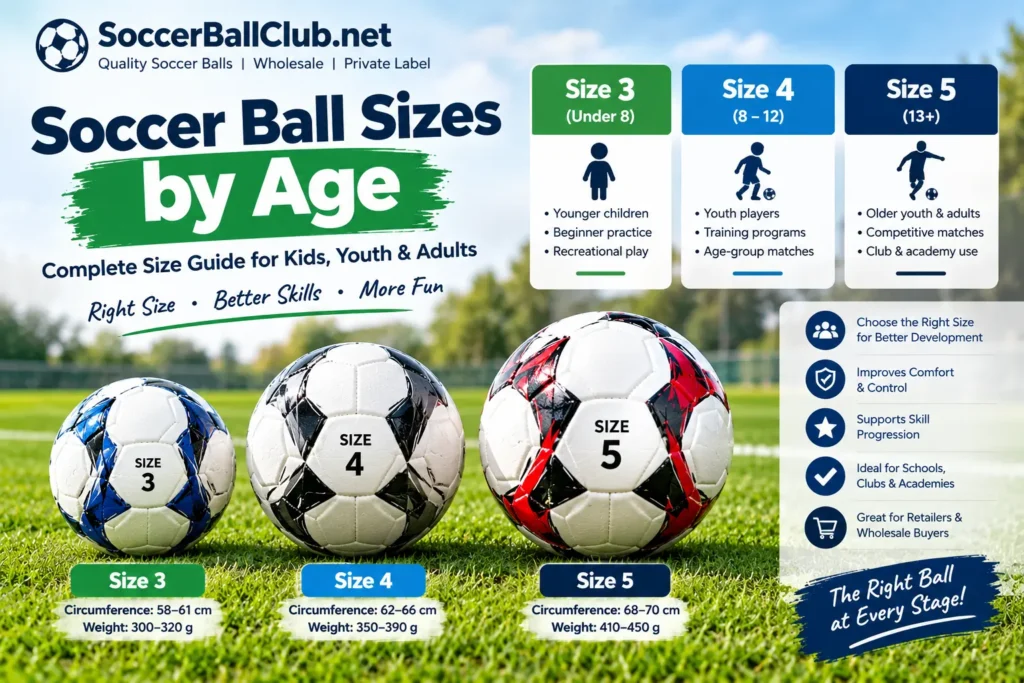
Soccer Ball Sizes by Age: Quick Reference
Soccer balls are commonly available in sizes 3, 4, and 5. The appropriate size depends on the player’s age, the competition rules, and the intended use.
| Soccer ball size | Common users | Typical applications |
|---|---|---|
| Size 3 | Younger children, often under 8 | Early skills, introductory practice, recreational play |
| Size 4 | Youth players, often ages 8–12 | Youth training and age-group competitions |
| Size 5 | Older youth and adults, often ages 13+ | Adult training, recreational play, and many competitive matches |
These age ranges are general guidance, not universal rules. Youth leagues may use different sizes depending on the competition and governing organization. Always confirm the requirements of the relevant league before purchasing balls for official matches.
1. Size 3 Soccer Balls for Younger Children
Size 3 soccer balls are commonly used by younger children who are learning basic soccer skills. Their smaller size can make it easier for beginners to practice ball control, passing, and shooting.
Benefits of Size 3 Balls
Beginner-friendly practice: Younger players can work on fundamental skills with equipment designed for their stage of development.
Skill development: A suitable ball helps children practice dribbling, stopping, passing, and coordination.
Useful for introductory programs: Preschools, recreational programs, and beginner soccer activities may use size 3 balls, depending on the participants and program requirements.
What Should Parents and Coaches Consider?
Choose a ball appropriate for the child’s age and playing environment. Look for consistent construction, a suitable surface feel, and easy maintenance.
For schools or academies buying multiple balls, consider purchasing enough equipment for small-group activities so players spend less time waiting for their turn.
2. Size 4 Soccer Balls for Youth Players
Size 4 soccer balls are frequently used by youth players developing their technique and understanding of the game. They provide a transition between smaller introductory balls and the standard size used in most adult soccer.
Who Uses Size 4 Soccer Balls?
Size 4 balls may be suitable for:
- Youth soccer training programs
- Junior clubs and academies
- School soccer activities
- Recreational youth teams
- Individual skill-development sessions
The exact age range depends on local competition rules. Some organizations use size 4 balls for specific youth age groups, while others may have different requirements.
Choosing a Size 4 Ball
Consider the playing surface, frequency of use, and training needs. A team practicing several times each week may prioritize durability and consistent performance, while a recreational player may focus on affordability and general usability.
If you are purchasing for a youth league, ask the coach or league administrator to confirm the approved ball size before ordering.
3. Size 5 Soccer Balls for Older Youth and Adults
Size 5 is the standard soccer ball size for most adult matches and many older youth competitions. It is widely used in organized soccer, adult recreational leagues, and general training.
Who Needs a Size 5 Ball?
Size 5 soccer balls are commonly purchased by:
- High school and adult teams
- Soccer clubs and academies
- Adult recreational players
- Sports retailers
- Training facilities
- Tournament organizers
Not every size 5 ball is designed for the same purpose. Training balls, recreational balls, and competition balls can differ in materials, construction, and performance specifications.
How to Select a Size 5 Ball
First, decide whether the ball will be used for everyday practice or official competition. Then compare construction, surface feel, durability, and any applicable approval requirements.
If the ball is intended for a sanctioned competition, verify the governing body’s current requirements and confirm that the exact model meets them.
4. What Is the Difference Between Size 3, Size 4, and Size 5?
The main differences are the ball’s dimensions, circumference, weight specifications, and intended applications.
A size 3 ball is smaller than a size 4, while a size 5 is the largest of these three commonly used sizes. Smaller balls are often appropriate for younger players, while larger balls are used as players progress through youth and adult soccer.
However, choosing a ball based only on size is not enough. Buyers should also consider:
- Player age and skill level
- League or tournament requirements
- Intended playing surface
- Training frequency
- Ball materials and construction
- Available budget
A correctly sized ball helps players practice with equipment suited to their activities, but appropriate coaching and regular practice remain essential for skill development.
5. How to Choose a Soccer Ball for Schools and Academies
Schools and soccer academies often serve players from several age groups. Selecting a mixture of sizes may be more useful than purchasing only one size.
Identify the Age Groups
List the groups using the equipment and confirm which sizes they need. Where official league rules apply, use those requirements rather than relying on a general age chart.
Consider Training Frequency
Programs with frequent training sessions may need balls designed for repeated use. Compare construction quality, expected playing conditions, and maintenance requirements.
Plan the Quantity
Estimate how many balls are needed for each group, considering the number of players, practice stations, and replacement stock.
Keep Sizes Organized
Label storage bags, shelves, or equipment carts by ball size. This helps coaches distribute the correct balls and makes inventory management easier.
For larger programs, a written equipment list can simplify future purchasing and replacement orders.
6. How to Choose Soccer Balls for Clubs and Wholesale Orders
Clubs, sports retailers, and distributors should evaluate more than the ball size when buying in bulk.
Product specifications: Confirm size, weight range, material, construction method, and intended use.
Quality consistency: Ask the supplier how it maintains consistency across a large production batch.
Samples: Test samples before approving a substantial order, particularly when purchasing a new model.
Price and quantity: Request quotations for the quantities you expect to need and check what is included in the price.
Branding options: If you need club logos or private-label products, confirm available customization options and minimum order quantities.
Delivery planning: Establish production and shipping timelines before ordering, especially when equipment is required before a new season or tournament.
For US buyers importing soccer balls, also account for transportation, applicable customs charges, and delivery to the final destination when calculating total cost.
7. How to Check Soccer Ball Quality
A suitable size does not guarantee that a ball is well made. Before buying, inspect the product and review its specifications.
Look for consistent shape, a clean surface finish, properly formed panels, and a valve that functions as intended. For stitched balls, check the stitching quality. For bonded balls, inspect the panel joins and surface finish.
Inflate the ball according to the manufacturer’s instructions and check whether it retains air appropriately. Follow the recommended pressure range rather than overinflating it.
If you are purchasing for a school, club, or retailer, request a sample and confirm that the delivered products will match the approved specifications.
8. Soccer Ball Care and Maintenance Tips
Proper care can help keep soccer balls in usable condition for longer.
- Inflate each ball according to the pressure range printed on the ball or specified by the manufacturer.
- Use a suitable pump and needle, following the manufacturer’s inflation instructions.
- Clean the surface with an appropriate method after use on muddy or dusty fields.
- Store balls in a cool, dry location away from excessive heat and direct sunlight.
- Avoid using balls on surfaces for which they are not designed.
- Inspect valves, seams, and panels regularly for signs of damage.
Schools and clubs should establish a simple routine for checking and storing equipment after training sessions.
Frequently Asked Questions
What size soccer ball is best for a 5-year-old?
A size 3 ball is commonly used for younger children, including many five-year-olds. However, check the recommendations of the child’s coach or program before purchasing.
What size soccer ball do 10-year-olds use?
Size 4 is commonly used for youth players around age 10, but the correct size depends on the league’s rules and the intended activity.
Do adults use size 5 soccer balls?
Yes. Size 5 is the standard size for most adult soccer matches and is widely used for adult training and recreational play.
Can schools buy different soccer ball sizes in bulk?
Yes. Schools and academies can request quotations for a combination of sizes. Confirm the required quantities and specifications for each age group before placing the order.
Are all size 5 soccer balls suitable for competitive matches?
No. Size alone does not establish match suitability or official approval. Check the ball’s specifications and the requirements of the relevant competition.
How many soccer balls does a team need?
The number depends on team size, training structure, available equipment, and budget. Coaches can estimate the quantity based on how many players or practice stations need a ball at the same time.
Final Thoughts
Choosing the right soccer ball size helps parents, coaches, schools, and clubs select equipment that suits their players and activities. Size 3 balls are commonly used by younger children, size 4 balls by many youth players, and size 5 balls for most adult matches and older youth competitions.
Because league requirements vary, confirm the applicable rules before purchasing balls for organized competition. For bulk buyers, product specifications, quality, pricing, and delivery arrangements are also important considerations.
Looking for soccer balls for your school, club, academy, or business? Contact SoccerBallClub to discuss your required sizes, quantities, product specifications, and bulk-order options.