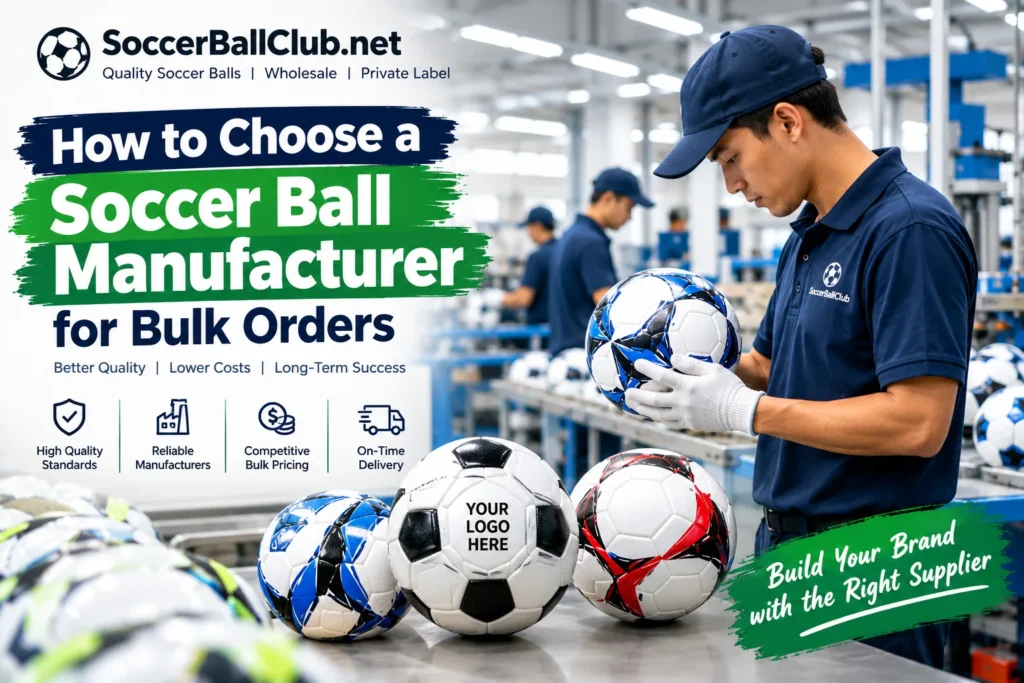
Finding the right soccer ball manufacturer is an important decision for sports retailers, wholesalers, soccer clubs, schools, academies, and private-label brands. When purchasing soccer balls in bulk, buyers need more than a competitive unit price. They need consistent product quality, clear specifications, reliable communication, and delivery arrangements that fit their business requirements.
Choosing a supplier without properly evaluating its products and processes can lead to inconsistent quality, unexpected costs, and delayed orders. A structured supplier evaluation helps buyers compare their options and make better purchasing decisions.
This guide explains how to choose a soccer ball manufacturer for bulk orders, what questions to ask, and how to prepare for a successful wholesale purchase.
1. Define Your Bulk Soccer Ball Requirements
Before contacting manufacturers, identify what you need to purchase and who will use the products. Clear requirements make it easier to request comparable quotations.
Start by considering:
- Order quantity: Estimate how many soccer balls you need for your initial order and potential repeat purchases.
- Ball sizes: Decide whether you require size 3, size 4, size 5, or a combination.
- Intended use: Identify whether the balls are for recreational play, regular training, school programs, or competitive matches.
- Materials and construction: Specify your preferences for the outer material, panel construction, stitching or bonding, and bladder.
- Branding: Decide whether you need standard products, custom colors, printed logos, or private-label packaging.
- Delivery destination: Identify where the shipment must arrive and when the products are needed.
A detailed product brief reduces misunderstandings and helps suppliers recommend suitable models.
2. Evaluate the Manufacturer’s Product Range
A suitable manufacturer should offer products that match your intended market. A retailer serving recreational players may need different products from a distributor supplying competitive clubs.
Ask for a product catalog that includes ball sizes, material specifications, construction details, available colors, and intended applications.
Training Soccer Balls
Training balls are designed for regular practice and recreational use. Buyers should consider durability, touch, maintenance requirements, and expected playing conditions.
Match Soccer Balls
Match balls may have specific performance and certification requirements. If your customers need a ball approved for a particular league or competition, request evidence of the applicable approval rather than relying on a general marketing claim.
Customized Soccer Balls
Some manufacturers offer customized designs for sports brands, clubs, schools, tournaments, and promotional campaigns. Available options may include logos, team colors, panel designs, and branded packaging.
Check whether customization is available for your selected model and whether it changes the minimum order quantity, price, or production schedule.
3. Check Materials and Manufacturing Quality
Product quality is one of the most important factors when comparing soccer ball manufacturers. Two balls may look similar in a photograph but perform differently depending on their materials and construction.
Common considerations include:
Outer material: TPU and PVC are used in different types of soccer balls. Their suitability depends on the product design, intended use, and quality of the material.
Panel construction: Balls may use machine stitching, hand stitching, thermal bonding, or other construction methods. Each approach has different characteristics and production considerations.
Bladder and valve: These components affect air retention and maintenance. Ask about the materials and quality-control procedures used for the specific model.
Shape and consistency: Finished balls should match the agreed specifications for shape, dimensions, weight, and other relevant characteristics.
Surface and finish: Inspect the product for uneven panels, visible defects, poor finishing, or inconsistent branding.
Request written specifications and evaluate samples before committing to a large order. Do not assume that a particular material or construction method automatically guarantees better performance.
4. Request Samples Before Confirming a Bulk Order
A sample gives buyers an opportunity to assess the actual product instead of relying entirely on catalog photographs.
When a sample arrives, review its appearance, construction, feel, shape, inflation retention, and branding, as relevant to the model. If the balls will be used by a team or academy, consider having the intended users evaluate them.
For customized orders, check that the logo placement, color, size, and artwork match your expectations.
Once a sample is approved, document the agreed product specifications. For larger production runs, ask the manufacturer how it will ensure that the bulk order remains consistent with the approved sample.
Sample availability, fees, and delivery times should be confirmed with the supplier before proceeding.
5. Compare Minimum Order Quantities and Wholesale Prices
Manufacturers may set minimum order quantities based on the product, production method, customization requirements, and packaging.
When requesting quotations, ask for prices at several quantities if your budget allows. This can help you understand how the unit price changes as order volume increases.
Your quotation should clearly state:
- Unit price and total product cost
- Minimum order quantity
- Custom logo or printing charges
- Packaging costs
- Sample or setup fees
- Production lead time
- Payment terms
- Shipping arrangements and additional charges
Avoid selecting a supplier based solely on the lowest quoted price. A lower unit price may not represent better value if the product does not meet your quality requirements or if important charges are excluded.
For imported orders, calculate the expected landed cost, including transportation, applicable duties, customs-related charges, and delivery to your destination.
6. Assess Customization and Private-Label Capabilities
If you are building a sports brand or supplying customized equipment, the manufacturer’s branding capabilities may influence your decision.
Ask whether the supplier can support your desired logo, colors, panel layout, and packaging. Provide high-quality artwork and request a digital proof or sample before production.
Also clarify whether your design can be reproduced consistently across future orders.
For private-label products, discuss packaging specifications, brand presentation, artwork ownership, and any relevant agreements. Only use logos and designs that you own or are authorized to reproduce.
Customization can add production steps, so confirm the associated charges, minimum quantities, and lead times before approving your order.
7. Review Production Capacity and Lead Times
A supplier should be able to explain its expected production schedule and the factors that could affect delivery.
Ask about the estimated time required for sample approval, production, quality checks, packaging, and shipment preparation. Custom designs may require additional time compared with standard products.
If your order is tied to a tournament, school season, or retail launch, provide the required delivery date early and ask the manufacturer to confirm whether it is realistic.
For large or recurring orders, discuss production planning and how the supplier manages demand fluctuations. Avoid relying on verbal promises alone; document the agreed schedule in your purchase terms.
8. Verify Supplier Communication and Business Practices
Clear communication is essential when purchasing products from a manufacturer, particularly when the order involves international shipping or customization.
Evaluate whether the supplier provides detailed answers, written quotations, clear specifications, and timely updates.
Before making a payment, confirm the legal business details, payment instructions, order terms, and relevant company information. Use appropriate commercial safeguards and avoid sending money to an account that cannot be verified as belonging to the intended business.
You should also clarify how product defects, missing items, shipping delays, and other order issues will be handled.
A dependable business relationship is built on transparent terms, realistic commitments, and a documented process for resolving problems.
9. Confirm Shipping and Delivery Arrangements
Bulk soccer ball orders require planning beyond the manufacturing stage. The delivery method and shipping terms affect both cost and timing.
Compare available shipping methods based on order size, destination, urgency, and the total cost of delivery.
Confirm who is responsible for arranging transportation, export documentation, insurance if applicable, import clearance, and other charges under the agreed shipping terms.
For orders entering the United States, check the applicable customs requirements and duties for the product’s classification and country of origin. A qualified customs broker can help clarify requirements for a specific shipment.
Build a reasonable time buffer into your plan so that unexpected delays do not disrupt customer commitments.
10. Build a Long-Term Supplier Relationship
For wholesalers, distributors, and retailers, a good first order can be the beginning of a long-term business relationship.
Keep records of approved samples, product specifications, artwork, packaging requirements, and quality expectations. Use the same documentation when requesting repeat orders.
After receiving a shipment, inspect the products and record any differences from the agreed specifications. Share feedback promptly and resolve issues before placing the next order.
As your business grows, review customer demand and inventory levels before increasing quantities. Reliable supplier coordination and realistic purchasing plans can help you maintain product availability without holding excessive stock.
Questions to Ask a Soccer Ball Manufacturer
Before choosing a supplier, ask these practical questions:
- What soccer ball sizes and models do you offer?
- What are the minimum order quantities for standard and customized balls?
- Can you provide written material and construction specifications?
- Are product samples available, and what do they cost?
- Can you apply our logo and provide customized packaging?
- How do you check quality during and after production?
- What are the estimated production and shipping timelines?
- Which costs are included in the quotation?
- What payment terms and order protections are available?
- How do you handle defective or nonconforming products?
Comparing answers from multiple suppliers helps you assess whether each manufacturer meets your commercial needs.
Frequently Asked Questions
How do I find a soccer ball manufacturer for bulk orders?
Start by defining your product requirements, then request catalogs, specifications, samples, and written quotations from potential suppliers. Compare product quality, customization options, order terms, and total delivered cost before deciding.
What is the minimum order quantity for wholesale soccer balls?
Minimum order quantities vary by manufacturer, model, customization requirements, and packaging. Contact suppliers directly to confirm the minimum quantity for your specific order.
Should I choose a manufacturer or a trading supplier?
A manufacturer may offer direct access to production specifications and customization, while a trading supplier may provide access to products from multiple factories. Evaluate each business based on product suitability, transparency, quality controls, communication, and overall value.
Can I order custom soccer balls for my own brand?
Some suppliers offer private-label services, including logo application and branded packaging. Confirm the available options, artwork requirements, minimum quantities, and production schedule before placing your order.
What should I check before paying a supplier?
Verify the business details, written quotation, product specifications, payment instructions, delivery terms, and policies for defects or delays. For a substantial order, consider appropriate inspection and payment safeguards.
Final Thoughts
Choosing the right soccer ball manufacturer for bulk orders requires careful evaluation of product quality, materials, customization capabilities, production capacity, pricing, and shipping arrangements.
By defining your requirements, reviewing samples, comparing written quotations, and documenting order terms, you can make a more informed purchasing decision and reduce avoidable risks.
Whether you supply sports retailers, soccer academies, schools, clubs, or a private-label brand, focus on finding a supplier that can meet your specifications and support your business requirements over time.
Need soccer balls for a wholesale or bulk order? Contact SoccerBallClub to discuss your required models, quantities, customization options, and quotation requirements.