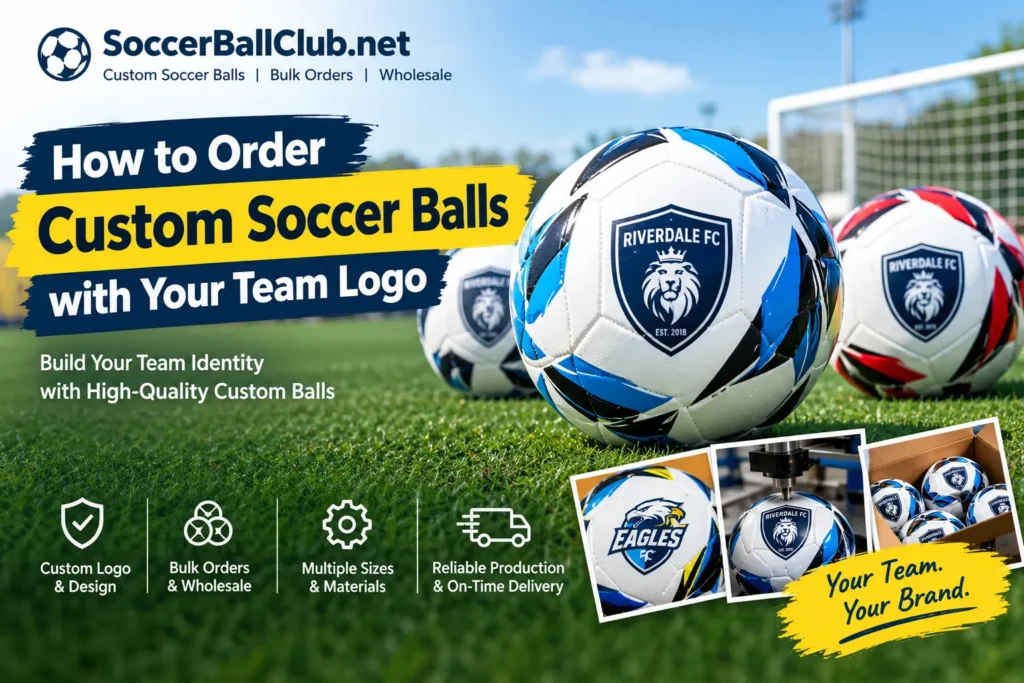
Ordering custom soccer balls with your team logo is an effective way to build team identity, promote a sports brand, and create a consistent look for players. Soccer clubs, schools, academies, tournament organizers, retailers, and sports equipment distributors can benefit from purchasing customized soccer balls in bulk.
However, choosing the right supplier involves more than adding a logo to a ball. Buyers should consider ball size, construction, printing quality, durability, order quantities, and delivery timelines before placing an order.
This guide explains how to order custom soccer balls in bulk and what to look for when selecting a soccer ball manufacturer or wholesale supplier.
Why Order Custom Soccer Balls with Your Logo?
Custom-branded soccer balls offer practical benefits for organizations that regularly purchase sports equipment.
Build a professional team identity: Soccer clubs and academies can display their logos and team colors on training balls, practice equipment, and promotional products.
Promote your sports brand: Retailers and sports brands can develop soccer balls featuring their own designs, logos, and packaging.
Support tournaments and events: Event organizers can use customized balls for competitions, team gifts, promotional campaigns, and sponsorship activities.
Simplify bulk purchasing: Ordering from one supplier can help organizations coordinate product specifications, branding, and delivery for larger equipment requirements.
For organizations purchasing dozens or hundreds of balls, planning the order in advance can help maintain consistency across the entire batch.
1. Choose the Right Soccer Ball Size
Before requesting a quotation, determine which ball sizes your organization needs. Soccer ball sizes are designed for different age groups and playing situations.
- Size 3: Commonly used by younger children developing basic soccer skills.
- Size 4: Often used by youth players, depending on the league and age group.
- Size 5: The standard size for most adult soccer matches and many older youth competitions.
Requirements can vary by league, age group, and training program. Confirm the applicable rules before placing a large order.
If you are buying for a school or soccer academy, ask your supplier whether multiple sizes can be included in the same order.
2. Select the Right Materials and Construction
The materials used in a soccer ball affect its touch, durability, performance, and intended use.
TPU and PVC Outer Materials
Thermoplastic polyurethane (TPU) is commonly used in soccer ball covers designed for different levels of play. Depending on the construction, it can provide a balance of flexibility, feel, and durability.
Polyvinyl chloride (PVC) is another material used in soccer balls, including some budget-friendly training products. The quality of the material and the overall construction both matter when comparing options.
Machine-Stitched and Other Construction Methods
Machine-stitched balls can be suitable for many training and recreational applications. Other construction methods may offer different performance characteristics and price points.
Ask the manufacturer for construction details, product samples, and recommendations based on your intended use. Do not assume that a particular material or construction method automatically guarantees professional match quality.
3. Prepare Your Team Logo and Design
Your logo is one of the most important elements of a custom soccer ball order. Before production begins, prepare a high-resolution version of your artwork.
For the best results:
- Provide a vector logo file when available, such as AI, EPS, or SVG.
- Confirm your brand colors and preferred ball design.
- Check the logo placement and size on the ball panels.
- Request a digital mockup before approving production.
- Confirm whether the design includes team names, numbers, sponsor logos, or other text.
The available customization methods depend on the ball material and manufacturing process. Ask the supplier which printing or branding options are suitable for your selected model.
Always review the final artwork carefully. Correcting a logo before production is easier than resolving a branding problem after a bulk shipment has been manufactured.
4. Find a Reliable Custom Soccer Ball Manufacturer
Selecting a reliable manufacturer is essential when ordering custom soccer balls in large quantities. A low quotation is not necessarily the best value if the products do not meet your specifications.
Evaluate potential suppliers using the following criteria:
Product experience: Ask about their experience manufacturing soccer balls for clubs, retailers, distributors, and private-label brands.
Customization capabilities: Confirm whether the supplier can reproduce your logo, colors, panel design, and packaging requirements.
Quality control: Ask how the manufacturer checks stitching or bonding, shape, inflation retention, surface finish, and print consistency, as applicable to the product.
Samples and specifications: Request a sample or documented specifications before committing to a large production run.
Communication: Choose a supplier that provides clear quotations, production updates, and written order terms.
Export experience: If you are importing soccer balls into the United States, discuss shipping arrangements, packaging, documentation, and estimated delivery schedules before confirming the order.
SoccerBallClub can be considered by buyers looking for custom soccer balls and bulk supply options. Contact the company directly to confirm available models, customization capabilities, minimum order quantities, and current production timelines.
5. Understand Minimum Order Quantities and Bulk Pricing
Custom soccer ball manufacturers may set minimum order quantities because personalized production requires artwork preparation, setup, materials, and manufacturing time.
The final price may depend on:
- Total quantity ordered
- Ball size and model
- Materials and construction
- Printing and customization complexity
- Individual packaging or branded boxes
- Shipping method and destination
- Sample, tooling, or setup charges, where applicable
Request a written quotation for several order quantities when possible. Comparing different quantities can help you understand whether a larger purchase offers meaningful savings.
Make sure the quotation clearly identifies what is included. A product price that excludes packaging, freight, or other charges may not represent the final landed cost for a US buyer.
6. Request a Sample Before Mass Production
For a large order, sample approval is an important step in reducing avoidable mistakes.
Check the sample for logo clarity, color accuracy, surface finish, shape, feel, and overall workmanship. If the balls are intended for a particular training environment or competition, evaluate them against the relevant requirements.
Approve the final design and product specifications in writing. If the supplier provides a pre-production sample, clarify whether mass production will follow the same approved specifications.
For repeat orders, save the artwork, model details, color references, and agreed specifications so future batches can be compared more easily.
7. Plan Shipping and Delivery to the United States
US clubs, schools, retailers, and importers should discuss delivery arrangements before placing an order.
Confirm the production lead time, shipping method, destination address, packaging details, and estimated arrival window. If the order is intended for a tournament or seasonal launch, allow additional time for unexpected production or transportation delays.
Importers should also clarify who is responsible for freight charges, customs documentation, applicable duties, and other import-related expenses.
Do not rely solely on a verbal delivery estimate. Ask for the expected timeline and key order terms in writing.
Frequently Asked Questions
Can I order soccer balls with my club logo?
Yes. Custom soccer balls can be produced with club logos, team colors, sponsor branding, or other approved artwork, depending on the manufacturer’s capabilities and the selected model.
Can schools and soccer academies order in bulk?
Schools and academies can request bulk quotations for training equipment. They should specify the required sizes, quantities, intended use, and branding needs when contacting a supplier.
How many custom soccer balls should I order?
The appropriate quantity depends on your team size, training schedule, replacement needs, and budget. Ask manufacturers about their minimum order quantities before finalizing your plan.
How can I compare wholesale soccer ball suppliers?
Compare product specifications, samples, customization quality, order terms, production timelines, communication, and the total delivered cost rather than evaluating suppliers on price alone.
Can sports brands create private-label soccer balls?
Some manufacturers offer private-label options that allow businesses to sell soccer balls under their own brand. Confirm logo application, packaging, product specifications, and minimum quantities directly with the supplier.
Final Thoughts
Ordering custom soccer balls with your team logo can help clubs, schools, academies, and sports brands create consistent equipment and strengthen their visual identity. The best results come from choosing suitable ball sizes and materials, preparing accurate artwork, evaluating manufacturers, and approving product specifications before mass production.
Whether you need training balls for a local academy or a larger shipment for a sports equipment business, compare samples, written quotations, and delivery terms before making your decision.
Looking for custom soccer balls in bulk? Contact SoccerBallClub to discuss your required quantities, ball specifications, logo customization, and wholesale order requirements.