
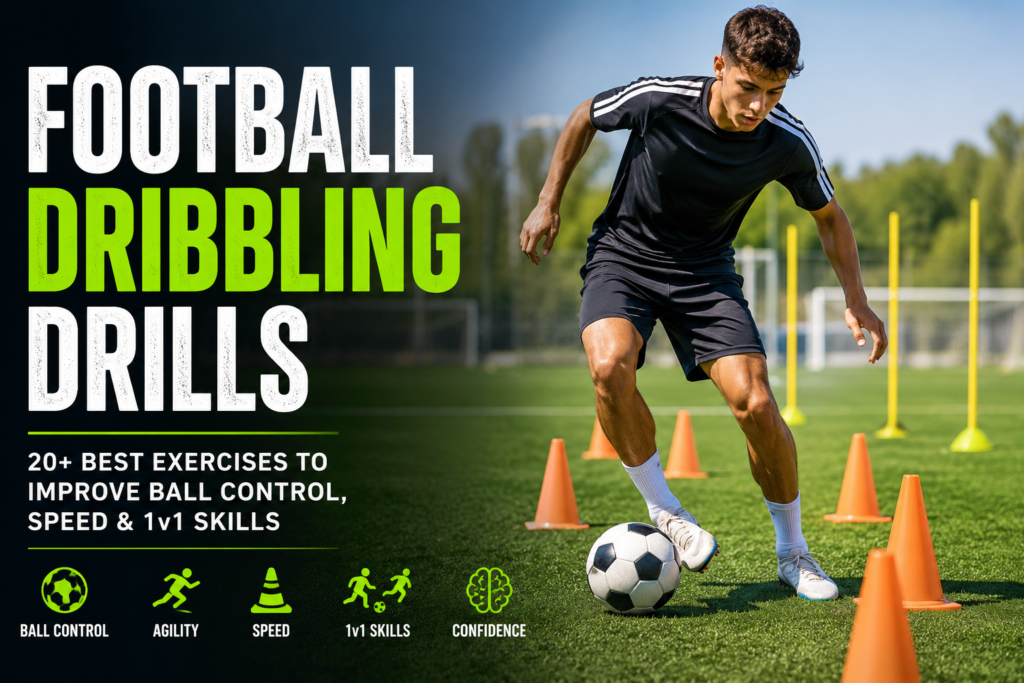
Football dribbling drills are essential training exercises that help players improve ball control, agility, coordination, speed, and confidence on the field. Whether you’re a beginner learning the basics or an experienced player refining your technique, regular dribbling practice can make you more effective in one-on-one situations and help you keep possession under pressure.
The best football dribbling drills combine close ball control, quick changes of direction, decision-making, and realistic match scenarios. By practicing consistently, players can develop better first touches, stronger weak-foot control, and the confidence to beat defenders in competitive games.
In this guide, you’ll learn the fundamentals of dribbling, the equipment you need, warm-up exercises, and progressively challenging drills that will help take your game to the next level.
Why Football Dribbling Is One of the Most Important Skills
Dribbling is much more than simply running with the ball. It allows players to create space, escape pressure, attack defenders, and maintain possession. Every successful team depends on players who can control the ball confidently while making quick decisions.
A good dribbler doesn’t always rely on flashy skills. Instead, they use intelligent movement, close touches, body positioning, and timing to move the ball effectively.
Benefits of Football Dribbling Drills
Regular dribbling practice offers several advantages:
- Improves close ball control.
- Develops better coordination between your feet and eyes.
- Increases agility and balance.
- Builds confidence during 1v1 situations.
- Improves reaction time.
- Helps players change direction quickly.
- Enhances overall match performance.
Players who dedicate time to dribbling drills often become more comfortable receiving the ball under pressure and are less likely to lose possession during games.
How Dribbling Improves Match Performance
During a football match, players constantly face defenders, limited space, and fast-paced situations. Strong dribbling skills help you:
- Escape defensive pressure.
- Create passing opportunities.
- Open shooting lanes.
- Progress the ball up the field.
- Keep possession in tight areas.
- Break defensive lines.
Whether you’re playing as a winger, midfielder, striker, or full-back, dribbling helps you contribute more effectively to your team’s attack.
Why Every Position Needs Dribbling Skills
Although wingers are often known for their dribbling ability, every player benefits from improving this skill.
Midfielders use dribbling to retain possession and create space.
Strikers use quick touches to beat defenders inside the penalty area.
Full-backs rely on dribbling when advancing down the wings.
Even goalkeepers benefit from basic dribbling skills when playing out from the back.
Football Dribbling Fundamentals Every Beginner Should Learn
Before attempting advanced tricks or fast-paced drills, every player should master the fundamentals.
1. Keep the Ball Close
One of the biggest mistakes beginners make is pushing the ball too far ahead.
Instead:
- Take short, controlled touches.
- Keep the ball within one or two steps.
- Stay balanced while moving.
- Slow down when entering crowded areas.
Close control allows you to react quickly if a defender challenges you.
2. Use Different Parts of Your Foot
Great dribblers don’t rely on one surface of the foot.
Practice using:
Inside of the Foot
Best for:
- Accurate control
- Tight turns
- Short movements
Outside of the Foot
Useful for:
- Quick direction changes
- Shielding the ball
- Speed dribbling
Sole of the Foot
Ideal for:
- Pull-backs
- Stopping the ball
- Turning away from defenders
Learning to switch naturally between these foot surfaces makes your dribbling more unpredictable.
3. Maintain Proper Body Position
Your body position affects both balance and control.
Keep these coaching points in mind:
- Bend your knees slightly.
- Stay on the balls of your feet.
- Keep your center of gravity low.
- Relax your shoulders.
- Use your arms for balance.
A balanced stance allows quicker reactions and smoother changes of direction.
4. Keep Your Head Up
Many young players spend too much time looking at the ball.
Instead, glance at the ball only when necessary and focus on:
- Teammates
- Defenders
- Open space
- Passing options
Developing this habit improves decision-making and helps you react more effectively during matches.
5. Practice with Both Feet
Using only your dominant foot makes you predictable.
Include exercises that strengthen your weaker foot by:
- Dribbling through cones.
- Performing inside-outside touches.
- Completing figure-eight patterns.
- Practicing turns in both directions.
Over time, you’ll become more versatile and harder to defend.
Essential Equipment for Football Dribbling Drills
You don’t need expensive gear to improve your dribbling. A few basic items are enough to create effective training sessions.
| Equipment | Purpose |
|---|---|
| Football | Essential for every drill |
| Cones | Mark dribbling routes and obstacles |
| Training markers | Create gates and turning points |
| Mini goals | Practice finishing after dribbling |
| Agility ladder | Improve foot speed and coordination |
| Stopwatch | Measure progress and speed |
If you’re training at home, everyday objects such as water bottles or shoes can replace cones.
Dynamic Warm-Up Before Dribbling Practice
Starting your session with a proper warm-up prepares your muscles, improves mobility, and reduces the risk of injury.
Dynamic Stretching
Perform each movement for 20–30 seconds:
- Leg swings
- Walking lunges
- High knees
- Butt kicks
- Hip circles
- Arm swings
These exercises increase blood flow and prepare your joints for movement.
Ball Activation
Spend a few minutes getting comfortable with the ball before moving into drills.
Try:
- Toe taps
- Foundation touches
- Inside-outside touches
- Sole rolls
- Pull-push movements
Focus on light, controlled touches rather than speed.
Light Movement Drills
Finish your warm-up with gentle movement exercises:
- Slow dribbling in a straight line
- Zigzag dribbling around cones
- Small changes of direction
- Gradual acceleration and deceleration
This helps transition your body from warm-up to more demanding drills while reinforcing proper technique.
What’s Next?
Now that you’ve learned the fundamentals, you’re ready to begin practicing structured football dribbling drills. In the next section, we’ll cover beginner, intermediate, and advanced exercises designed to improve close control, speed, agility, and confidence in match situations.