
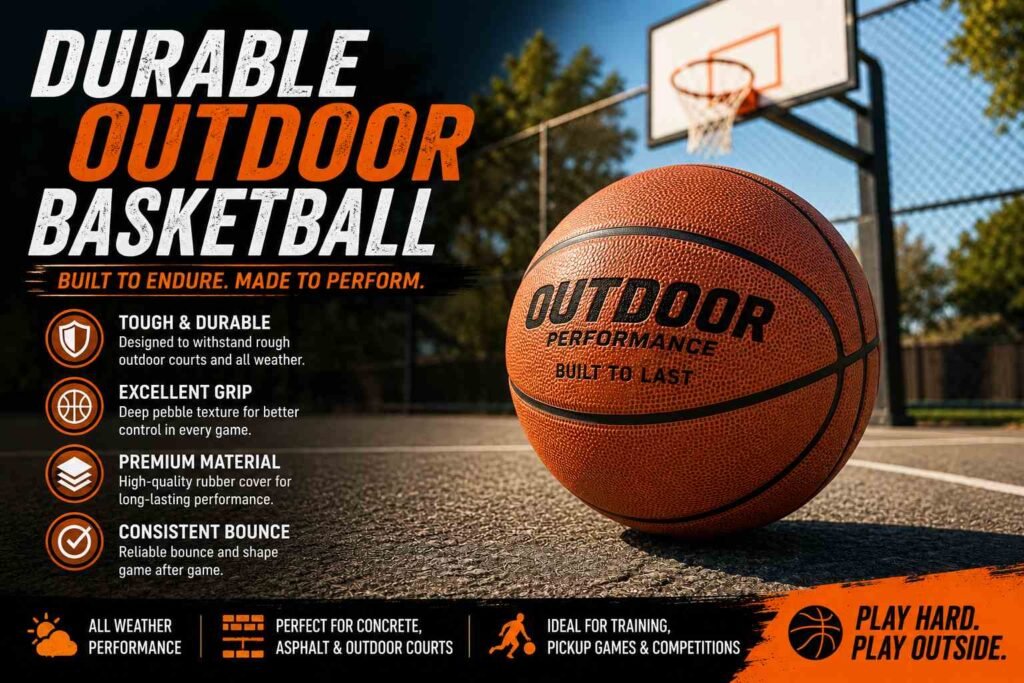
Playing basketball outdoors is a great way to enjoy the game, whether you are practicing at a neighborhood court, playing pickup games with friends, or training regularly. However, outdoor courts can be much harder on basketballs than indoor hardwood. Rough concrete and asphalt can quickly wear down a ball that is not designed for outdoor use.
That is why choosing a durable outdoor basketball is important. A good outdoor basketball should withstand rough surfaces while maintaining reliable grip, shape, and performance over time.
In this guide, we will explain what makes an outdoor basketball durable and what to consider when choosing one for regular play.
What Makes a Durable Outdoor Basketball?
A durable outdoor basketball is designed to handle the demanding conditions found on outdoor courts. Unlike indoor basketballs, outdoor models generally need an exterior that can resist abrasion from concrete, asphalt, and other hard surfaces.
Important features include:
- Strong outer materials
- Abrasion resistance
- Reliable grip
- Consistent shape
- Durable construction
- Suitable inflation retention
- Performance in different outdoor conditions
Durability does not mean sacrificing playing performance. The best outdoor basketballs balance toughness with a comfortable feel and dependable handling.
Why Outdoor Courts Are Hard on Basketballs
Outdoor basketball courts are usually constructed from concrete, asphalt, or other hard materials. These surfaces can be significantly rougher than indoor basketball courts.
Every dribble creates friction between the ball and the court. Over time, this can wear down the outer surface, reduce grip, and affect the appearance of the ball.
Weather can create another challenge. Outdoor basketballs may be exposed to sunlight, heat, dust, moisture, and temperature changes.
Choosing a ball specifically designed for outdoor use can help it handle these conditions more effectively.
1. Look for an Abrasion-Resistant Cover
The outer cover is one of the most important factors when choosing an outdoor basketball.
A ball with a durable composite or rubber-based exterior can be better suited to rough outdoor surfaces than a premium indoor ball designed primarily for polished hardwood.
The cover should provide enough resistance to repeated contact with concrete and asphalt while still allowing players to maintain control.
If you play outdoors frequently, prioritize construction and durability rather than choosing a ball based only on appearance.
2. Choose the Right Basketball Size
Basketballs are available in different sizes for different age groups and levels of play.
A standard men’s basketball is generally Size 7, while Size 6 is commonly used for women’s basketball and some youth programs. Smaller basketballs are available for younger players.
Before purchasing a ball, check the requirements of your league, school, club, or training program.
For casual outdoor play, choose a size that matches the players who will be using it.
3. Grip Matters on Outdoor Courts
A durable basketball still needs to provide good grip.
Outdoor conditions can introduce dust and dirt to the surface, making ball handling more difficult. A textured exterior can help players maintain control during dribbling, passing, and shooting.
Look for a surface that feels secure without being unnecessarily rough on the hands.
Regularly wiping the basketball with a suitable damp cloth can also help maintain its grip.
4. Consider Composite vs. Rubber Basketballs
Both composite and rubber basketballs can be suitable for outdoor play, but they offer different characteristics.
Composite Basketballs
Composite materials can provide a softer, more comfortable feel while still offering useful durability for outdoor courts.
They may be a good choice for players who want a balance between outdoor toughness and a more refined feel.
Rubber Basketballs
Rubber basketballs are often selected for their durability and resistance to rough surfaces. They can be particularly practical for recreational outdoor play and beginner training.
The best choice depends on how frequently you play, your preferred feel, and your budget.
5. Consider Where You Will Play
Not all outdoor courts are equally demanding.
A smooth outdoor court may be relatively gentle on a basketball, while rough asphalt can cause significantly more abrasion.
If you regularly play on rough concrete or asphalt, choose a ball specifically designed for outdoor conditions.
If you occasionally play outdoors but primarily play indoors, you may want a versatile basketball that can handle both environments. However, always follow the manufacturer’s recommendations regarding surface use.
6. Check the Ball’s Construction
A basketball’s construction can influence its longevity.
Look for strong seams, consistent panel construction, and a reliable bladder. A well-constructed ball should maintain its round shape during regular use.
For teams, schools, and basketball programs, construction quality becomes especially important because the ball may be used for many hours every week.
7. Choose a Basketball With Reliable Air Retention
A basketball should maintain its recommended inflation over time.
If a ball loses air frequently, it can affect dribbling, shooting, and passing. Before playing, check the pressure and inflate the ball according to the manufacturer’s recommended range.
Avoid overinflating the basketball simply to make it feel harder. Correct inflation helps maintain predictable performance and can reduce unnecessary stress on the ball.
8. Think About Frequency of Use
Your playing habits should influence your purchase.
If you play once or twice a month, a basic outdoor basketball may be enough.
If you play several times a week, investing in a more durable outdoor model can provide better long-term value.
For schools, clubs, community courts, and training programs, durability should be an even higher priority because the basketballs may experience heavy daily use.
9. Keep Your Outdoor Basketball Clean
Regular maintenance can extend the useful life of a basketball.
After playing, remove dust and dirt from the surface using a soft cloth. Avoid harsh cleaning chemicals that could damage the outer material.
If the basketball becomes wet, allow it to dry naturally before storing it.
Keeping the surface clean can help preserve its grip and appearance.
10. Store It Properly
Storage is often overlooked, but it can affect the lifespan of an outdoor basketball.
Avoid leaving the ball outside overnight or exposing it to extreme heat for extended periods. Direct sunlight and high temperatures can contribute to material deterioration.
A cool, dry storage area is generally a better choice.
You should also avoid storing heavy objects on top of the basketball because prolonged pressure can affect its shape.
11. Don’t Use an Indoor Basketball on Rough Outdoor Courts
Indoor basketballs are typically designed around the feel and requirements of indoor hardwood courts.
Using a premium indoor ball regularly on rough asphalt can cause unnecessary wear to its cover.
If you frequently play outdoors, keep a separate outdoor basketball specifically for those courts.
This can help preserve your indoor basketball while giving you a ball designed for tougher playing conditions.
12. Consider Weather Conditions
Outdoor basketball players have to deal with changing weather.
Heat, sunlight, dust, humidity, and moisture can all affect equipment.
Avoid playing with a basketball that has become excessively wet. A wet court and wet basketball can also create unsafe playing conditions.
When the weather is particularly harsh, store your basketball indoors rather than leaving it exposed.
13. Choose the Right Ball for Training
Outdoor basketball courts are excellent for individual practice.
Players can work on:
- Ball handling
- Dribbling
- Passing
- Shooting
- Footwork
- Conditioning
- Rebounding
- Defensive movement
For regular training, choose a ball that can withstand repeated contact with the court.
A durable outdoor basketball can be particularly useful for players who practice several times per week.
14. Outdoor Basketballs for Kids
Young players can benefit from having a basketball that matches their age and ability.
A smaller basketball can make it easier for children to develop proper handling and shooting techniques.
When choosing an outdoor basketball for kids, consider the appropriate size, weight, grip, and durability.
Parents and coaches should also make sure the ball is suitable for the court and training environment.
15. Outdoor Basketballs for Teams and Schools
Schools, basketball clubs, recreation centers, and youth programs often need basketballs that can handle frequent use.
In these situations, durability is particularly important.
Instead of selecting a basketball based only on its initial price, consider its expected lifespan and how frequently it will be used.
Buying reliable basketballs in appropriate quantities can help teams maintain consistent equipment for practices and games.
How to Get More Life From Your Outdoor Basketball
Even the most durable outdoor basketball requires proper care.
Follow these simple habits:
- Use it on appropriate outdoor surfaces.
- Keep it properly inflated.
- Clean it regularly.
- Avoid unnecessary exposure to rain and extreme heat.
- Store it indoors when not in use.
- Check the cover and seams periodically.
- Avoid using harsh chemicals when cleaning it.
These simple steps can help preserve the ball’s performance and appearance.
Common Mistakes to Avoid
When buying an outdoor basketball, avoid choosing solely based on the lowest price.
A cheaper ball may not provide the durability required for frequent outdoor use. Similarly, an expensive indoor basketball may not be the right choice for rough outdoor courts.
Also avoid ignoring size requirements, playing surface, grip, and maintenance.
The right basketball should match your playing environment and intended use.
Final Thoughts
Choosing a durable outdoor basketball is about finding the right balance between toughness, grip, performance, and value. Outdoor courts can be demanding, so a basketball designed specifically for outdoor conditions can provide a better experience and potentially last longer with proper care.
Consider the court surface, basketball size, cover material, grip, construction, frequency of use, and storage conditions before making your choice.
Whether you are practicing alone, playing pickup basketball, training with a team, or equipping a school or club, the right outdoor basketball can help you spend more time playing and less time replacing worn-out equipment.
For more basketball and sports equipment guides, explore SoccerBallClub for products and information designed for players, teams, clubs, academies, and sports enthusiasts.