
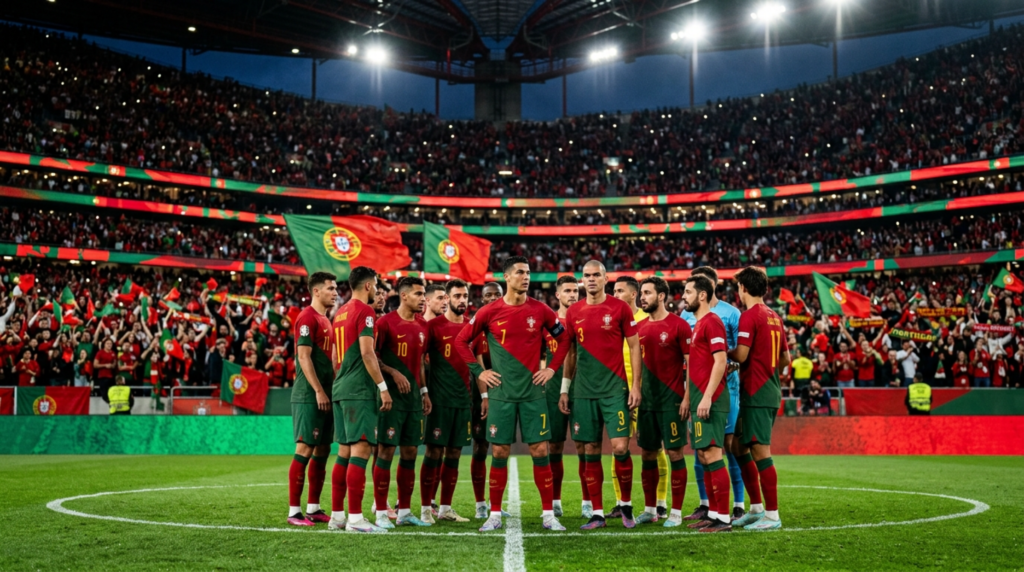
The Portugal national football team is one of the most respected teams in international football. Known for its technical quality, attacking talent, and strong football culture, Portugal has developed into a regular contender at major tournaments. Over the years, the team has produced legendary players, memorable matches, and important international titles.
Portugal has also built a reputation for combining experienced stars with talented young players. This balance has helped the national side remain competitive across different generations.
A Brief History of the Portugal National Football Team
The Portugal national football team represents Portugal in international men’s football. The team is governed by the Federação Portuguesa de Futebol, commonly known as the Portuguese Football Federation.
Portugal played its first official international match in 1921. For many years, however, the national team struggled to achieve consistent success at major international competitions. Its breakthrough came during the 1960s when a talented generation led by the legendary Eusébio helped Portugal reach the 1966 FIFA World Cup semi-finals.
That tournament remains one of the most important moments in Portuguese football history. Eusébio became one of the stars of the competition, scoring nine goals and helping Portugal finish third.
Although Portugal had talented players in later decades, major international success remained difficult to achieve. The country came close at several tournaments before finally winning its first major senior international trophy in the 21st century.
Portugal’s Greatest International Achievement
One of the defining moments for the Portugal national football team came at UEFA Euro 2016.
Portugal reached the final in France and faced the host nation. The match was difficult, and Portugal lost Cristiano Ronaldo to injury during the first half. Despite that setback, the team remained organized and continued fighting.
Eder eventually scored the winning goal in extra time. His long-range strike gave Portugal a 1–0 victory and secured the country’s first European Championship title.
The triumph changed the perception of Portuguese football. Portugal was no longer simply a team with talented individuals. It had demonstrated that it could win a major international tournament through teamwork, discipline, and resilience.
Portugal later won another major international trophy at the 2019 UEFA Nations League. The victory strengthened the team’s reputation as one of Europe’s leading national sides.
Cristiano Ronaldo and a Golden Generation
No discussion about the modern Portugal national football team would be complete without Cristiano Ronaldo.
Ronaldo became the central figure of Portuguese football for more than a decade. His goalscoring ability, athleticism, professionalism, and leadership turned him into one of the most recognizable footballers in the world.
He made his Portugal debut as a teenager and went on to become the team’s most important attacking player. His international career includes appearances at multiple European Championships and FIFA World Cups.
Ronaldo’s influence extends beyond scoring goals. His experience has also helped younger Portuguese players understand the demands of international football.
However, Portugal’s success has never depended on one player alone. The national team has consistently produced high-level midfielders, defenders, goalkeepers, and forwards.
Portugal’s Style of Football
The Portugal national football team is often associated with technical ability and intelligent possession. Portuguese players typically develop strong ball-control skills from a young age, which contributes to the national team’s ability to play attractive football.
Depending on the coach and available players, Portugal can use different tactical approaches. The team can dominate possession and build attacks patiently, but it can also transition quickly when space appears.
Creative midfielders can provide passes between defensive lines, while fast attackers can exploit spaces behind defenders. Portuguese defenders are also increasingly comfortable playing with the ball, allowing the team to build attacks from the back.
This tactical flexibility is one reason Portugal can adapt to different opponents.
Key Players and Emerging Talent
Portugal has produced many outstanding footballers throughout its history. Eusébio remains one of the most famous names from the country’s early golden generation. Luis Figo later became another major international star and won the FIFA World Player of the Year award in 2001.
In the modern era, Cristiano Ronaldo became the team’s most famous player. Alongside him, Portugal has developed numerous players capable of performing at the highest level.
Bernardo Silva has become an important creative presence, offering close control, intelligent movement, and technical quality in midfield and attack. Bruno Fernandes provides creativity, passing range, and goals from midfield.
Portugal has also benefited from players such as Rúben Dias, who has established himself as an important central defender. Diogo Jota has added energy and attacking movement, while other young Portuguese players continue to emerge through the country’s strong football development system.
The depth of talent means Portugal can build competitive squads even when injuries or suspensions affect important players.
Portugal at the FIFA World Cup
The FIFA World Cup has produced several memorable chapters in Portugal’s history.
The 1966 tournament was particularly significant because Portugal reached the semi-finals. The team eventually finished third, with Eusébio playing a major role in its impressive campaign.
Portugal later returned to the World Cup stage with greater regularity. The team reached the semi-finals again in 2006, led by a younger Cristiano Ronaldo and a talented squad.
The 2006 tournament demonstrated Portugal’s ability to compete with Europe’s strongest teams. Although the team did not reach the final, its fourth-place finish remains one of its best World Cup results.
Portugal has continued to qualify for major World Cups, reflecting the country’s consistency in international football.
Portugal’s European Championship Journey
The European Championship has become particularly important to Portuguese football.
Portugal reached the Euro final in 2004 when the tournament was hosted on home soil. Despite strong support from Portuguese fans, the team suffered a surprising defeat against Greece in the final.
That disappointment was followed by years of improvement. Portugal eventually reached another final in 2016 and this time lifted the trophy.
The Euro 2016 victory remains one of the greatest achievements in the history of the Portugal national football team. It showed the team’s ability to handle pressure and succeed even when circumstances were difficult.
Portugal has since remained a regular presence among Europe’s strongest national sides.
The Importance of Portuguese Football Development
A major reason behind Portugal’s international success is its youth development system.
Portuguese clubs have invested heavily in academies that teach young players technical skills, tactical awareness, and football intelligence. Many future national-team players develop through these systems before moving into senior professional football.
Clubs such as Benfica, Porto, and Sporting CP have historically played important roles in developing Portuguese talent.
Sporting CP, in particular, produced several internationally recognized players, including Cristiano Ronaldo. Portuguese academies continue to provide opportunities for young footballers to develop before competing at the highest level.
This system helps maintain a steady supply of talented players for the national team.
Tactical Strength and Team Depth
Another major strength of Portugal is squad depth.
In previous generations, Portugal sometimes depended heavily on a small number of elite players. The modern team has greater depth across almost every position.
There are technically gifted midfielders, experienced defenders, quality goalkeepers, and several attacking options. This allows the coaching staff to change formations and tactics depending on the opponent.
Portugal can play a possession-based game against defensive opponents or use quick counterattacks against teams that leave space.
The ability to change style during a tournament can be extremely valuable because international competitions often involve different tactical challenges in every round.
The Future of the Portugal National Football Team
The future of Portuguese football looks promising.
Cristiano Ronaldo’s generation has helped establish a winning culture, while younger players are ready to take on greater responsibility. The combination of experienced leaders and emerging talent gives Portugal a strong foundation for future competitions.
The country’s football academies continue producing technically capable players, while Portuguese clubs provide them with opportunities to compete at a high level.
Future success will depend on how effectively the national team integrates new players, maintains tactical balance, and handles pressure at major tournaments.
Portugal will also face increasingly strong competition from teams such as France, Spain, England, Germany, Italy, and the Netherlands. Winning international tournaments is never easy, but Portugal has the quality needed to remain among Europe’s leading contenders.
Why Portugal Has Become a Major Football Power
Portugal’s rise is the result of several factors working together. Strong youth development, talented players, experienced coaches, competitive clubs, and a deep football culture have all contributed to the national team’s progress.
The country’s international identity has also evolved. Portugal was once viewed mainly as a team capable of producing individual stars. Today, it is recognized as a complete football nation capable of competing for major trophies.
The Euro 2016 victory and Nations League triumph provided clear evidence of that transformation.
Conclusion
The Portugal national football team has developed from a talented but inconsistent international side into one of Europe’s most competitive football nations. Its history includes legendary players such as Eusébio, Luis Figo, and Cristiano Ronaldo, as well as major achievements such as the 2016 European Championship and 2019 Nations League.
Portugal’s strength is not limited to its famous stars. Its excellent youth development system continues to produce talented players, giving the national team a strong foundation for the future.
With technical quality, tactical flexibility, international experience, and a new generation of emerging talent, Portugal remains a fascinating team to follow. Its supporters will hope that the next chapter brings even more memorable performances and international trophies.