
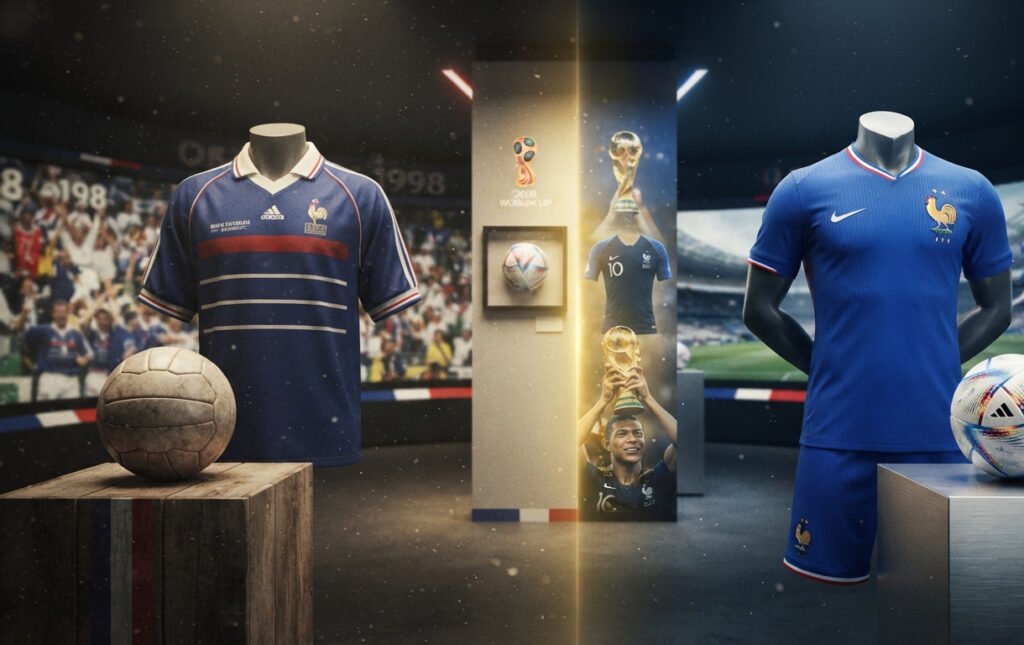
When global football enthusiasts search for france national football team games, they seek more than mere dates and scores. They want the narrative behind Les Bleus—the tactical evolution visible through 90-minute battles, the generational transitions witnessed in competitive fixtures, and the emotional arcs that define one of international football’s most decorated dynasties.
From the triumphant 2018 World Cup campaign to the heartbreak of recent tournaments, France’s fixture list reads like a chronicle of modern football excellence. Whether you’re tracking Didier Deschamps’ final chapter as manager or planning to witness Kylian Mbappé’s captaincy era unfold, understanding the context behind each match enriches the viewing experience.
Recent Campaigns: Euro 2024 and Nations League Analysis
The most recent chapter in france national football team games revealed both resilience and vulnerability. UEFA Euro 2024 in Germany showcased a French squad that prioritized defensive solidity over attacking flair—a departure from their traditional swagger.
Euro 2024 Performance Breakdown
Les Bleus navigated Group D without conceding a goal from open play, yet managed only one victory against Austria (1-0). The subsequent draws against the Netherlands (0-0) and Poland (1-1) highlighted a creative stagnation that would ultimately prove costly. The knockout phase demonstrated France’s penalty-shootout prowess against Portugal, but the semi-final defeat to Spain (2-1) exposed tactical limitations when forced to chase the game.
Nations League Redemption
Following European Championship disappointment, France’s Nations League A campaign provided necessary rehabilitation. Deschamps’ side demonstrated remarkable adaptability, securing top position in their group ahead of Italy and Belgium. Notable victories included a 4-1 dismantling of Israel and a statement 3-1 win against Italy in Milan—matches that suggested the squad had rediscovered its attacking cohesion.
These france national football team games served a dual purpose: securing qualification for the Nations League Finals while testing tactical configurations for the forthcoming World Cup cycle. The emergence of Bradley Barcola and Warren Zaïre-Emery in competitive fixtures indicated successful generational integration alongside established stars.
World Cup 2026 Qualifiers: The Road Ahead
The immediate future of france national football team games centers on FIFA World Cup 2026 qualification. Drawn into Group D alongside Croatia, Czech Republic, Faroe Islands, Gibraltar, and Armenia, France faces a mathematically straightforward but logistically demanding path to North America.
Qualification Schedule Highlights
The campaign commences in March 2025, with fixtures strategically distributed across the calendar to accommodate club commitments. The highlight undoubtedly features the rematch against Croatia—ghosts of the 2018 World Cup Final lingering in fixtures that now carry qualification stakes rather than global glory.
France’s qualification strategy typically involves rotating squads for matches against lower-ranked opponents while deploying full-strength lineups for competitive fixtures against Croatia and Czech Republic. This approach allows Deschamps to maintain squad freshness while blooding emerging talents like Leny Yoro and Désiré Doué in meaningful international contexts.
The expanded 48-team World Cup format reduces pressure on traditional powers, yet france national football team games during qualification remain essential for tactical cohesion. With the tournament hosted across the United States, Canada, and Mexico, Les Bleus aim to become the first European nation to win World Cups on three different continents.
Historic Context: Matches That Defined a Dynasty
Understanding contemporary france national football team games requires appreciation of the fixtures that constructed their modern identity. The 1998 World Cup Final against Brazil (3-0) transcended sport, uniting a multicultural France through Zinedine Zidane’s iconic headers and Emmanuel Petit’s sealing strike.
The 2018-2022 World Cup Arc
No analysis of French international fixtures is complete without examining the 2018 World Cup Final against Croatia (4-2). This match exemplified Deschamps’ pragmatic revolution—absorbing pressure before unleashing devastating counter-attacks through Mbappé and Antoine Griezmann. The tactical discipline displayed in Moscow set the template for subsequent tournament performances.
Conversely, the 2022 World Cup Final against Argentina (3-3, lost on penalties) represents perhaps the most dramatic of all france national football team games. Mbappé’s hat-trick in defeat showcased individual brilliance within collective disappointment—a match that simultaneously highlighted France’s psychological resilience and vulnerability in high-stakes moments.
European Championship Legacy
Euro 1984 (France 2-0 Spain) and Euro 2000 (France 2-1 Italy via golden goal) established France’s credentials as tournament specialists. These victories demonstrated an ability to control finals through midfield dominance—Platini’s generation yielding to Zidane’s artistry.
Tactical Evolution Visible Through Fixtures
Analyzing france national football team games chronologically reveals clear tactical evolution. Deschamps’ tenure has traversed multiple systems: the 4-3-3 attacking vibrancy of 2018, the defensive 3-4-3 experimented during Euro 2020, and the current 4-2-3-1 variations balancing control with transition speed.
Recent fixtures against top-tier opposition (Belgium, Italy, Spain) demonstrate an increasing emphasis on high pressing and vertical passing. The integration of William Saliba into defensive structures has allowed France to maintain higher defensive lines, while Griezmann’s deeper positioning creates numerical superiority in midfield build-up.
These tactical adjustments manifest distinctly in france national football team games against varied opposition. Against deep-blocking teams like Gibraltar, France emphasizes width and crossing patterns. Against possession-dominant sides like Spain, they revert to compact mid-blocks and rapid verticality—a chameleon-like adaptability that defines elite international football.
Where to Watch and Follow Fixtures
For supporters tracking france national football team games, multiple broadcast options ensure comprehensive coverage. In France, TF1 and M6 hold primary rights through 2026, while international viewers access fixtures via ESPN (Americas), BBC/ITV (UK), and beIN Sports (Middle East/North Africa).
Digital engagement has transformed how fans consume Les Bleus fixtures. The FFF (French Football Federation) mobile application provides real-time lineups, tactical heatmaps, and exclusive post-match interviews. Social media channels offer behind-the-scenes content from Clairefontaine, the iconic national team training center.
Ticket acquisition for home matches at Stade de France requires FFF membership registration, with priority given to season ticket holders and regional supporter clubs. Away fixtures typically see limited allocations distributed through lottery systems given extraordinary demand.
Conclusion
The narrative of france national football team games extends beyond simple results tables. Each fixture represents a chapter in an ongoing saga of multicultural excellence, tactical innovation, and relentless competitive ambition. As Deschamps’ era approaches its inevitable conclusion and Mbappé’s captaincy defines a new generation, the upcoming World Cup qualifiers offer both closure and commencement.
Whether analyzing historic triumphs or anticipating future battles, following Les Bleus requires appreciation for the strategic depth inherent in international football. From the tactical chess matches against Italy to the anticipated qualification clinchers against Croatia, France’s fixture list remains essential viewing for students of the beautiful game.
As the road to 2026 begins, supporters worldwide will continue monitoring france national football team games not merely for entertainment, but for the continued evolution of football artistry that has defined French football for three decades.