
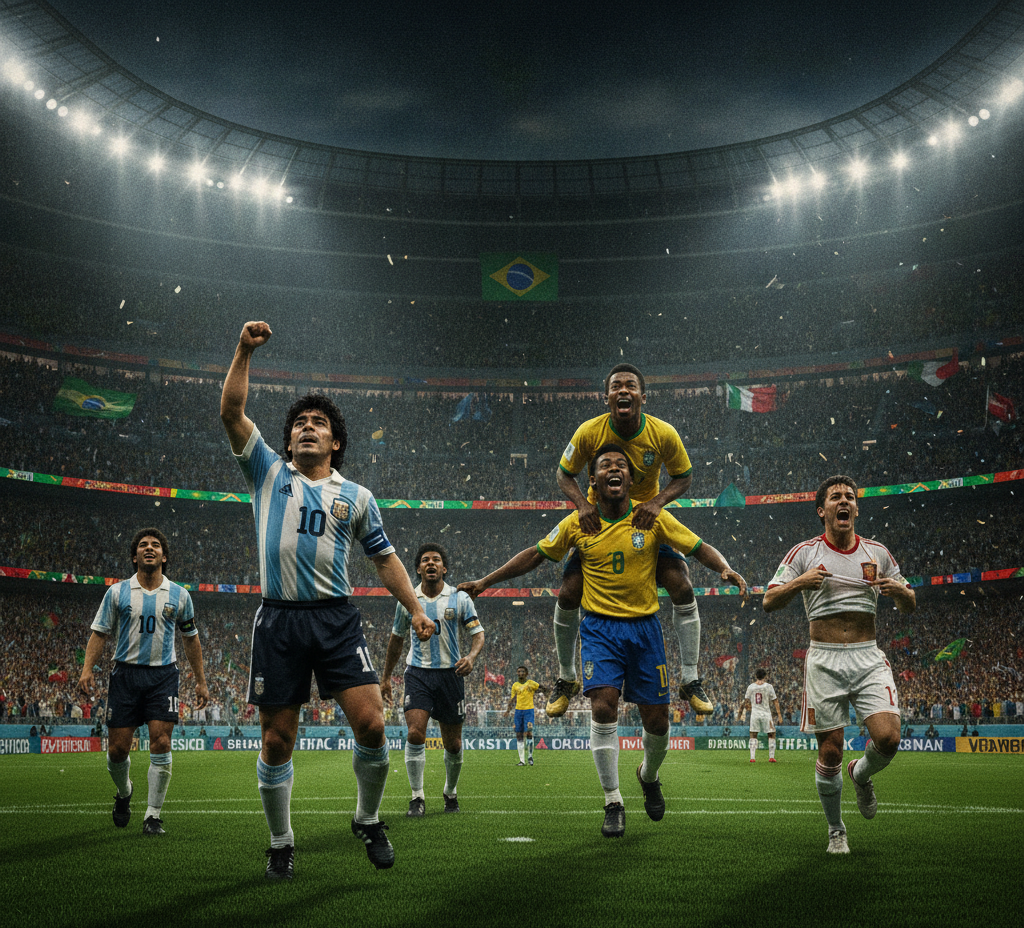
Many football fans see a number like 16 goals and assume a modern superstar will eventually break it.
The reality is much more complicated.
To challenge the World Cup scoring record, a player must:
- Qualify for multiple World Cups
- Remain healthy for over a decade
- Play for a strong national team
- Reach the knockout stages regularly
- Maintain elite goal-scoring form
A single injury, early tournament exit, or missed qualification campaign can significantly reduce a player’s chances.
That is why so few players have come close to Miroslav Klose’s record.
The Story Behind Miroslav Klose’s 16 Goals
When football fans discuss legendary goal scorers, names such as Pelé, Ronaldo Nazário, Messi, and Cristiano Ronaldo often dominate conversations.
Miroslav Klose’s path was different.
He was never known for flashy skills or spectacular dribbling.
Instead, he built his record through:
- Intelligent movement
- Excellent positioning
- Consistent finishing
- Strong teamwork
His record demonstrates an important football lesson:
The most effective goal scorer is not always the most famous player on the pitch.
The Single-Tournament Record That Still Stands
One of the most fascinating World Cup records belongs to Just Fontaine.
During the 1958 World Cup, Fontaine scored 13 goals in one tournament.
To understand how extraordinary this is:
- Lionel Messi never scored 13 goals in a single World Cup.
- Cristiano Ronaldo never scored 13 goals in a single World Cup.
- Miroslav Klose never scored 13 goals in a single World Cup.
Fontaine’s achievement remains one of football’s most untouchable records.
Many experts consider it even harder to break than the all-time World Cup scoring record.
Which Goals Matter Most?
A common mistake among fans is treating every goal equally.
Some goals carry far greater significance than others.
Group Stage Goals
These goals help teams qualify for the knockout rounds.
Without them, a tournament may end quickly.
Knockout Round Goals
Pressure increases dramatically after the group stage.
One goal can decide whether a team advances or goes home.
Final Match Goals
Goals scored in World Cup finals often become part of football history.
Players who score in finals are remembered for generations.
When evaluating World Cup goal scorers, context is just as important as totals.
The Modern Player Most Likely to Break the Record
Whenever World Cup scoring records are discussed, one name appears frequently.
Kylian Mbappé
The French forward has already scored numerous World Cup goals at a young age.
Several factors work in his favor:
- He plays for a strong national team.
- France regularly reaches the latter stages of tournaments.
- He is still relatively young.
- His playing style is built around attacking opportunities.
However, history shows that breaking the record requires consistency over many years.
Many players begin strongly but struggle to maintain the same level across multiple tournaments.
The Evolution of World Cup Goal Scoring
Football has changed significantly over the decades.
Earlier Eras
Older tournaments often featured:
- More open games
- Less sophisticated defensive systems
- Different fitness standards
Modern Football
Today’s World Cup includes:
- Advanced tactical planning
- Video analysis
- Athletic defenders
- Structured defensive systems
This makes scoring consistently more difficult than many fans realize.
Comparing players from different eras requires understanding these differences.
Surprising Facts About World Cup Goal Scorers
Here are some interesting facts many casual fans do not know:
- Miroslav Klose scored more World Cup goals than Pelé.
- Just Fontaine scored all 13 of his World Cup goals in one tournament.
- Cristiano Ronaldo became the first male player to score in five different World Cups.
- Several football legends never came close to the all-time scoring record despite successful careers.
- A player can win the World Cup and still not finish as the tournament’s top scorer.
These facts show why World Cup statistics often surprise newer fans.
What Young Footballers Can Learn From the Record Holders
The top World Cup scorers share several characteristics beyond talent.
They Stay Ready
Opportunities at World Cups are limited.
Players must perform immediately when chances arise.
They Adapt
Different opponents require different approaches.
The best scorers constantly adjust.
They Stay Consistent
Most records are built over many years rather than one great month.
They Focus on Fundamentals
Positioning, timing, and finishing often matter more than spectacular skills.
Expanded FAQs
Who currently holds the record for most World Cup goals?
Miroslav Klose of Germany holds the record with 16 goals.
Who scored the most goals in a single World Cup?
Just Fontaine scored 13 goals during the 1958 tournament.
Has Lionel Messi broken the World Cup scoring record?
No. Messi has an outstanding World Cup career but has not surpassed Klose’s total.
Can Kylian Mbappé break the record?
Many analysts believe he has a realistic chance if he remains healthy and continues playing in future World Cups.
Why didn’t Pelé finish as the all-time leading scorer?
Although Pelé won multiple World Cups and scored important goals, total goal-scoring records depend on many factors, including matches played and tournament opportunities.
What is harder: winning the World Cup or becoming the all-time top scorer?
Both are extremely difficult. Winning requires a complete team, while becoming the all-time top scorer requires elite individual performance across multiple tournaments.
Why This Record Continues to Fascinate Football Fans
The World Cup scoring record combines everything people love about football:
- History
- Competition
- Longevity
- Memorable moments
- Legendary players
Every four years, fans watch the next generation of stars and wonder whether someone can eventually surpass the names that have dominated the record books for decades.
That ongoing chase is one reason the World Cup remains football’s most compelling tournament.