
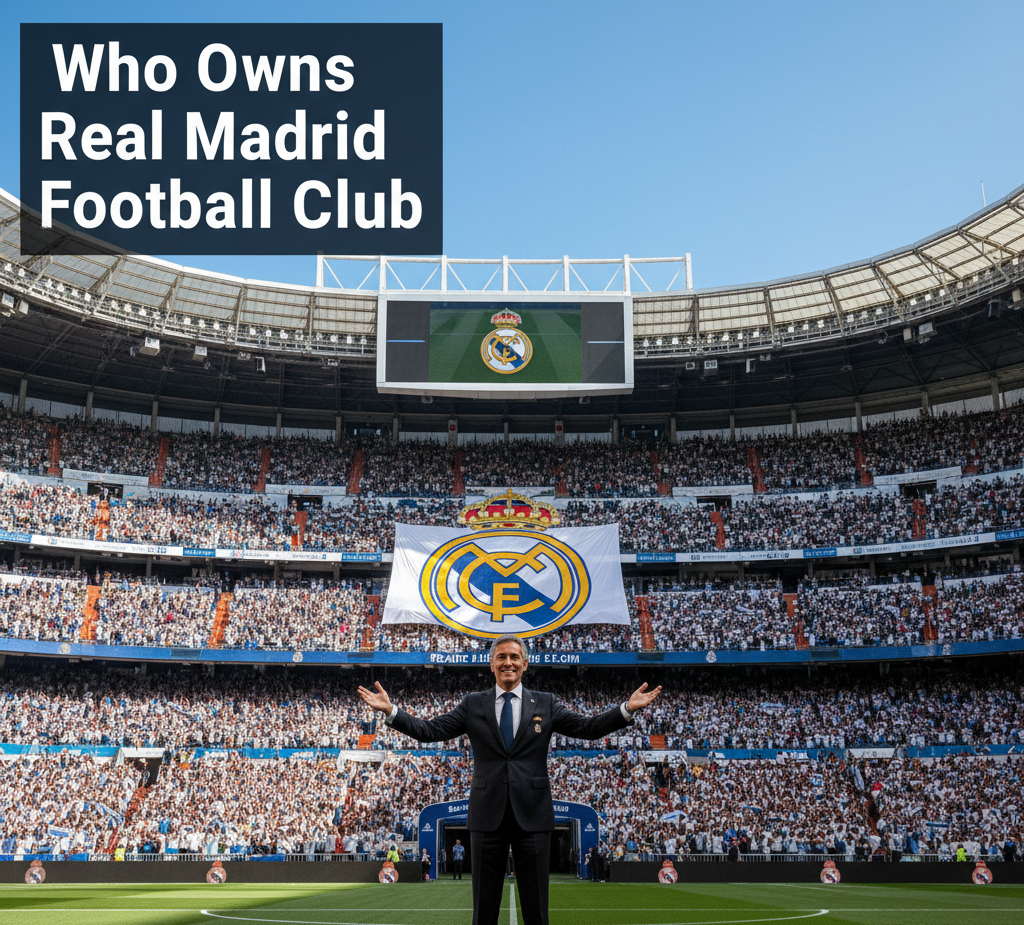
If you’ve ever wondered “who owns Real Madrid football club”, you’re not alone. Real Madrid is one of the most successful and valuable football clubs in the world, known for winning numerous domestic and international titles. But unlike many other clubs, Real Madrid’s ownership structure is unique. In this article, we’ll explain exactly who owns Real Madrid, how the club is run, and why its ownership model sets it apart in world football.
Introduction to Real Madrid Football Club
Real Madrid Club de Fútbol, based in Madrid, Spain, is a giant in the football world. Founded in 1902, the club has a rich history, winning 35 La Liga titles, 14 UEFA Champions League trophies, and multiple domestic cups.
With a global fanbase, state-of-the-art stadium (Santiago Bernabéu), and world-class players, Real Madrid is more than just a football club—it’s a global brand worth billions.
Despite its fame, many fans ask the question: “who owns Real Madrid football club?” Unlike many European clubs, Real Madrid doesn’t have a single private owner or billionaire investor.
Real Madrid’s Unique Ownership Structure
Member-Owned Club (Socios System)
Real Madrid operates under a member-owned system, known in Spain as the “socios” system. This means the club is owned collectively by its registered members, rather than a single private owner or corporate entity.
- Members, called socios, have the right to vote in club elections.
- Socios elect the club president and the board of directors.
- Members pay an annual fee to maintain their membership and voting rights.
In short, Real Madrid belongs to its fans, not a billionaire or corporation. This democratic model is very rare in modern football, especially for a club of this size.
The Role of the Club President
While the socios collectively own the club, the president is the most powerful figure in the organization. The president is elected for a fixed term (usually four years) and manages day-to-day operations, transfers, finances, and strategic decisions.
Some notable presidents in Real Madrid’s history include:
- Santiago Bernabéu (1943–1978): Revolutionized the club, built the Santiago Bernabéu Stadium, and led Real Madrid to numerous domestic and European titles.
- Florentino Pérez (2000–2006, 2009–present): Known for the “Galácticos” era, bringing global superstars like Zidane, Ronaldo, Beckham, and now managing modern transfers and stadium renovations.
The president acts like the club’s CEO, but technically ownership remains with the socios, not the president personally.
How the Socios System Works
The socios system is key to understanding who owns Real Madrid:
- Membership Enrollment: Fans can apply to become socios, paying an annual membership fee.
- Voting Rights: Socios vote in presidential elections. Each member has one vote, giving them influence over club decisions.
- Board of Directors: The president appoints the board, which oversees finances, football operations, marketing, and club strategy.
- Democratic Decisions: Big decisions, such as major stadium renovations or changes in club statutes, often require approval from socios.
This system ensures fan ownership and accountability, which is why Real Madrid has resisted full privatization unlike many other European clubs.
Real Madrid’s Financial Power
Even though the club is fan-owned, it operates like a professional corporation:
- Revenue Streams: Ticket sales, merchandise, broadcasting rights, sponsorships, and player transfers.
- Valuation: Real Madrid is consistently ranked as one of the most valuable football clubs in the world, often exceeding $5 billion in estimated value.
- Salaries and Transfers: Managed carefully by the president and board, using revenue to maintain elite talent while ensuring long-term sustainability.
This combination of fan ownership and corporate-level management makes Real Madrid one of the most stable and powerful clubs globally.
Difference Between Real Madrid and Privately Owned Clubs
Many football clubs, like Chelsea, Manchester City, or Paris Saint-Germain, are owned by billionaires or investment groups. This means a single person or company makes all major decisions.
Real Madrid is different because:
- Decisions are democratically controlled by fans (socios)
- Presidents must answer to voting members
- The club cannot be bought outright by an individual, ensuring long-term fan influence
This model protects the club from risky private ownership, making it unique among top-tier football clubs.
Florentino Pérez: The Face of Real Madrid Ownership
While the socios technically own Real Madrid, Florentino Pérez is the most influential figure today:
- Current president since 2009 (second term)
- Responsible for major player transfers and commercial deals
- Oversees stadium renovations and expansion projects
- Drives the “Galácticos” strategy, signing global superstars
Even though Pérez is not the owner in a legal sense, he effectively manages the club’s operations and strategic vision.
Global Branding and Media Impact
Real Madrid’s ownership and management model also allows it to operate as a global brand:
- Merchandising: Official jerseys and products sold worldwide
- Media Rights: TV broadcasting deals worth hundreds of millions annually
- Tourism: Santiago Bernabéu attracts fans globally
- Digital Presence: Social media accounts with hundreds of millions of followers
All of these factors are carefully overseen by the president and board, ensuring the club maintains its global influence and financial power.
Challenges of the Socios System
While fan ownership has many benefits, it also comes with challenges:
- Decision-making can be slower due to democratic voting
- Large investments may require member approval
- Pressure from fans can influence football decisions
Despite these challenges, the system has worked well for Real Madrid, allowing them to remain successful on and off the pitch for decades.
Why Real Madrid Ownership Matters
Understanding who owns Real Madrid is important because it explains how the club operates differently from other European giants:
- Fan-first approach: Decisions reflect member interests
- Financial stability: Controlled spending and investments
- Long-term vision: Presidents must balance immediate success with club sustainability
This structure has allowed Real Madrid to consistently compete at the highest level while maintaining strong ties to its fanbase.
Conclusion
So, who owns Real Madrid football club? Legally, the club is owned by its members (socios). There is no single private owner. The president, currently Florentino Pérez, manages the club’s operations, finances, and player transfers, but ownership ultimately lies with thousands of registered members who elect the president and approve major decisions.
Real Madrid’s unique ownership model ensures the club stays connected to its fans while operating as a global football powerhouse. It is a rare combination of democracy, professionalism, and world-class success that makes Real Madrid one of the most admired football clubs in history.
FAQs About Real Madrid Ownership
Q1: Can someone buy Real Madrid outright?
No. The club is owned by socios, so it cannot be purchased by a single individual.
Q2: Who elects the club president?
The socios (registered members) vote to elect the president.
Q3: How long is the president’s term?
Typically four years, after which elections are held again.
Q4: Does fan ownership affect transfers?
Yes. Major financial decisions, including transfers, are overseen by the president and board and often need approval from members for large investments.
Q5: How many socios does Real Madrid have?
The club has tens of thousands of registered members worldwide.