
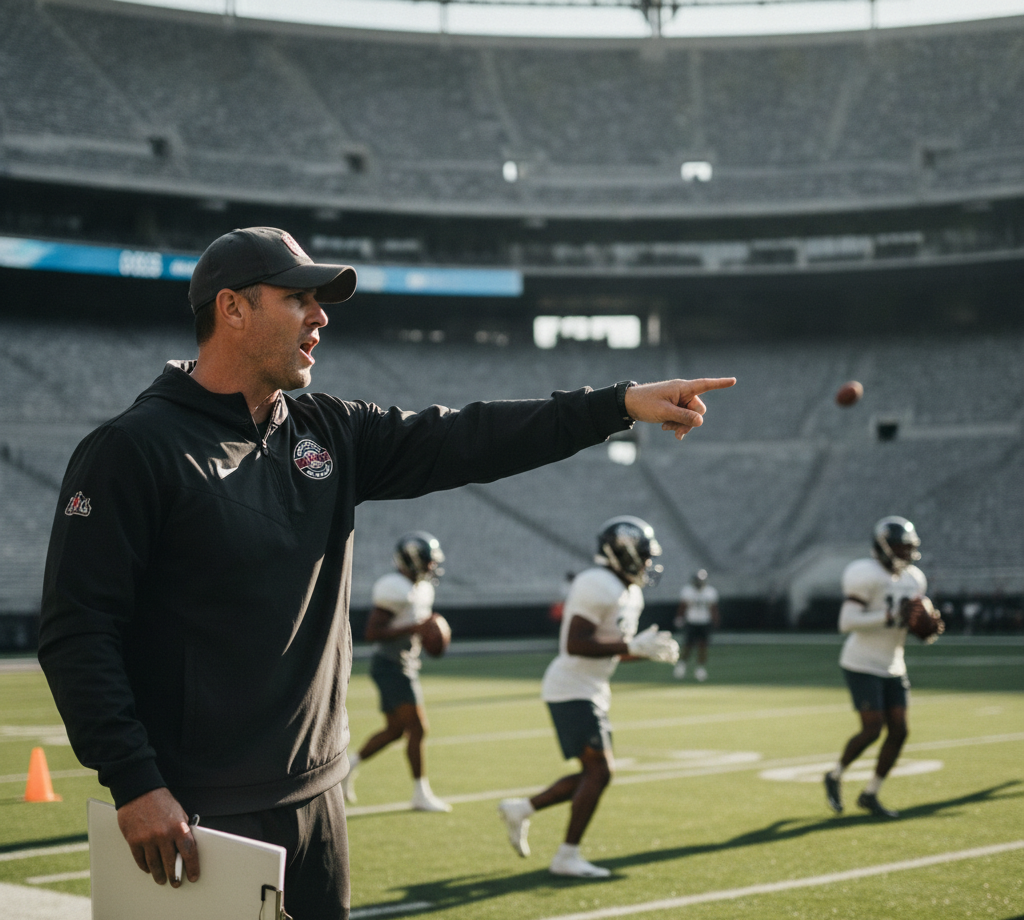
What Is a Football Coach?
A football coach is a professional responsible for guiding players and teams to improve performance through structured training, tactical planning, and match preparation. In modern football, the role extends beyond training sessions and includes leadership, analysis, and long-term player development across all competitive levels.
A football coach works in different environments such as grassroots clubs, academies, schools, semi-professional teams, and professional organizations. Their main responsibility is to design effective training sessions that develop technical skills like passing, shooting, dribbling, and defending while also improving physical fitness and game understanding.
Beyond training, a football coach plays a key role in building team strategy. This includes selecting formations, studying opponents, and making tactical decisions before and during matches. Coaches also evaluate player performance, provide feedback, and adjust training plans to improve weaknesses and strengthen overall team performance.
Key Responsibilities Overview
| Area | Description |
| Training | Designing structured practice sessions |
| Tactics | Creating match strategies and formations |
| Analysis | Reviewing performance and opponents |
| Development | Improving individual player skills |
A modern football coach also focuses on communication and psychology, ensuring players stay motivated, disciplined, and confident throughout the season. This balance of technical and personal development is what separates average coaches from highly successful ones.
Understanding this role is essential before moving into the practical steps of how coaching careers begin, including qualifications and entry pathways into the profession.
What Does a Football Coach Do?
A football coach plays a central role in shaping team performance by combining tactical planning, player development, and match preparation. After understanding what the role involves, it becomes important to break down the real football coach responsibilities that define daily work in this profession.
One of the primary football coach responsibilities is designing and delivering structured training sessions. This includes developing drills that improve technical skills such as passing, shooting, dribbling, and defensive organization, while also ensuring players build fitness and game awareness. Coaches must adapt sessions based on age, skill level, and team objectives.
Another key responsibility is tactical preparation for matches. Coaches analyze opponents, select formations, assign player roles, and adjust strategies based on in-game situations. This requires strong decision-making and the ability to read the flow of a match effectively.
Coaches also manage overall team performance throughout the season. This involves monitoring player progress, reviewing match footage, and providing feedback to improve individual and team outcomes. Effective communication is essential here, as players rely on clear instructions and constructive guidance.
Core Responsibilities Overview
| Area | Description |
| Training Design | Planning drills and practice sessions |
| Tactical Planning | Choosing formations and strategies |
| Performance Analysis | Reviewing matches and player data |
| Player Development | Improving individual skills and mindset |
In addition to these duties, football coach responsibilities include building team discipline, maintaining motivation, and fostering a positive environment where players can grow both technically and mentally.
Understanding these core duties provides a clear foundation for moving forward into the next stage: how to begin building the essential skills every successful coach needs to develop a professional coaching career.
Can You Become a Football Coach Without Playing Professionally?
To become a football coach:
- Learn football basics
- Take coaching courses
- Earn certification
- Volunteer with teams
- Gain match experience
- Build portfolio
- Network
- Apply for jobs
Yes—modern football coaching is no longer limited to former professional players. The coaching pathway today is built around education, certifications, and practical experience, which makes it accessible to anyone passionate about the game. This is why many beginners search for guidance on how to become football coach without playing at a professional level.
The reality is that most football associations prioritize coaching knowledge over playing history. To become football coach without playing, candidates typically start with grassroots certifications and gradually progress through structured football coaching qualifications like UEFA coaching badges. These programs focus on tactics, player development, communication, and match management rather than a player’s past career.
Do You Need Professional Playing Experience?
No, professional playing experience is not a requirement in most coaching systems. While it can be helpful for understanding game situations, it is not essential for success. Many clubs value coaches who demonstrate strong leadership, analytical thinking, and the ability to improve players through structured training methods.
Famous Coaches Without Elite Playing Careers
| Coach | Background Insight |
| José Mourinho | Started as an assistant and analyst before coaching elite clubs |
| Arrigo Sacchi | Never played at top professional level |
| André Villas-Boas | Built career through tactical analysis and coaching education |
These examples show that tactical intelligence and learning ability often outweigh playing experience in modern coaching.
To become football coach without playing, the key focus should be continuous learning, gaining hands-on experience with local teams, and progressing through official coaching licenses. This structured pathway allows beginners to build credibility and move from grassroots levels toward higher competitive coaching roles.
With this foundation understood, the next step is developing the essential skills every successful coach must master to progress in their coaching journey.
Essential Skills Every Football Coach Needs
Building a successful coaching career requires more than just understanding the game; it depends on developing strong football coaching skills that allow you to guide, motivate, and improve players effectively. Once you know that coaching is accessible even without professional playing experience, the next step is focusing on the abilities that truly define a great coach.
One of the most important football coaching skills is leadership. A coach must be able to set direction, build discipline, and inspire players to perform at their best in both training and competitive matches. Strong leadership creates structure and trust within the team environment.
Communication is another critical skill. Coaches must clearly explain tactics, training instructions, and individual feedback in a way that players of different ages and abilities can easily understand. Good communication also includes listening and adapting based on player responses.
Core Coaching Skills Breakdown
| Skill Area | Why It Matters |
| Leadership | Builds discipline and motivation |
| Communication | Ensures clarity in instructions |
| Tactical Understanding | Helps create effective game plans |
| Match Analysis | Improves performance through review |
| Player Development | Focuses on long-term improvement |
Tactical understanding and match analysis are also essential football coaching skills. Coaches must study formations, analyze opponents, and adjust strategies during games. This helps teams stay competitive and make smarter in-game decisions.
Player development is equally important, especially at youth and academy levels. A coach must understand how to improve individual strengths while addressing weaknesses through structured training sessions and personalized feedback.
Together, these abilities form the foundation of effective coaching and determine how quickly a coach can progress through different levels of the game.
With these core skills in place, the next stage is understanding the formal qualifications and licensing system required to advance in professional football coaching.
Football Coaching Qualifications and Licenses Explained
After developing core coaching abilities, the next step in building a professional career is understanding the formal structure of football coaching qualifications. These qualifications provide the pathway from beginner-level coaching to elite professional roles and are essential for working within organized football systems.
Most countries follow a tiered licensing system that ensures coaches progress step by step. These football coaching qualifications focus on tactical knowledge, training methodology, player safety, and long-term development principles. They are designed to help coaches gain both theoretical understanding and practical experience.
Football Coaching License Pathway
| Level | Qualification | Coaching Level |
| Entry | Grassroots Certificate | Youth & beginner coaching |
| Level 1 | UEFA C License | Basic team coaching |
| Level 2 | UEFA B License | Academy & amateur teams |
| Level 3 | UEFA A License | Semi-professional & elite youth |
| Elite | UEFA Pro License | Professional & national teams |
The first step usually begins with grassroots football coaching, where beginners learn how to manage training sessions and work with young players. As coaches progress, they move into UEFA coaching badges such as the UEFA C and UEFA B licenses, which introduce advanced tactics and structured match preparation.
Higher-level football coaching qualifications like the UEFA A and UEFA Pro License focus on elite performance, leadership under pressure, and advanced tactical systems used in professional football.
These qualifications are not just formalities—they ensure coaches can safely and effectively develop players while meeting international coaching standards. They also significantly improve career opportunities across clubs, academies, and national programs.
With a clear understanding of licensing in place, the next important step is learning how to follow a practical roadmap that turns coaching knowledge into real-world experience and career growth.
Step-by-Step Guide to Becoming a Football Coach
Turning knowledge and qualifications into a real career requires a clear roadmap that shows how to become football coach in a practical and structured way. After understanding coaching licenses and certifications, the next step is applying them through real-world experience and continuous development.
The process of how to become football coach begins with learning the fundamentals of the game and then gradually moving into formal education and hands-on coaching roles. Each step builds confidence, improves decision-making, and develops essential coaching habits needed at higher levels.
Step-by-Step Coaching Pathway
| Step | Action | Purpose |
| 1 | Learn football basics | Build game understanding |
| 2 | Join coaching course | Gain structured knowledge |
| 3 | Get first certification | Start official coaching journey |
| 4 | Volunteer locally | Gain real experience |
| 5 | Work match days | Develop tactical awareness |
| 6 | Build portfolio | Showcase experience & skills |
| 7 | Network in football | Access opportunities |
| 8 | Apply for roles | Start paid coaching career |
A key part of learning how to become football coach is gaining practical experience as early as possible. Volunteering with schools, academies, or local clubs allows beginners to apply coaching methods in real training environments and develop communication and leadership skills.
As coaches progress, building a strong portfolio becomes essential. This includes certifications, session plans, match analysis notes, and any coaching achievements. Networking with clubs and football associations also plays a major role in discovering opportunities that are not publicly advertised.
Ultimately, this step-by-step pathway ensures that coaching development is structured, progressive, and aligned with professional standards in football.
With this practical roadmap in place, the next stage is exploring the different coaching opportunities available at various levels of the game.
Coaching Opportunities at Different Levels
Understanding the practical pathway of how to become football coach naturally leads to exploring where this career can actually take you. The football coaching career path is not limited to one level; instead, it offers a structured progression from beginner roles to elite professional opportunities.
The football coaching career path typically starts at grassroots level, where coaches work with young players and focus on basic skill development. As experience grows, coaches move into schools, academies, and competitive youth setups before advancing to semi-professional and professional environments. Each level builds new responsibilities, expectations, and learning opportunities.
Coaching Levels Overview
| Level | Role | Focus Area |
| Grassroots | Beginner Coach | Basic skills & enjoyment |
| School Football | School Coach | Development & discipline |
| Academy Level | Youth Coach | Talent development & tactics |
| Semi-Professional | Competitive Coach | Results & performance |
| Professional | Elite Coach | High-level strategy & management |
At grassroots level, coaches focus on fun, engagement, and foundational skills. In school and academy environments, the football coaching career path becomes more structured, with greater emphasis on tactics, physical development, and long-term player progression.
At semi-professional level, results start to matter more, and coaches must balance player development with competitive performance. Finally, at professional level, coaching becomes highly strategic, involving advanced analysis, media pressure, and full squad management.
Progressing through the football coaching career path requires patience, continuous learning, and progression through official coaching qualifications. Each stage prepares coaches for the demands of the next level, ensuring steady career growth.
With a clear understanding of career opportunities at different levels, the next important step is evaluating the financial side of coaching, including salary expectations and long-term earning potential.
Football Coach Salary and Career Growth
After exploring the different levels of the football coaching career path, it becomes important to understand the financial side of the profession. The football coach salary varies significantly depending on experience, qualifications, location, and the level at which a coach is working.
At the beginning of the journey, many coaches start in volunteer or low-paid roles at grassroots or school level. As experience and football coaching qualifications increase, opportunities for paid positions improve, especially in academies and structured club environments. Progression through coaching licenses also has a direct impact on earning potential.
Football Coach Salary Overview
| Level | Role | Salary Range (Approx.) |
| Entry Level | Grassroots Coach | Low / Volunteer |
| School Level | School Coach | $500 – $2,000/month |
| Academy Level | Youth Coach | $1,500 – $5,000/month |
| Semi-Professional | Club Coach | $3,000 – $10,000/month |
| Professional | Elite Coach | $10,000+ per month |
At academy level, a football coach salary becomes more stable, especially within professional club systems where structured contracts and development programs are in place. Coaches at this stage often receive additional benefits such as training resources and career development support.
At professional level, salaries increase significantly, particularly in top leagues and national teams. However, earnings depend heavily on results, reputation, and coaching credentials such as UEFA coaching licenses.
Several factors influence the football coach salary, including experience, performance record, team success, and geographic region. Coaches with higher qualifications and proven results are more likely to secure higher-paying positions.
Overall, coaching offers strong long-term financial growth for those who continue developing their skills and progressing through the football system.
With a clear understanding of salary and career growth, the next step is exploring the modern tools and technologies that successful coaches use to improve performance and gain a competitive edge.
Modern Tools Used by Successful Football Coaches
After understanding how earnings and progression work in the football coach salary structure, it is equally important to recognize how modern coaching success is increasingly driven by digital innovation. Today, football coaching technology plays a major role in improving performance, decision-making, and player development at every level of the game.
Modern coaches rely on football coaching technology to gain deeper insights into both individual and team performance. These tools help transform traditional coaching methods into data-driven systems that improve accuracy, efficiency, and tactical awareness during training and matches.
Key Modern Coaching Tools
| Tool | Purpose | Benefit |
| Video Analysis Software | Match review & tactical breakdown | Improves decision-making |
| GPS Tracking Systems | Player movement & workload monitoring | Reduces injuries |
| Performance Analytics | Statistical performance review | Identifies strengths/weaknesses |
| Scouting Platforms | Talent identification | Expands recruitment options |
Video analysis software is one of the most widely used forms of football coaching technology, allowing coaches to review matches in detail, highlight tactical errors, and improve future performance. This helps players visually understand their mistakes and correct them more effectively.
GPS tracking systems are also essential, especially in professional environments. They monitor distance covered, sprint speed, and physical workload, helping coaches manage player fitness and prevent injuries over a long season.
Performance analytics tools provide deeper statistical insights into passing accuracy, possession, and tactical efficiency. Meanwhile, scouting platforms help coaches and clubs identify new talent quickly and more accurately than traditional methods.
As football coaching technology continues to evolve, coaches who adapt to these tools gain a significant advantage in developing players and achieving consistent results.
With modern tools understood, the next important area is recognizing the most common mistakes new coaches make and how to avoid them for long-term success.
Common Mistakes New Football Coaches Make
After understanding how football coaching technology improves performance and modernizes training methods, it is equally important to recognize the mistakes that often hold new coaches back. Many beginners overlook simple principles, which is why practical football coaching tips are essential for long-term success in this profession.
One of the most common issues is poor session planning. New coaches often run training without clear objectives, leading to unstructured and ineffective sessions. Following structured football coaching tips such as setting goals for every drill and organizing progressive training blocks helps create more meaningful development for players.
Another major mistake is overcomplicating tactics. Beginners sometimes try to implement advanced systems too early, which confuses players—especially at youth level. Keeping instructions simple, clear, and age-appropriate is one of the most valuable football coaching tips for building understanding and confidence within a team.
Ignoring player psychology is another critical error. Players respond not only to tactics but also to motivation, communication, and emotional support. Coaches who fail to build trust or manage confidence levels often struggle to get consistent performance from their teams.
Weak communication also affects coaching effectiveness. Clear instructions, constructive feedback, and active listening are key to improving teamwork and performance. Without strong communication, even well-planned training sessions lose impact.
Common Mistakes Overview
| Mistake | Impact |
| Poor planning | Ineffective training sessions |
| Overcomplicated tactics | Player confusion |
| Weak communication | Reduced team performance |
| Ignoring psychology | Low motivation & trust |
By applying simple and practical football coaching tips, new coaches can avoid these mistakes and build a stronger foundation for their coaching journey.
With these common challenges in mind, the next step is to address the most frequently asked questions about starting a career in football coaching.
Frequently Asked Questions
After understanding the most common mistakes new coaches make and how to avoid them using practical football coaching tips, it is important to address the key questions beginners often search for. These people also ask queries help clarify doubts about qualifications, timeframes, and career requirements in football coaching.
Frequently Asked Questions
Many beginners rely on people also ask results to understand how the coaching pathway works in real life. Below are the most common questions with clear and practical answers.
How long does it take to become a football coach?
The time varies depending on your goals. You can start coaching at grassroots level within weeks by completing basic courses. However, reaching advanced or professional levels may take several years of experience, training, and progression through coaching licenses.
Do you need a degree to become a football coach?
No, a degree is not mandatory. Most coaching roles focus on practical experience and certifications. However, degrees in sports science or physical education can support long-term development and improve career opportunities.
Can I become a football coach without playing football?
Yes, it is possible. Many successful coaches built their careers through education, coaching qualifications, and experience rather than playing professionally. Tactical knowledge and communication are more important than playing history.
Which coaching license should I get first?
Beginners usually start with a grassroots coaching certificate. After that, they progress to UEFA C, UEFA B, and higher-level football coaching qualifications based on experience and career goals.
How much do football coaches earn?
Earnings depend on level and experience. Entry-level coaches may earn little or volunteer, while professional coaches at top clubs can earn high salaries depending on success and reputation.
These people also ask questions highlight the most important concerns for beginners starting their coaching journey.
With these FAQs clarified, the final step is understanding how to conclude your journey and take the first practical action toward becoming a football coach.
Conclusion
Bringing together everything discussed, the journey of learning how to become football coach is best understood as a structured progression of skills, qualifications, and real-world experience. From foundational knowledge to advanced coaching roles, each stage builds the confidence and competence required to succeed in modern football.
At the core of how to become football coach is continuous development. Starting with grassroots coaching courses, gaining practical experience with local teams, and progressing through official coaching licenses helps create a strong professional foundation. Alongside this, developing communication, leadership, and tactical understanding ensures long-term success in different coaching environments.
Key Takeaways Summary
| Area | Focus |
| Education | Coaching courses & certifications |
| Experience | Local clubs, schools, academies |
| Skills | Leadership, tactics, communication |
| Progression | Licensing pathway & career growth |
The most important step is to start early and stay consistent. Many aspiring coaches delay action because they overthink qualifications or career pathways. However, real progress in how to become football coach comes from taking practical steps—volunteering, learning from experienced coaches, and gradually building a coaching portfolio.
As experience grows, opportunities expand from youth coaching to academy, semi-professional, and eventually professional levels. Each stage brings new challenges, but also greater rewards in terms of responsibility, recognition, and career growth.
Ultimately, football coaching is not just a job but a long-term development journey. Those who remain committed, keep learning, and adapt to modern coaching methods will find the most success in this competitive field.
With a clear understanding of the full pathway, the final step is to take action and begin your own football coaching journey today.