
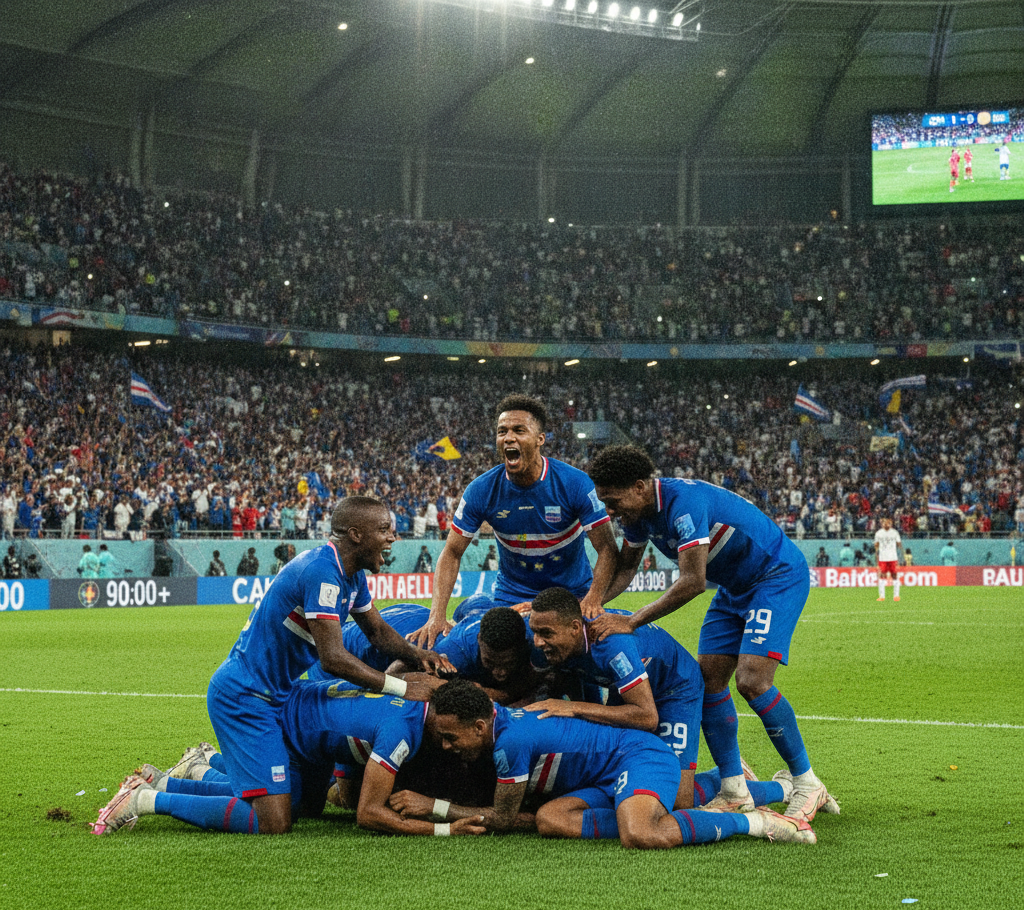
When football fans think about African football, countries such as Senegal, Morocco, Egypt, and Nigeria usually receive most of the attention. Cape Verde, a small island nation in the Atlantic Ocean, rarely enters the conversation among casual fans.
That makes their rise even more remarkable.
With a population of roughly half a million people, Cape Verde has managed to compete against nations with significantly larger populations, stronger domestic leagues, and greater financial resources. While many small countries struggle to make an impact on the international stage, Cape Verde has built a reputation as a disciplined and difficult team to beat.
Their progress has not been based on luck. It has been driven by long-term planning, effective player development, and smart recruitment strategies.
The Key Turning Point in Cape Verde Football
For many years, Cape Verde was not considered a major force in African football.
One of the biggest changes came when the football federation began strengthening connections with players of Cape Verdean heritage living abroad. Many talented footballers with family roots in Cape Verde were developing through professional academies in Portugal, France, the Netherlands, and Belgium.
This expanded the available talent pool dramatically.
Instead of relying solely on local players, Cape Verde successfully combined domestic talent with players gaining experience in some of Europe’s most competitive football environments.
The result was a stronger and more competitive national team.
What Makes Cape Verde Difficult to Play Against?
Many football fans assume successful teams must have world-famous stars.
Cape Verde proves otherwise.
Their success is often built around three important strengths:
Defensive Organization
Cape Verde is known for maintaining a compact defensive structure.
Players stay disciplined, limit space between defensive lines, and make it difficult for opponents to create clear scoring opportunities.
This tactical discipline has helped them compete against teams with greater individual talent.
Teamwork Over Individual Stars
Unlike some national teams that rely heavily on one or two key players, Cape Verde often succeeds because of collective effort.
Every player contributes both offensively and defensively.
This balanced approach makes the team less predictable.
Effective Counterattacks
Cape Verde frequently uses quick transitions from defense to attack.
After winning possession, players move the ball forward rapidly, creating dangerous opportunities against opponents who are caught out of position.
Memorable Africa Cup of Nations Performances
The Africa Cup of Nations has played a major role in increasing Cape Verde’s international reputation.
Several tournament appearances demonstrated that the team could compete with established African football powers.
Rather than simply participating, Cape Verde regularly challenged stronger opponents and advanced further than many experts predicted.
These performances helped change perceptions of the national team across Africa and beyond.
Lessons Other Small Football Nations Can Learn
Cape Verde’s journey offers valuable lessons for countries with limited resources.
Focus on Long-Term Development
Sustainable success rarely happens overnight.
Cape Verde invested in player development and scouting rather than searching for quick fixes.
Use Global Connections
Many countries have talented players living abroad.
Cape Verde successfully integrated diaspora players into the national team setup.
Build a Clear Playing Identity
One reason for Cape Verde’s consistency is that the team generally understands how it wants to play.
Strong organization often compensates for limited resources.
Common Misconceptions About Cape Verde Football
“They Are Just a Small Team”
Population size does not always determine football success.
Several countries with much larger populations have struggled to achieve the consistency that Cape Verde has shown in recent years.
“They Depend on Luck”
Consistent performances in major competitions are rarely the result of luck.
Cape Verde’s success reflects preparation, coaching, scouting, and tactical discipline.
“They Don’t Produce Quality Players”
Many Cape Verdean players have competed in respected European leagues and gained valuable professional experience.
Why Football Fans Should Follow Cape Verde
For fans who only watch the biggest football nations, Cape Verde offers something different.
The team represents one of the best examples of how intelligent planning and teamwork can overcome limitations.
Watching Cape Verde can also help newer football fans appreciate tactical aspects of the game, including:
- Defensive positioning
- Pressing systems
- Counterattacking strategies
- Team organization
- Player development pathways
These elements are often easier to see in well-structured teams than in star-driven squads.
Frequently Asked Questions
Why is Cape Verde called the Blue Sharks?
The nickname “Blue Sharks” reflects the country’s close connection to the Atlantic Ocean and has become an important symbol of the national team.
Has Cape Verde qualified for the FIFA World Cup?
Cape Verde has not yet qualified for a FIFA World Cup, but the nation has become increasingly competitive during qualification campaigns.
Why do many Cape Verde players play in Europe?
Historical connections with countries such as Portugal have helped many Cape Verdean players develop through European football academies and professional clubs.
What is Cape Verde’s biggest football achievement?
Many football observers consider the team’s strong performances in Africa Cup of Nations tournaments among its most significant achievements.
Is Cape Verde football still improving?
Yes. Continued investment in player development, scouting, and international competition suggests that Cape Verde can remain competitive for years to come.
Final Thoughts
Cape Verde football demonstrates that success is not always determined by population size, financial resources, or global recognition. Through smart planning, strong team culture, and effective player development, the country has earned respect across African football.
Their story remains one of the most impressive examples of how a small nation can compete with much larger football powers and continue exceeding expectations on the international stage.