
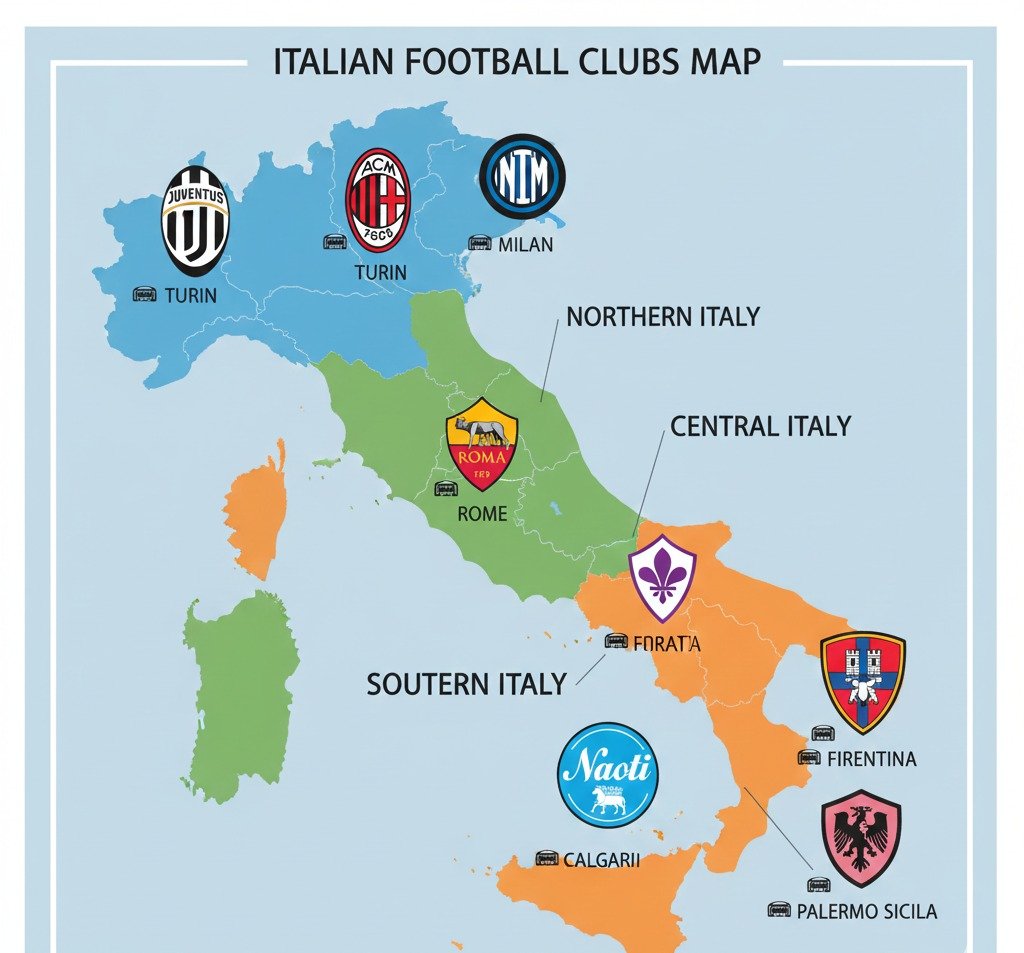
Italy is a nation with a rich footballing history, famous for its passionate fans, legendary players, and world-class clubs. From Serie A giants like Juventus, AC Milan, and Inter Milan to smaller regional teams, football is deeply embedded in Italian culture. Understanding the football clubs in Italy geographically is crucial for fans, analysts, and enthusiasts who want a complete picture of Italian football.
In this guide, we will explore the map of football clubs in Italy, their locations, league placements, and some interesting historical and cultural facts. This article is perfect for fans who want to combine their love for football with a sense of geography.
Italian Football Structure Overview
Italian football is organized into a hierarchical league system. The top four levels are:
Serie A – The top tier, home to elite clubs such as Juventus, AC Milan, Inter Milan, and AS Roma.
Serie B – The second tier, featuring clubs aspiring to reach Serie A.
Serie C – The third tier, divided into regional groups to reduce travel for smaller clubs.
Serie D – The semi-professional fourth tier, heavily regionalized.
Knowing the league system helps in understanding the locations and significance of each football club on the map of Italy.
Football Clubs in Northern Italy
Northern Italy is home to many of Italy’s most famous and historic clubs. The region is economically strong, and football clubs benefit from solid financial backing.
Juventus (Turin, Piedmont)
Founded in 1897
Home stadium: Allianz Stadium
Known for: Multiple Serie A titles, domestic dominance
Map location: Northwest Italy
AC Milan (Milan, Lombardy)
Founded in 1899
Home stadium: San Siro
Known for: European successes, 7 UEFA Champions League titles
Map location: Northern Italy, near the Swiss border
Inter Milan (Milan, Lombardy)
Founded in 1908
Home stadium: San Siro (shared with AC Milan)
Known for: Serie A dominance and international trophies
Torino FC (Turin, Piedmont)
Founded in 1906
Rival of Juventus (Derby della Mole)
Atalanta (Bergamo, Lombardy)
Known for: Strong youth academy and Champions League qualification
Map location: Northeastern Lombardy
Other notable clubs in the North include Hellas Verona, Genoa, and Sampdoria (Liguria).
Football Clubs in Central Italy
Central Italy features historic clubs with a blend of success and cultural heritage. This region includes Tuscany, Lazio, and Umbria.
AS Roma (Rome, Lazio)
Founded in 1927
Home stadium: Stadio Olimpico
Known for: Derby della Capitale against Lazio, passionate fanbase
SS Lazio (Rome, Lazio)
Founded in 1900
Home stadium: Stadio Olimpico
Rivalry: AS Roma
Fiorentina (Florence, Tuscany)
Founded in 1926
Home stadium: Stadio Artemio Franchi
Known for: Purple kits and European campaigns
Perugia (Umbria)
Founded in 1905
Participates in Serie B, known for youth development
Other clubs include Siena, Livorno, and Pescara (Abruzzo).
Football Clubs in Southern Italy
Southern Italy and the islands (Sicily, Sardinia) have clubs with passionate local followings. While historically less dominant than Northern clubs, some have achieved national success.
Napoli (Naples, Campania)
Founded in 1926
Home stadium: Stadio Diego Armando Maradona
Known for: Diego Maradona era, passionate fanbase
Palermo (Sicily)
Founded in 1900
Plays in Serie B or C historically, representing Sicilian football
Cagliari (Sardinia)
Founded in 1920
Home stadium: Sardegna Arena
Notable achievement: Serie A champions in 1969–70
Other Southern clubs: Bari, Lecce, Foggia, Reggina.
Using a Map to Explore Italian Football Clubs
A map of football clubs in Italy is a valuable tool for fans:
Geographical awareness: Understand the regional rivalries
Travel planning: Useful for fans visiting stadiums
Historical context: Locate clubs with cultural significance
Football analytics: Examine patterns of success by region
Tips for using the map:
Northern Italy has a high density of clubs in Lombardy, Piedmont, and Veneto.
Central Italy clubs are fewer but historically significant.
Southern Italy and islands have passionate fanbases but fewer top-tier clubs.
Rivalries Highlighted on the Map
Italian football is famous for intense rivalries. A club map helps illustrate their locations:
Derby della Madonnina: AC Milan vs Inter Milan (Milan)
Derby della Capitale: AS Roma vs Lazio (Rome)
Derby della Mole: Juventus vs Torino (Turin)
Sicilian Derby: Palermo vs Catania (Sicily)
Geography plays a key role in these rivalries, with proximity fueling fan passions.
How Geography Affects Italian Football
Italy’s varied geography influences football culture:
Northern Italy: Wealthy, industrial regions with top clubs
Central Italy: Historic cities with iconic stadiums
Southern Italy: Passionate, community-centered clubs
Islands (Sicily, Sardinia): Limited but fiercely loyal fanbases
Elevation, climate, and transport connectivity also affect club logistics, training, and fan attendance.
Conclusion
A map of football clubs in Italy is more than a tool—it is a window into the country’s rich football culture. From Northern giants like Juventus and AC Milan to Southern gems like Napoli and Cagliari, Italian football offers diversity, passion, and history.
Whether you are a fan exploring the Serie A, a traveler planning stadium visits, or a football analyst, understanding the geographical distribution of Italian clubs enhances your appreciation of the beautiful game in Italy.
Next time you watch a match or plan a football tour, consult a map of football clubs in Italy to fully immerse yourself in the country’s football culture.