
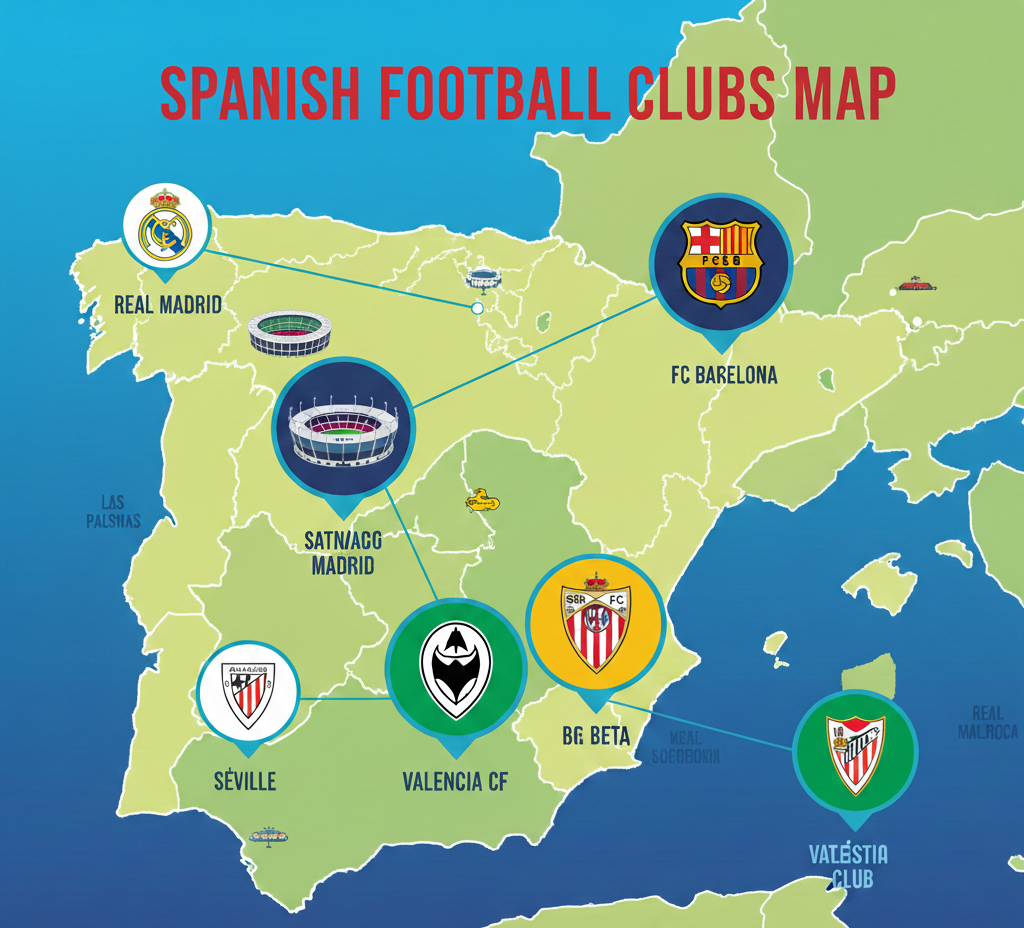
Football is more than just a sport in Spain — it is a way of life. From bustling cities to small towns, football clubs play a central role in shaping regional identity, fan culture, and community pride. Understanding the Spanish football clubs map gives fans, sports enthusiasts, and travelers insight into the geographic distribution of Spain’s football clubs and how location influences rivalries, style of play, and cultural significance.
In this article, we will explore the distribution of Spain’s football clubs, discuss major teams and their regions, analyze regional footballing cultures, and explain why geography plays a key role in the country’s football identity.
The Geographic Spread of Spanish Football Clubs
Spain’s football is organized into multiple tiers, with La Liga at the top, followed by Segunda División and several lower divisions. Clubs are located across the country, from the urban centers of Madrid and Barcelona to smaller cities like Villarreal, Pamplona, and Vigo.
Mapping these clubs highlights how football is woven into the social and cultural fabric of Spain. Some regions, such as Madrid, Catalonia, Andalusia, and the Basque Country, are football powerhouses with multiple top-tier clubs. Other areas, like Galicia and the Balearic Islands, host clubs that, while smaller, maintain passionate local followings.
The geographic distribution of clubs not only reflects population density but also the history and traditions of football in each region. Spain’s football map is therefore as much about culture as it is about location.
Major La Liga Clubs and Their Locations
Real Madrid – Madrid
One of the most famous clubs in the world, Real Madrid is based in Spain’s capital. Its iconic stadium, Santiago Bernabéu, is a symbol of both football excellence and Spanish sporting heritage. Real Madrid’s influence extends beyond Spain, but its local presence makes it central to the Madrid football scene.
FC Barcelona – Barcelona
Located in Catalonia, FC Barcelona represents not just a city but an entire region. Camp Nou, the club’s stadium, is a landmark of football history, and the team is known for its distinct playing style and Catalan identity.
Atlético Madrid – Madrid
Sharing the capital with Real Madrid, Atlético Madrid brings its own unique style and passionate fanbase. Known for resilience and tactical discipline, Atlético represents the competitive spirit of Madrid football.
Sevilla FC – Seville
In southern Spain, Sevilla FC embodies Andalusian pride. Its passionate supporters, historic stadium, and competitive performance make it a central figure in southern Spain’s football landscape.
Real Betis – Seville
Also from Seville, Real Betis has one of the most vibrant and loyal fanbases in Spain. The rivalry between Sevilla FC and Real Betis is one of the country’s most exciting football derbies, showcasing the impact of local geography on fan culture.
Valencia CF – Valencia
On Spain’s eastern coast, Valencia CF represents the city of Valencia. Known for its iconic Mestalla stadium, the club has a long history and a strong regional following, contributing to the football map in eastern Spain.
Villarreal CF – Villarreal
A small town club that has risen to prominence, Villarreal CF is a testament to the power of local support and strategic management. Despite its size, Villarreal competes at high levels in Spain and Europe, representing the broader reach of Spanish football.
Athletic Bilbao – Bilbao
From the Basque Country, Athletic Bilbao is famous for its policy of using only local players. This approach strengthens regional identity and emphasizes the cultural connection between football and the Basque people.
Real Sociedad – San Sebastián
Also in the Basque Country, Real Sociedad showcases northern Spain’s football culture. Both the city and the club contribute to the diversity of Spain’s football map.
Celta de Vigo – Vigo
Celta de Vigo brings professional football to Galicia in the northwest. The club has a devoted local following and provides northern Spain with representation in top-flight football.
Osasuna – Pamplona
Osasuna, based in the northern city of Pamplona, adds to Spain’s football diversity. Its loyal fanbase and strong regional identity make it an important part of the Spanish football clubs map.
Rayo Vallecano – Madrid
Another Madrid club, Rayo Vallecano represents the working-class neighborhoods of the capital, highlighting the social diversity within the city’s football culture.
Getafe CF – Getafe
Located in the Madrid metropolitan area, Getafe CF contributes to the city’s competitive landscape and regional rivalries.
Girona FC – Girona
From Catalonia’s northeastern region, Girona FC has been making steady progress in Spain’s top division, showcasing the growing influence of smaller regions in national football.
UD Almería – Almería
Almería, in southeastern Spain, represents Andalusia on the top-flight football map, emphasizing regional diversity and competitive balance.
RCD Mallorca – Palma de Mallorca
Mallorca brings top-level football to the Balearic Islands, demonstrating that Spain’s football culture extends beyond the mainland.
Understanding Regional Football Cultures
Madrid Region
Home to multiple clubs, Madrid is a hub of football rivalry and talent. Real Madrid, Atlético Madrid, and smaller clubs make the city a competitive center in Spain.
Catalonia
Barcelona and Girona represent Catalonia. Football here reflects Catalan identity, pride, and technical playing styles.
Andalusia
Sevilla and Almería highlight southern Spain’s passion for football. Local derbies and vibrant fan culture define the region.
Basque Country
Athletic Bilbao and Real Sociedad show how football can preserve regional identity and emphasize homegrown talent.
Valencian Community
Valencia and Villarreal demonstrate how smaller towns can have a significant impact on national football through dedicated local support.
Galicia
Celta de Vigo represents Galicia, showing the importance of northern Spain in the national football map.
Stadiums and Geographic Significance
Stadiums are central to a club’s identity and add geographic depth to the football map:
Santiago Bernabéu – Madrid
Camp Nou – Barcelona
Mestalla – Valencia
Wanda Metropolitano – Madrid
Ramón Sánchez-Pizjuán – Sevilla
San Mamés – Bilbao
These stadiums not only host football matches but also serve as cultural landmarks that anchor clubs to their regions.
Football Rivalries Shaped by Geography
Spanish football rivalries are deeply influenced by geography:
El Clásico – Real Madrid vs. FC Barcelona: national rivalry, regional pride
Seville Derby – Sevilla FC vs. Real Betis: city-based rivalry, passionate fan culture
Basque Derby – Athletic Bilbao vs. Real Sociedad: regional pride and identity
Valencian Derby – Valencia CF vs. Villarreal CF: eastern coastal rivalry
These rivalries reflect local history, geography, and fan loyalty.
Conclusion
The Spanish football clubs map is more than a tool for locating teams. It is a reflection of Spain’s regional diversity, cultural heritage, and the deep connection between football and society. From major cities like Madrid and Barcelona to smaller towns like Villarreal and Pamplona, football clubs define communities, inspire fans, and create one of the most exciting football landscapes in the world.
Understanding the geography of Spanish football enhances appreciation for the sport, the rivalries, and the unique identities that each region brings to the national football culture. For fans, analysts, and travelers alike, the Spanish football clubs map is an essential guide to the heartbeat of football in Spain.