
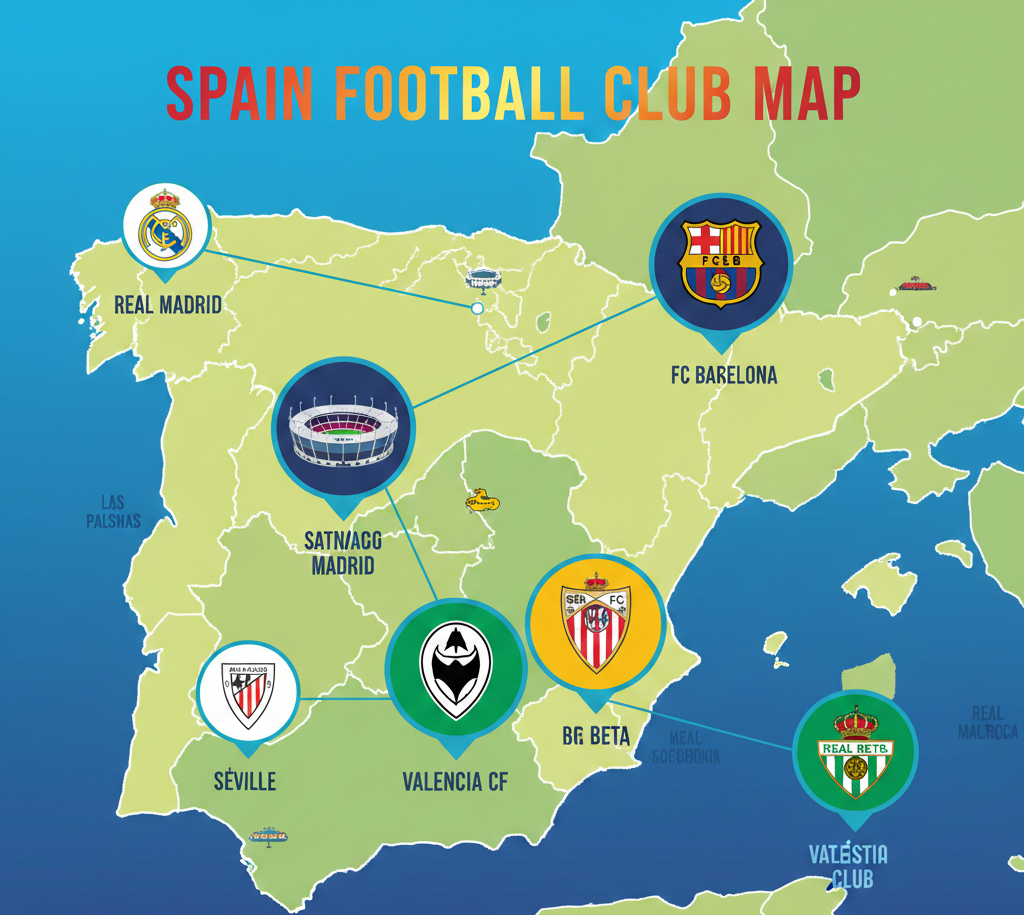
Spain is one of the most iconic footballing nations in the world, with a rich history, passionate fans, and legendary clubs. From the historic grounds of Santiago Bernabéu to the bustling Camp Nou, Spanish football is not just a sport — it’s a culture that defines cities, regions, and even entire communities. Understanding the Spain football club map allows fans and enthusiasts to see how football is geographically spread across the country and how it shapes local identity, rivalries, and fan culture.
In this article, we will explore the distribution of Spain’s football clubs, highlight the most important teams, discuss regional footballing identities, and show why geography plays a key role in the nation’s footballing story.
The Geographic Spread of Spanish Football Clubs
Football in Spain is organized in multiple tiers, with La Liga at the top, followed by the Segunda División, and several lower divisions. Each tier represents a different level of competitiveness and fan engagement, but geography plays a constant role across all levels.
Spain’s football clubs are distributed across its major cities and regions. Urban centers like Madrid and Barcelona are home to multiple clubs, while regions such as the Basque Country, Catalonia, and Andalusia have strong footballing cultures that reflect local identity. Even smaller towns contribute to the football ecosystem with clubs that compete professionally and foster passionate communities.
Mapping these clubs helps fans understand the rivalries, cultural differences, and local pride that make Spanish football unique.
Major Football Clubs in Spain
Real Madrid – Madrid
Real Madrid is not just a football club; it is a global institution. Located in Spain’s capital, the club has a worldwide fanbase, a history of success in domestic and European competitions, and one of the most famous stadiums in the world, Santiago Bernabéu. Real Madrid represents the national and international spotlight of Spanish football, combining excellence with a storied legacy.
FC Barcelona – Barcelona
FC Barcelona, based in Catalonia, is equally iconic. Known for its motto “Més que un club” (More than a club), Barcelona represents Catalan culture and pride. Camp Nou, its stadium, is one of the largest in Europe and a symbol of the city itself. Barcelona is also recognized globally for its style of play and contribution to Spanish football identity.
Atlético Madrid – Madrid
Sharing the capital with Real Madrid, Atlético Madrid is known for its resilience, strong defensive play, and dedicated fanbase. Atlético brings a competitive balance to Madrid’s football scene and is famous for its passionate atmosphere during home games at Wanda Metropolitano.
Sevilla FC – Sevilla
From Andalusia’s largest city, Sevilla FC has a long-standing history and one of the most passionate fanbases in Spain. Sevilla represents the southern spirit of Spanish football, blending local identity with competitive excellence in La Liga and European competitions.
Real Betis – Sevilla
Also based in Sevilla, Real Betis showcases the city’s vibrant football culture. Known for its colorful fans and strong local support, Betis shares a historic rivalry with Sevilla FC that is considered one of the most exciting derbies in Spain.
Valencia CF – Valencia
Valencia CF is located in eastern Spain and represents one of the most important footballing cities outside Madrid and Barcelona. The club has a rich history, and its stadium, Mestalla, is iconic. Valencia’s presence highlights the importance of football culture along Spain’s Mediterranean coast.
Villarreal CF – Villarreal
Despite being from a relatively small town, Villarreal CF has made a significant impact in Spanish football. Known as “The Yellow Submarine,” Villarreal consistently competes in European competitions and demonstrates how smaller regions can produce top-level football clubs.
Athletic Bilbao – Bilbao
Athletic Bilbao, from the Basque Country, is renowned for its unique policy of recruiting only local talent. This philosophy strengthens regional identity and pride while maintaining a competitive presence in La Liga. The club’s stadium, San Mamés, is a fortress of Basque football.
Real Sociedad – San Sebastián
Also from the Basque region, Real Sociedad highlights northern Spain’s football culture. The club has a loyal following and has contributed significantly to Spanish football’s competitive depth.
Regional Distribution and Footballing Culture
Spanish football is deeply tied to regional identity. Different regions have distinct styles, traditions, and levels of fan engagement:
Madrid Region: Home to Real Madrid, Atlético Madrid, and other smaller clubs. The city is the epicenter of Spanish football rivalry and global recognition.
Catalonia: FC Barcelona dominates, but smaller clubs like RCD Espanyol provide intra-city rivalries and cultural richness. Catalan football reflects a style that emphasizes skill and tactical intelligence.
Andalusia: With clubs like Sevilla FC and Real Betis, Andalusia boasts passionate fans and historic derbies that are deeply tied to local identity.
Basque Country: Athletic Bilbao and Real Sociedad represent regional pride, local talent development, and unique football philosophies.
Valencian Community: Valencia CF and Villarreal CF showcase football culture along Spain’s eastern coast, emphasizing technical skill and community support.
The map of Spanish football clubs is not only about location; it reflects centuries of culture, identity, and competition.
The Role of Stadiums in Spanish Football Geography
Football stadiums are central to a club’s identity. They are landmarks, meeting points, and symbols of local pride. Some of the most famous stadiums in Spain include:
Santiago Bernabéu (Real Madrid)
Camp Nou (FC Barcelona)
Mestalla (Valencia CF)
Wanda Metropolitano (Atlético Madrid)
Estadio Ramón Sánchez-Pizjuán (Sevilla FC)
San Mamés (Athletic Bilbao)
Each stadium contributes to the football landscape of Spain, reinforcing the geographic importance of clubs and their cities.
Football Rivalries Shaped by Geography
Geography plays a key role in Spanish football rivalries:
El Clásico: Real Madrid vs. FC Barcelona — a national rivalry that also symbolizes regional and cultural differences.
Seville Derby: Sevilla FC vs. Real Betis — a city rivalry fueled by local pride.
Basque Derby: Athletic Bilbao vs. Real Sociedad — a regional rivalry emphasizing Basque identity.
Valencian Derby: Valencia CF vs. Villarreal CF — coastal competition highlighting regional dominance.
These rivalries are more than games; they reflect history, identity, and the social geography of Spain.
Mapping the Future: Emerging Clubs and Regional Growth
While traditional clubs dominate, Spain’s football landscape continues to evolve. Clubs from smaller cities are rising through the ranks, demonstrating that talent and passion exist beyond traditional powerhouses. The Spain football club map is constantly shifting as these teams gain recognition, contributing to competitive balance and regional development.
Conclusion
The Spain football club map is a reflection of more than just geography. It tells the story of culture, history, rivalry, and identity. From the capital of Madrid to the coastal cities of Valencia and the northern Basque region, football in Spain is an integral part of life.
Understanding the locations of clubs, the regions they represent, and their cultural significance provides fans with a richer appreciation of Spanish football. Every stadium, every city, and every club adds a unique piece to the intricate map of football in Spain.
Whether you are a fan planning a football tour, a student of sports geography, or simply someone who loves football, exploring Spain’s football club map offers a window into the heart of one of the world’s greatest footballing nations.