
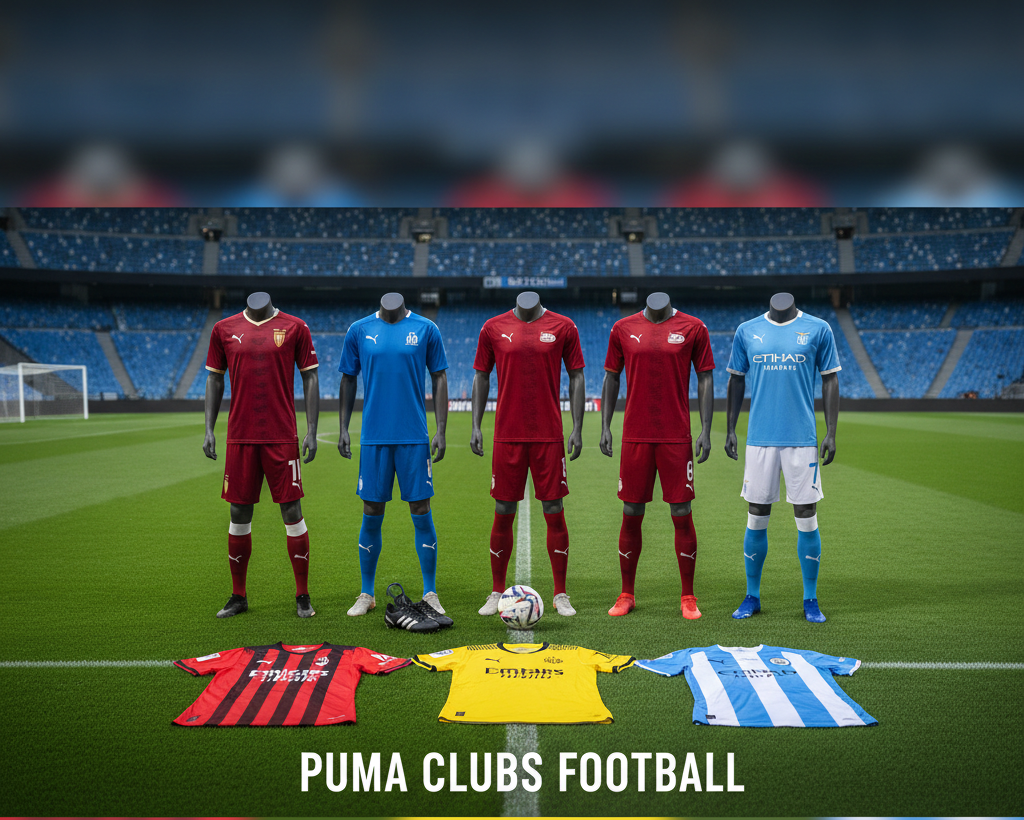
The term “puma clubs football” refers to professional football teams that are sponsored or officially outfitted by Puma, one of the world’s leading sportswear brands. In the competitive world of football, kit manufacturers like Puma play a critical role in outfitting teams, shaping club identity, powering performance on the pitch, and connecting fans with the sport.
Puma’s impact on football stretches from elite Europe’s top leagues to national teams and clubs in every continent. This article explores what puma clubs football means, how Puma partners with top clubs, examples of major Puma-sponsored teams, and why these partnerships matter.
What Does “Puma Clubs Football” Mean?
“Puma clubs football” refers to football teams that wear Puma kits and gear as their official apparel provider. This includes:
Matchday jerseys (home, away, third kits)
Training and warm-up apparel
Official fan merchandise
Sports equipment and accessories
These partnerships go beyond just supplying uniforms — Puma often collaborates with clubs on marketing, product innovation, fan engagement, and co-branded campaigns. The presence of Puma on a club’s shirt is a powerful symbol of cooperation between an apparel brand and football culture.
Puma’s Role in Global Football
Puma is one of the oldest and most recognized sportswear brands in the world. In football, Puma competes alongside other major brands such as Nike and Adidas for sponsorship and kit manufacturing deals. Recent trends show Puma increasing its footprint, not just through individual club deals but through strategic partnerships that include club networks and global football groups.
Puma has signed extensive kit supply deals with clubs across Europe, South America, Asia, Africa, and Oceania, solidifying its role in both club identity and global football visibility.
Puma and City Football Group: A Landmark Partnership
One of Puma’s most significant moves in football was the global partnership with City Football Group (CFG). Since July 2019, Puma has been the official kit supplier for Manchester City FC, one of the most successful clubs in the English Premier League.
But it doesn’t end there. That agreement expanded to cover multiple CFG clubs worldwide, including:
Manchester City (England)
Melbourne City FC (Australia)
Girona FC (Spain)
Lommel SK (Belgium)
Montevideo City Torque (Uruguay)
Sichuan Jiuniu FC (China)
Mumbai City FC (India)
Club Atlético Palermo (Argentina)
This large-scale partnership is one of the biggest Puma has ever agreed, both in ambition and global reach, allowing Puma to deliver kits, training gear, and merchandise across continents.
In addition, highly lucrative extensions keep Puma tied with City Football Group through 2035, cementing Puma’s influence in elite football.
Examples of Major Puma Clubs in World Football
Puma’s presence in club football is broad, but some partnerships stand out due to prestige, history, or commercial impact.
1. Manchester City FC (England)
Manchester City’s partnership with Puma is one of football’s most high-profile kit deals. Puma supplies all official kits and training gear for the club, including men’s, women’s, and youth teams.
City’s success in the Premier League and Europe makes it a visible flagship for Puma, strengthening the brand’s global reach.
2. Borussia Dortmund (Germany)
German powerhouse Borussia Dortmund has been a Puma partner since the early 2010s. Their long-standing collaboration reflects one of Puma’s deepest football relationships, emphasizing product innovation and fan culture.
3. AC Milan (Italy)
The legendary Italian club AC Milan also wears Puma kits. This partnership elevates Puma’s presence in Serie A and has global marketing significance due to Milan’s worldwide fanbase.
4. Olympique de Marseille (France)
French club Olympique de Marseille is another well-known Puma club. Puma’s partnership here brings modern technical design to one of Ligue 1’s traditional giants.
5. PSV Eindhoven (Netherlands)
PSV Eindhoven in the Dutch Eredivisie is also part of Puma’s club network, which strengthens Puma’s presence in the Netherlands and highlights the brand’s reach across multiple European leagues.
6. Valencia CF (Spain)
Spanish La Liga club Valencia CF represents Puma in one of Europe’s top leagues. This partnership provides kits and apparel while connecting Puma with Spanish football culture.
7. Palmeiras (Brazil)
In South America, Sociedade Esportiva Palmeiras is one of Puma’s marquee partnerships. This relationship extends Puma’s influence into the beloved and competitive Brazilian football ecosystem.
8. Galatasaray SK (Turkey)
Puma’s reach also includes Turkish football, with Galatasaray SK one of the prominent teams wearing Puma kits, increasing Puma’s visibility in competitive domestic and European competitions.
9. Shakhtar Donetsk (Ukraine)
Ukrainian club Shakhtar Donetsk partners with Puma, demonstrating Puma’s involvement in Eastern European football markets and continental competitions.
10. Additional Puma Clubs Worldwide
Beyond Europe and South America, Puma also outfits clubs like Maccabi Tel Aviv (Israel), Universidad Católica (Chile), Club Cerro Porteño (Paraguay), Bengaluru FC (India), and many others, highlighting the brand’s global footprint.
These examples show how puma clubs football spans across leagues, continents, and competitive levels, making Puma a global football brand.
What Puma Provides to Football Clubs
Partnering with Puma usually involves more than just supplying kits. Clubs benefit from:
1. Customized Kit Design
Puma collaborates closely with clubs to design unique home, away, and third kits that reflect identity, history, and fan expectations.
2. Performance Gear
Training kits, warm-up wear, and competition apparel are engineered for top-level performance.
3. Merchandise and Revenue
Official fan merchandise — jerseys, scarves, and accessories — boosts club income and fan engagement.
4. Marketing and Activation
Puma often co-creates campaigns with clubs, amplifying social media reach and brand excitement.
These components make Puma partnerships valuable both on and off the field.
Puma’s Strategy and Position in Football Apparel
Puma positions itself aggressively in football through partnerships, innovative design, and strategic deals. According to recent analysis, Puma sponsors more top-league clubs than many rival brands, leading in the count of teams sponsored across the top five European leagues.
This places Puma ahead of other heritage brands in terms of sheer quantity and variety of clubs in elite competitions — from Bundesliga to La Liga to Serie A — making puma clubs football a broad and impactful phenomenon.
The Future of Puma in Football
Puma’s forward strategy in football includes expanding relations with club networks, entering new markets, and signing long-term deals that secure both parties’ growth. The extended partnership with City Football Group until 2035 is a major indicator of Puma’s long-term ambition in football.
Emerging markets, fan collaborations, and innovation in kit technology will continue to shape Puma’s role in football.
Conclusion: Why Puma Clubs Football Matters
“Puma clubs football” is more than just a list of teams — it represents how a major sports brand influences the football world. By partnering with iconic clubs, global networks, and rising teams, Puma has embedded itself deeply into professional football culture.
From Manchester City’s Premier League dominance to Borussia Dortmund’s passionate fanbase, Puma’s partnerships reflect both tradition and modern strategy. Whether you’re a fan, player, or club executive, understanding Puma’s role in football shows how sportswear brands help shape the game both on the pitch and in the global marketplace.