
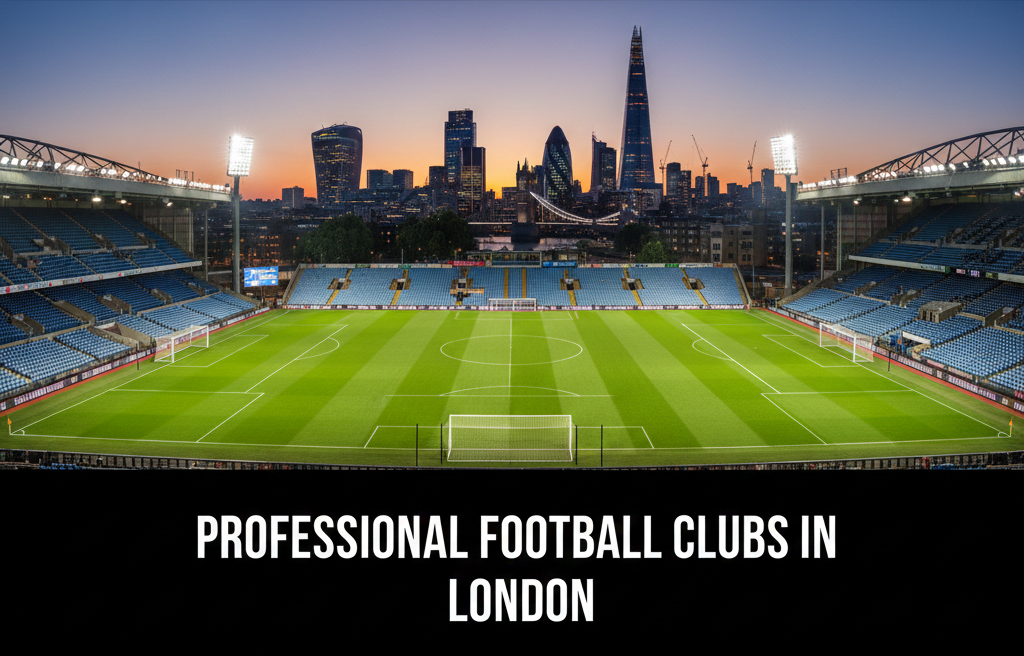
London is widely regarded as one of the greatest football cities in the world. No other city can match its sheer number of professional teams, historic stadiums, intense rivalries, and global influence on the sport. From world-famous Premier League giants to proud lower-league community clubs, the professional football clubs in London form the backbone of English football culture.
This detailed guide explores London’s professional football scene, covering top-tier clubs, lower-league teams, rivalries, history, and why London remains the heart of football in England.
Why London Is the Capital of Football
London’s football dominance comes from several unique factors:
A large and diverse population
Deep historical roots in English football
Strong financial infrastructure
Multiple boroughs supporting their own clubs
World-class stadiums and training facilities
Because of these advantages, London hosts more professional football clubs than any other city in the UK.
What Are Professional Football Clubs?
Professional football clubs are teams whose players are paid and compete in officially recognized leagues. In England, professional clubs compete in:
The Premier League
The English Football League (Championship, League One, League Two)
The National League and below
London has representation at nearly every professional level.
Premier League Clubs in London
The Premier League is the highest level of English football, and London is home to several elite clubs that compete at the top of the game.
Arsenal Football Club
Arsenal is one of the most successful and recognizable football clubs in England. Based in North London, the club is known for its attacking football, strong youth development, and passionate fanbase. Arsenal has consistently been a top competitor in domestic and European competitions.
Chelsea Football Club
Located in West London, Chelsea is a modern football powerhouse. The club has enjoyed major domestic and international success, building a global reputation through strong investment, elite players, and a winning mentality.
Tottenham Hotspur Football Club
Tottenham Hotspur, often called Spurs, is another North London giant. Known for its attacking philosophy and modern stadium, Tottenham is a consistent presence in top-level football and European competitions.
West Ham United Football Club
Based in East London, West Ham United has a proud working-class identity and a long tradition of developing talented players. The club plays a significant role in London’s football culture and enjoys fierce local rivalries.
Fulham Football Club
Fulham is the oldest professional football club in London. Playing near the River Thames, Fulham blends historic charm with competitive ambition, regularly competing in the Premier League and Championship.
Crystal Palace Football Club
Crystal Palace represents South London in the Premier League. Known for its passionate supporters and vibrant matchday atmosphere, Palace has become a stable top-flight club in recent years.
Brentford Football Club
Brentford’s rise to the Premier League is one of modern football’s success stories. With smart recruitment and data-driven strategies, Brentford has established itself as a competitive force among elite clubs.
Championship Clubs in London
The EFL Championship is one of the most competitive leagues in the world, and London features several strong clubs pushing for promotion.
Queens Park Rangers (QPR)
QPR is based in West London and has a rich football history. While the club has experienced ups and downs, it remains an important part of London’s professional football landscape.
Millwall Football Club
Millwall represents South East London and is known for its intense atmosphere and loyal supporters. The club has a strong identity and regularly competes at Championship level.
Charlton Athletic Football Club
Charlton Athletic has a proud history and a strong community focus. Based in South East London, the club continues to aim for stability and long-term growth.
League One and League Two Clubs
Beyond the Championship, London’s professional football depth continues across League One and League Two.
Leyton Orient Football Club
Leyton Orient is a historic East London club with deep local roots. The club plays a key role in maintaining professional football access at the community level.
AFC Wimbledon
AFC Wimbledon is a fan-owned club born from community spirit. Its rise through the leagues is one of the most inspiring stories in English football.
Barnet Football Club
Barnet represents North London and has competed professionally for many years. The club serves as an important stepping stone for players and coaches.
Bromley Football Club
Bromley has grown steadily and represents South East London in the professional football pyramid.
National League and Semi-Professional Clubs
London’s football strength doesn’t stop at the EFL. Several clubs compete professionally in the National League and nearby divisions.
Examples include:
Sutton United
Dagenham & Redbridge
Wealdstone
Welling United
These clubs play a vital role in developing talent and sustaining London’s football ecosystem.
London Football Rivalries
One of the most exciting aspects of the professional football clubs in London is the intensity of local rivalries.
North London Derby
Matches between Arsenal and Tottenham Hotspur are among the fiercest in world football.
West London Rivalries
Chelsea, Fulham, QPR, and Brentford compete in closely contested local derbies that carry strong neighbourhood pride.
East and South London Rivalries
West Ham, Millwall, Charlton, and Crystal Palace share historic rivalries shaped by geography and tradition.
These rivalries add emotion, drama, and identity to London football.
Stadiums and Football Infrastructure
London is home to some of the most impressive football stadiums in the world. Modern facilities, historic grounds, and community stadiums all contribute to the city’s football appeal.
Key characteristics include:
High seating capacity
Advanced technology
Excellent fan experience
Strong transport connectivity
This infrastructure supports both elite and grassroots football.
Global Impact of London Football Clubs
London clubs attract millions of fans worldwide. Their global influence includes:
International fanbases
Global broadcast reach
Commercial partnerships
Youth academies producing elite talent
The city’s clubs play a major role in shaping the global image of English football.
Why London Has So Many Professional Clubs
Several reasons explain London’s unmatched football density:
Large population supports multiple teams
Historic formation of clubs across boroughs
Strong grassroots football culture
Economic strength enabling sustainability
Continuous fan engagement
Together, these factors ensure football thrives across the city.
Future of Professional Football Clubs in London
Looking ahead, London’s football future remains strong:
Continued investment in youth academies
Stadium redevelopment and modernization
Increased focus on sustainability
Greater international influence
London is expected to remain the most important football city in England for decades to come.
Conclusion
The professional football clubs in London represent the heart, soul, and future of English football. From legendary Premier League giants to community-driven lower-league teams, London offers unmatched diversity, passion, and history.
Whether you are a lifelong supporter, a new fan, or someone exploring football culture, London’s professional clubs tell a story of tradition, competition, and constant evolution. Football in London is not just a sport—it is a way of life.