
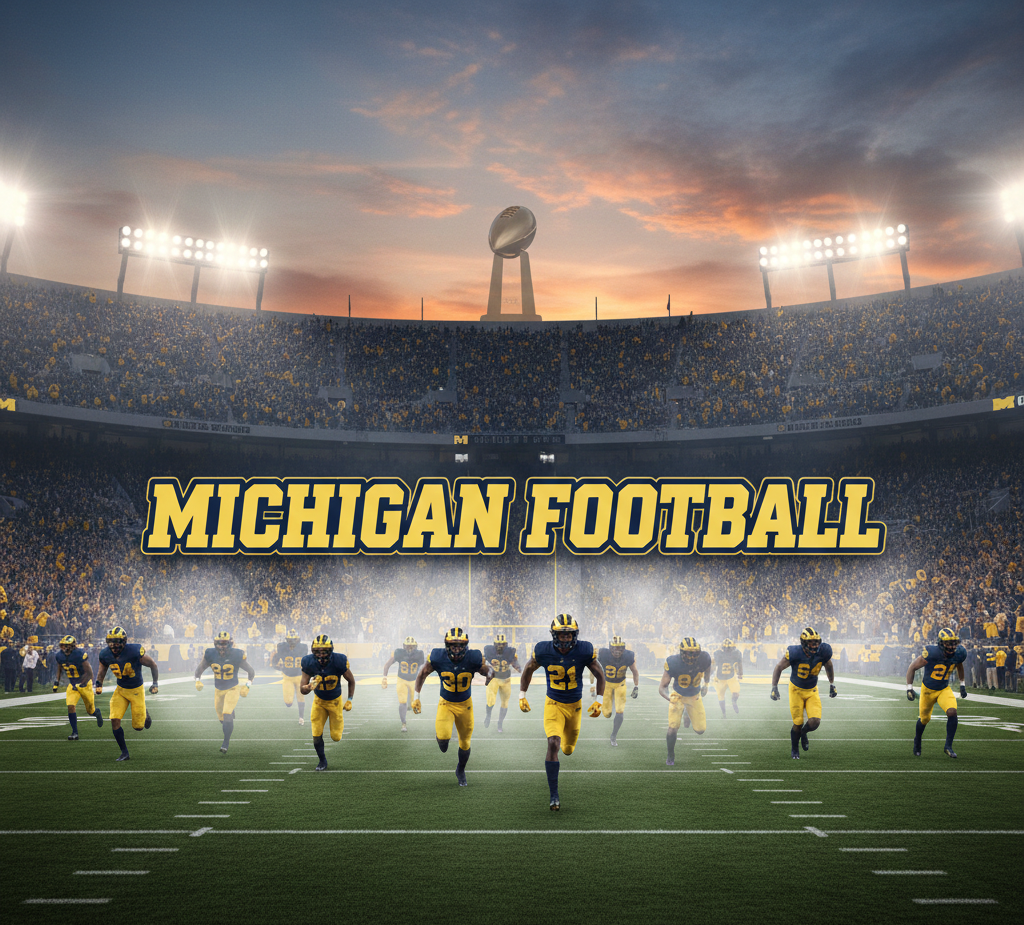
Few programs in college athletics carry the tradition, prestige, and national recognition of Michigan football. Known for its iconic winged helmet, passionate fan base, and historic success, Michigan football has shaped the identity of college football for more than a century. From legendary coaches to national championships and unforgettable rivalries, the Wolverines represent excellence, toughness, and tradition.
This comprehensive guide explores the history, championship success, coaching eras, iconic players, recruiting dominance, and future outlook of Michigan football — one of the most respected programs in the sport.
The Origins of Michigan Football
Michigan football began in 1879, making it one of the oldest programs in college football history. Representing the University of Michigan, the Wolverines quickly became a dominant force in the early years of the sport.
Under coach Fielding H. Yost in the early 1900s, Michigan football established national prominence. His “Point-a-Minute” teams overwhelmed opponents with explosive offenses and disciplined defense. Those early championship teams laid the foundation for what would become one of the winningest programs in college football history.
From the beginning, Michigan football was built on innovation, strength, and competitive excellence.
The Big House: A Cathedral of College Football
Michigan football plays its home games at Michigan Stadium, famously known as “The Big House.” With a seating capacity exceeding 100,000 fans, it is the largest stadium in the United States and one of the largest in the world.
Game days in Ann Arbor are legendary. The sea of maize and blue fills the stadium with unmatched energy. When the band plays “The Victors,” the fight song echoes across the field, reminding everyone of the program’s proud history.
The Big House is not just a stadium — it is a symbol of Michigan football’s massive tradition and national impact.
National Championships and Big Ten Success
Michigan football has claimed multiple national championships across different eras. The Wolverines have consistently competed at the highest level of college football, particularly within the Big Ten Conference.
The Big Ten is one of the most competitive conferences in the country, featuring historic programs and intense rivalries. Michigan football has captured numerous conference titles, demonstrating sustained excellence.
Winning in the Big Ten requires physicality, depth, and discipline — qualities that have defined Michigan football for generations.
The Bo Schembechler Era
One of the most transformative figures in Michigan football history is Bo Schembechler. Taking over in 1969, he built a culture of toughness, accountability, and relentless preparation.
Under Schembechler, Michigan football became a consistent national contender. His teams were known for:
Strong running games
Physical defensive fronts
Discipline and structure
A team-first mentality
The “Ten-Year War” between Schembechler and Ohio State coach Woody Hayes became one of the most famous rivalry periods in college football history.
Even today, the values Bo instilled remain part of the Michigan football identity.
The Michigan vs Ohio State Rivalry
No discussion of Michigan football is complete without mentioning its historic rivalry with Ohio State. Simply known as “The Game,” this matchup is one of the most intense and watched rivalries in all of sports.
Every year, the outcome carries conference title implications and often national championship significance. The rivalry dates back over a century and has produced unforgettable moments.
For Michigan football, defeating Ohio State is not just another win — it is a defining achievement each season.
Modern Success and National Titles
In recent years, Michigan football has reestablished itself as a dominant force. Strong recruiting, elite coaching, and disciplined development have returned the Wolverines to the top tier of college football.
The program’s resurgence includes:
Big Ten championships
College Football Playoff appearances
National championship success
Improved defensive and offensive balance
Michigan football has proven that tradition alone is not enough — adaptation and growth are essential for modern success.
Heisman Winners and Legendary Players
Michigan football has produced some of the most iconic players in college football history.
One of the most famous Wolverines is Charles Woodson, who won the Heisman Trophy as a defensive back — a rare accomplishment. His impact extended beyond defense, contributing as a return specialist and offensive playmaker.
Throughout its history, Michigan football has developed:
Elite quarterbacks
Dominant offensive linemen
Hard-hitting linebackers
Dynamic running backs
Many Wolverines have gone on to successful NFL careers, reinforcing Michigan’s reputation as a pipeline for professional talent.
Recruiting and Player Development
One reason Michigan football remains competitive is its strong recruiting foundation. The program attracts top talent from across the country, particularly from football-rich regions.
Recruits are drawn by:
Academic prestige of the university
Historic football tradition
National exposure
Elite coaching staff
World-class facilities
Beyond recruiting, player development is central to Michigan football’s philosophy. Strength training, conditioning, and detailed game preparation ensure athletes reach their full potential.
Offensive and Defensive Identity
Michigan football has traditionally emphasized physical play. While the sport has evolved toward high-powered passing offenses, Michigan maintains balance.
Offensive Strength
The Wolverines often build their offense around a powerful running game supported by disciplined offensive line play. Strong quarterback leadership complements this system, allowing for explosive passing when needed.
Defensive Discipline
Defensively, Michigan football is known for structured schemes and physical execution. Fast linebackers, strong defensive lines, and smart secondary play define their approach.
This balanced identity allows Michigan football to compete in cold-weather Big Ten battles as well as high-scoring national matchups.
Culture and Tradition
Michigan football is rooted in tradition. The winged helmet design is one of the most recognizable symbols in sports. The maize and blue colors represent pride and unity.
Game-day traditions include:
The team touching the “Go Blue” banner before entering the field
The Michigan Marching Band performance
Singing “The Victors” after every win
These traditions connect past, present, and future generations of players and fans.
Impact on College Football
Michigan football has influenced the broader landscape of college athletics in several ways:
Promoting academic excellence alongside athletic performance
Establishing long-term coaching stability models
Elevating the importance of rivalry branding
Supporting expanded playoff systems
Few programs have shaped the sport’s identity as consistently as Michigan football.
Facilities and Infrastructure
To compete nationally, Michigan football invests heavily in facilities. Modern training centers, recovery technology, and advanced analytics rooms support player development.
Michigan Stadium itself is continually upgraded to enhance both player performance and fan experience. These investments ensure the Wolverines remain competitive in recruiting and performance.
The Future of Michigan Football
The landscape of college football continues to change. NIL opportunities, transfer portal movement, and playoff expansion are reshaping the sport.
Michigan football is well-positioned for the future. The combination of strong leadership, recruiting depth, and institutional support provides stability.
As long as the program maintains its balance of tradition and innovation, Michigan football will continue to compete for championships.
Why Michigan Football Remains Elite
Several key factors explain the sustained success of Michigan football:
Historic foundation and winning culture
Elite facilities and institutional backing
Strong recruiting pipelines
Balanced offensive and defensive identity
Passionate national fan base
These elements create a program capable of competing year after year at the highest level.
Final Thoughts
Michigan football is more than wins and losses — it is a symbol of tradition, resilience, and excellence. From early championship teams to modern playoff contenders, the Wolverines have consistently demonstrated what it means to build a legacy.
With a proud history, iconic rivalries, national championships, and a relentless commitment to improvement, Michigan football stands among the giants of college athletics.
Whether you are a lifelong supporter wearing maize and blue or simply a fan of college football history, one thing is clear: Michigan football represents greatness built over generations — and its story is far from finished.