
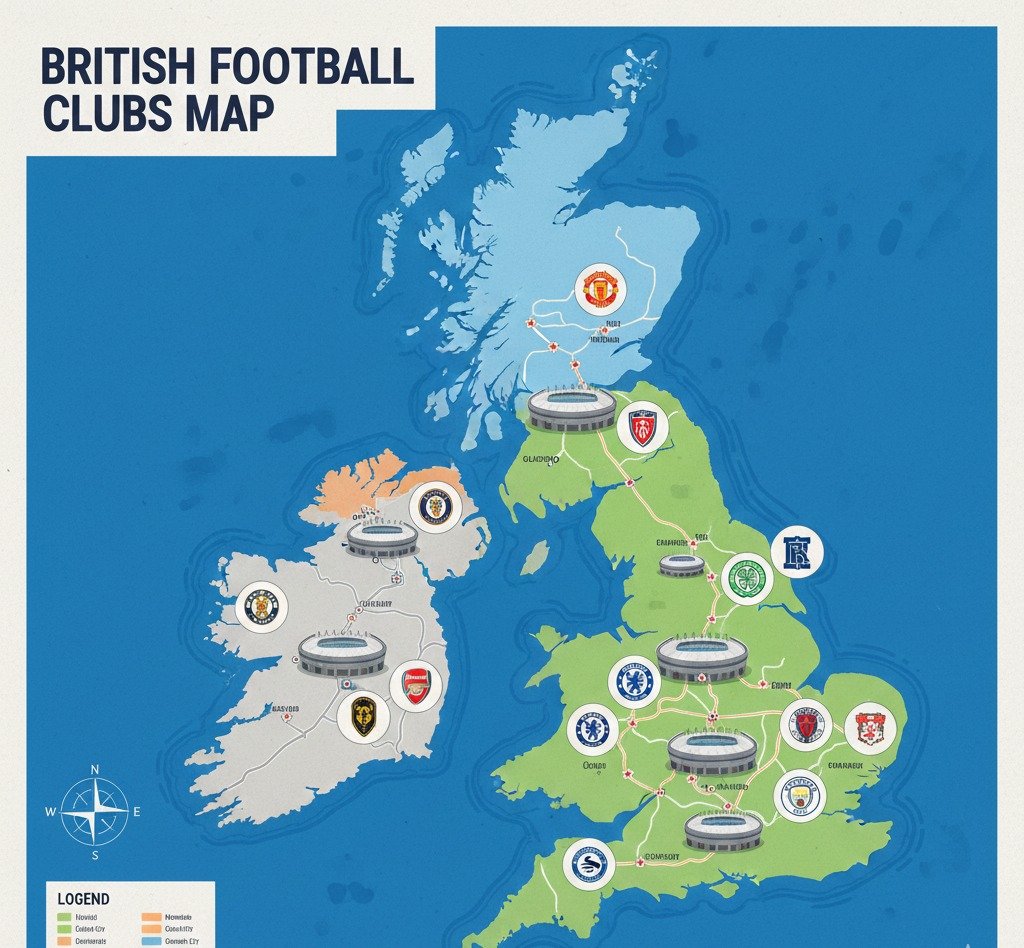
Football is deeply ingrained in the culture of the United Kingdom. From bustling cities to small towns, football clubs have been at the heart of communities for over a century. Understanding the distribution of British football clubs provides insight into the country’s football culture, history, and regional rivalries.
This article explores the map of British football clubs, highlighting key teams, regional concentrations, league structures, and the cultural significance of football in England, Scotland, Wales, and Northern Ireland.
The Importance of Mapping British Football Clubs
Mapping football clubs across the UK is not just about geography—it reflects history, culture, and social identity. Football clubs often originated around industrial towns, local communities, and workplaces, and their locations highlight areas of strong footballing tradition.
A map of British football clubs helps fans, researchers, and analysts:
Understand regional football strongholds
Track the evolution of the sport in the UK
Identify clusters of competitive teams
Visualize local rivalries and historic derbies
Football Clubs in England
England is home to the largest concentration of football clubs in the UK, with hundreds of professional, semi-professional, and amateur teams. The English football league system is a pyramid, allowing clubs to progress from local leagues to the Premier League, one of the most popular leagues globally.
Key English Clubs and Locations
Manchester United (Manchester): One of the most successful and popular clubs worldwide.
Liverpool FC (Liverpool): Known for its passionate fanbase and European success.
Arsenal FC (London): Famous for its history and style of play.
Chelsea FC (London): A dominant club in English football with global recognition.
Leeds United (Leeds): Historic club with deep roots in Yorkshire.
Newcastle United (Newcastle): Northern powerhouse with loyal support.
Regional Concentrations
North West England: Liverpool, Manchester, Bolton – high density of historic clubs.
London and South East: Arsenal, Chelsea, Tottenham, Crystal Palace – major urban centers with multiple teams.
Midlands: Aston Villa, Birmingham City, Nottingham Forest – historic industrial heartlands.
England’s map shows clusters of clubs in industrial and urban areas, reflecting the sport’s working-class origins.
Football Clubs in Scotland
Scotland has a rich footballing history, with clubs that have shaped European football. The Scottish football league system is smaller but highly competitive.
Key Scottish Clubs
Celtic FC (Glasgow): One of Scotland’s most famous clubs, with a long-standing rivalry with Rangers.
Rangers FC (Glasgow): Historic club with significant domestic and European success.
Aberdeen FC (Aberdeen): Northern Scotland club with strong traditions.
Heart of Midlothian (Edinburgh): Known as Hearts, a key Edinburgh-based team.
Hibernian FC (Edinburgh): Another major club in Scotland’s capital.
Regional Concentrations
Central Belt: Glasgow, Edinburgh – home to most of Scotland’s top clubs.
North East: Aberdeen, Dundee – smaller clusters with historic teams.
Scottish clubs are fewer but historically impactful, and the Glasgow derby between Celtic and Rangers remains one of football’s fiercest rivalries.
Football Clubs in Wales
Wales has a smaller number of professional clubs, many of which participate in the English football league system. Welsh football clubs often balance national pride with competition in English leagues.
Key Welsh Clubs
Cardiff City (Cardiff): Competes in the English football league system.
Swansea City (Swansea): Known for its stylish football and competitive spirit.
Wrexham AFC (Wrexham): Historic club gaining recent attention for its growth.
Regional Concentrations
South Wales: Cardiff, Swansea, Newport – main hubs of Welsh football.
North Wales: Wrexham, Connah’s Quay – smaller clubs with strong local support.
Wales’ football map shows fewer clubs, with urban centers hosting the most prominent teams.
Football Clubs in Northern Ireland
Northern Ireland has a compact but passionate football community. The Northern Irish football league system features semi-professional and amateur clubs, with local derbies drawing significant attention.
Key Northern Irish Clubs
Linfield FC (Belfast): Most successful club in Northern Ireland.
Glentoran FC (Belfast): Historic rival of Linfield, forming one of the fiercest derbies.
Coleraine FC (Coleraine): Northern club with loyal support.
Regional Concentrations
Belfast: High density of top-tier clubs
Coastal towns: Smaller clubs with historic roots
Northern Ireland’s football map reflects urban concentration in the capital and surrounding towns.
Mapping Patterns Across the UK
Analyzing the map of British football clubs reveals several patterns:
Urban Dominance: Most clubs are based in cities or industrial towns.
Historic Clusters: England’s North West and Midlands, Scotland’s Central Belt, and Wales’ South host multiple historic clubs.
Rural Scarcity: Less densely populated areas have fewer professional clubs.
Cross-Border Participation: Welsh clubs in English leagues show flexibility in competition for higher exposure.
These patterns highlight football’s growth as a working-class sport, evolving into a professional and global industry.
Using Maps to Explore Football Culture
Football maps are valuable for fans, researchers, and journalists. They help:
Track historic rivalries like Manchester United vs. Liverpool or Celtic vs. Rangers
Identify areas with emerging talent and clubs
Plan fan travel for matches and derbies
Analyze socio-economic factors influencing club locations
Interactive football maps online now allow fans to explore clubs by league, location, or historical significance, enhancing engagement with the sport.
The Role of British Football Clubs in Communities
British football clubs are more than sports teams—they are cultural institutions. Clubs contribute by:
Providing youth programs and training academies
Hosting community events and charitable activities
Acting as social hubs for local identity
Generating economic impact through matches, tourism, and merchandise
Mapping these clubs shows not only their locations but also their influence on local communities.
Challenges and Opportunities
Challenges
Financial disparities between clubs in different leagues
Maintaining competitive balance in leagues dominated by major clubs
Adapting historic stadiums to modern requirements
Opportunities
Expanding youth development across the UK
Leveraging geographic data for fan engagement
Promoting lesser-known clubs through digital platforms and social media
Understanding the geographic distribution of clubs can inform strategies for growth, investment, and fan engagement.
Conclusion
A map of British football clubs provides more than a visual representation—it tells the story of football’s evolution in the UK. England, Scotland, Wales, and Northern Ireland each contribute unique cultural and historical dimensions to the sport. From world-famous Premier League clubs to historic Scottish teams and Welsh and Northern Irish local favorites, the geographic distribution highlights football’s deep roots in society.
Mapping these clubs helps fans, analysts, and communities appreciate the diverse and rich football culture of the United Kingdom. Whether exploring rivalries, planning visits, or studying the sport’s history, a football club map is an essential tool for understanding UK football.