
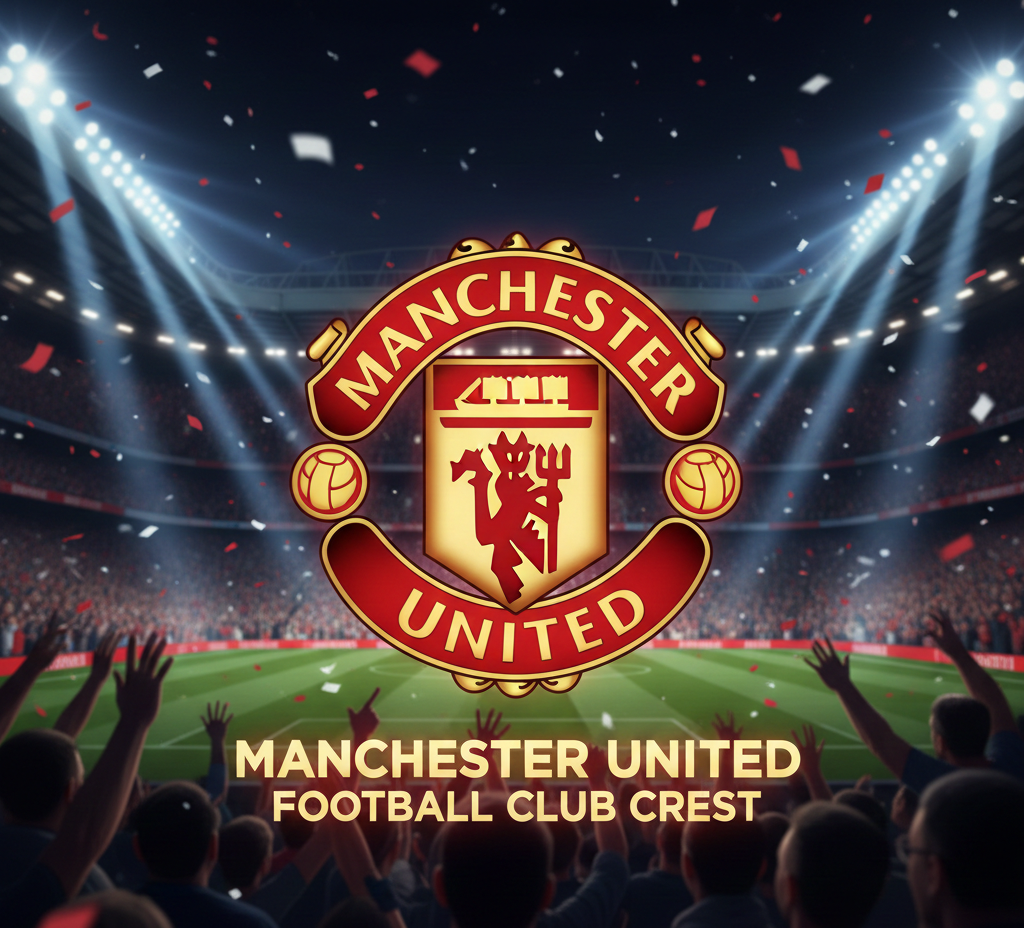
The Manchester United Football Club crest is one of the most recognizable symbols in world football. More than just a logo, it represents history, passion, success, and a global fanbase that spans generations. From its roots in industrial Manchester to its status as a worldwide sporting icon, the Manchester United crest tells a powerful story of identity, pride, and tradition.
In this article, we explore the history of the Manchester United crest, its design elements, symbolism, evolution over time, and why it remains one of the most valuable and iconic football crests in the world.
Introduction to Manchester United Football Club
Founded in 1878 as Newton Heath LYR Football Club, Manchester United has grown into one of the most successful and widely supported football clubs in history. With a record number of English league titles, European trophies, and legendary players, the club’s image is inseparable from its famous crest.
The Manchester United crest is not just a visual identity—it embodies the spirit of the club, its working-class roots, and its ambition to dominate English and European football.
Origins of the Manchester United Crest
Early Club Identity
In its early years as Newton Heath, the club did not use a formal crest. Like many football clubs in the late 19th century, visual branding was minimal. Kits were simple, and symbols were rarely used beyond basic identifiers.
The first connections between the club and a recognizable emblem came from Manchester’s city coat of arms, which would later influence the design of the Manchester United crest.
Influence of Manchester City’s Coat of Arms
The modern Manchester United crest draws heavy inspiration from the Manchester City coat of arms, which includes:
A ship representing Manchester’s industrial and maritime heritage
A shield symbolizing strength and unity
A devil figure adapted later as the club’s unique identity
The city of Manchester was historically known as a hub of industry, trade, and innovation. These themes were subtly incorporated into the club’s crest to represent pride in its local roots.
Evolution of the Manchester United Crest
1. Early Crests (1940s–1960s)
Manchester United first used a crest regularly in the 1940s, mainly on official documents and matchday programs. The design was directly adapted from the city’s coat of arms and included:
A ship at the top of the shield
Red and yellow color themes
Minimal branding elements
This early crest laid the foundation for future designs.
2. Introduction of the Red Devil (1960s–1970s)
The most defining moment in the history of the Manchester United crest came in the 1960s under legendary manager Sir Matt Busby.
The club adopted the nickname “The Red Devils”, inspired by Salford rugby team and Busby’s desire to create a more intimidating identity.
As a result:
The devil holding a trident was added to the crest
The design became bolder and more aggressive
The club’s branding gained a distinct personality
This change transformed Manchester United’s image forever.
3. Modernization and Commercial Era (1980s–1990s)
As football entered a global commercial era, Manchester United refined its crest for modern branding.
Key updates included:
Cleaner lines and sharper edges
Removal of the words “Football Club” in 1998
Simplified design for merchandising and global recognition
The removal of “Football Club” reflected the club’s expansion beyond football into a global brand.
4. Current Manchester United Crest
The current crest, introduced in 1998, remains in use today with minimal alterations.
Main features include:
A red devil holding a trident
A ship symbolizing Manchester’s industrial heritage
A yellow and red color scheme
The words “Manchester United” in bold typography
This design strikes the perfect balance between tradition and modern branding.
Symbolism Behind the Manchester United Crest
Every element of the Manchester United crest carries meaning.
The Red Devil
The red devil represents:
Fearlessness and aggression on the pitch
Competitive spirit
A unique identity that separates United from other clubs
It is one of the most iconic mascots in football history.
The Ship
The ship symbolizes:
Manchester’s trading and industrial past
Global connectivity and expansion
Progress and ambition
It reflects the city’s transformation into a global powerhouse.
Colors: Red and Yellow
The red color represents:
Passion
Strength
Energy
Yellow adds:
Contrast and visibility
A royal and historic touch
Together, they create a bold and instantly recognizable look.
Manchester United Crest and Global Branding
Manchester United is more than a football club—it is a global sports brand.
The crest appears on:
Official kits
Merchandise and apparel
Digital platforms
Stadium branding
Media and sponsorship materials
With over 1 billion supporters worldwide, the crest serves as a universal symbol of loyalty and pride.
The Crest’s Role in Club Culture and Fan Identity
For fans, the Manchester United crest represents:
History and legacy
Emotional connection across generations
Memories of legendary players and iconic moments
From Old Trafford to supporters’ clubs across Asia, Africa, and the Americas, the crest unites fans under a shared identity.
Legal Protection and Trademark Significance
Manchester United fiercely protects its crest through:
Trademarks
Licensing agreements
Anti-counterfeiting measures
Unauthorized use of the crest can lead to legal action, emphasizing its value as intellectual property.
Comparisons with Other Football Club Crests
Compared to other major clubs:
Manchester United’s crest is more aggressive than Barcelona’s
More traditional than Manchester City’s modern redesign
More globally recognizable than most Premier League crests
Its consistency over decades has strengthened its brand recognition.
Why the Manchester United Crest Rarely Changes
Unlike some clubs that frequently rebrand, Manchester United maintains stability.
Reasons include:
Strong emotional attachment from fans
Historical significance
High global recognition
Commercial value
Any major change would risk alienating supporters worldwide.
Manchester United Crest in Digital and Modern Media
In the digital age, the crest has been optimized for:
Social media platforms
Mobile apps
Video games
NFTs and digital collectibles
Its simple yet bold design ensures adaptability across all formats.
The Emotional Power of the Crest
For many supporters, the crest represents:
Family traditions
Childhood memories
Triumphs and heartbreaks
A sense of belonging
It is not just a logo—it is an emotional symbol.
Future of the Manchester United Crest
While minor refinements may occur, the core elements of the crest are expected to remain unchanged.
The red devil, ship, and bold colors will continue to define Manchester United’s identity for future generations.
Conclusion
The Manchester United Football Club crest is one of the most iconic symbols in sports history. Rooted in Manchester’s industrial heritage and shaped by decades of success, the crest represents tradition, ambition, and global unity.
From its early beginnings to its modern global presence, the Manchester United crest has evolved while staying true to its core identity. It is more than a badge—it is a symbol of pride, passion, and footballing greatness.
For fans around the world, wearing the crest means carrying the legacy of one of the greatest football clubs ever created.