
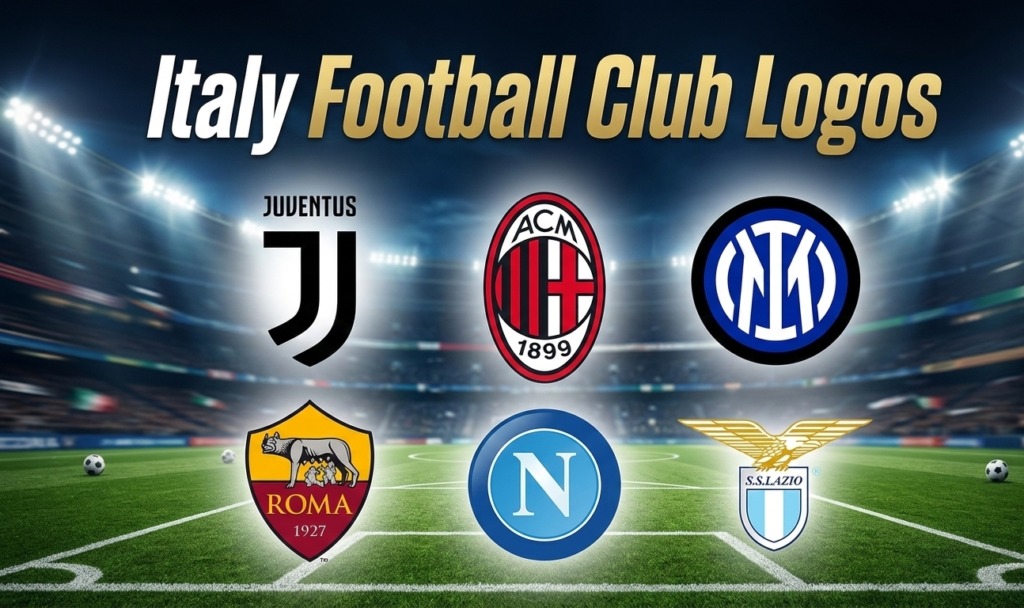
Football in Italy is more than just a sport—it is a cultural phenomenon that unites communities, inspires generations, and showcases artistry both on and off the pitch. Among the most recognized elements of Italian football culture is the Italy football club logo, a symbol that represents a club’s identity, values, history, and ambitions. From classic designs rooted in tradition to modern logos reflecting contemporary aesthetics, these symbols play a pivotal role in branding, fan loyalty, and global recognition.
This article provides a comprehensive overview of Italy football club logos, exploring their history, symbolism, design evolution, and their significance in modern football marketing and culture.
The Importance of Football Club Logos in Italy
A football club logo is much more than a decorative badge—it is a visual representation of the club’s heritage, achievements, and philosophy. In Italy, where football clubs are deeply embedded in local culture, logos serve multiple purposes:
Identity and Recognition: Logos help fans instantly recognize their club on jerseys, merchandise, and promotional materials.
Historical Significance: Many logos incorporate elements representing the club’s origins, city, or key historical achievements.
Fan Connection: Supporters feel a sense of belonging and pride through symbols that visually express the club’s identity.
Commercial Value: A strong logo enhances merchandising opportunities, from replica jerseys to accessories, contributing to a club’s financial success.
Historical Evolution of Italian Football Club Logos
Italian football clubs have a long and rich history, and their logos reflect the evolution of design trends alongside football culture.
Early Years (1900s–1950s)
During the early decades of Italian football, club logos were simple and emblematic, often incorporating:
City crests or coats of arms
Initials of the club’s name
Minimalist geometric shapes
For example, clubs like Juventus initially featured black and white stripes combined with simple initials, reflecting the city of Turin and the club’s colors. Logos during this era were primarily functional, serving as identifiers for fans and teams.
Mid-Century Designs (1960s–1980s)
As football became more popular and professionalized, logos began to incorporate symbolic and artistic elements. Clubs added:
Animals and mythological figures (e.g., lions, eagles) representing strength and courage
Stars and trophies to symbolize championships won
Decorative borders and banners to enhance aesthetics
During this period, logos also became important for fan merchandise, appearing on scarves, badges, and team apparel.
Modern Era (1990s–Present)
With the rise of global marketing and digital media, Italian football club logos have evolved to reflect brand strategy and modern design principles:
Simplification: Many clubs streamlined complex logos to make them easily recognizable in digital and print formats.
Bold Colors and Typography: Enhanced visibility and brand consistency across platforms.
Global Appeal: Logos now cater not only to local fans but also to international supporters and sponsors.
Digital Optimization: Designed to scale well on social media, apps, and websites.
Examples include:
AC Milan: Maintains traditional red and black stripes with the Saint Ambrose cross, now in a sleeker circular design.
Inter Milan: Uses an interlocking “IM” monogram that is modern yet rooted in heritage.
Juventus: Shifted from a traditional crest to a minimalist “J” logo, symbolizing innovation while retaining brand identity.
Symbolism in Italy Football Club Logos
Every element of an Italian football club logo carries meaning:
Colors
Red: Represents passion, energy, and courage.
Blue: Often linked to city identity (e.g., Napoli) or national symbolism.
Black and White: Classic colors signifying tradition and balance.
Gold and Silver: Used for stars and championship recognition.
Shapes and Figures
Circles and Shields: Indicate unity, protection, and heritage.
Animals: Lions, eagles, and other creatures convey strength, pride, and dominance.
Stars: Each star represents a milestone, often linked to championship victories.
Letters and Monograms
Many clubs incorporate initials or monograms to reinforce brand identity. Examples include:
AC Milan: “ACM” intertwined with the founding year
Inter Milan: “FCIM” forming a circular emblem
Juventus: A minimalist “J” representing both Juventus and modernity
Iconic Italian Football Club Logos
Juventus
Juventus’ logo is one of the most recognizable in world football. Its modern black and white minimalist design emphasizes simplicity and global brand recognition while preserving the club’s historic colors.
AC Milan
AC Milan retains elements from its original design, featuring red and black stripes, the Saint Ambrose cross, and gold outlines. This logo reflects Milanese heritage and the club’s enduring legacy.
Inter Milan
Inter’s circular logo with interlocking letters symbolizes unity and the city of Milan. Its blue and black colors, combined with a clean gold outline, convey strength and international appeal.
Napoli
SSC Napoli’s logo incorporates a bold “N” within a blue circle, representing the city’s maritime heritage. The design is simple yet instantly recognizable globally.
Roma
AS Roma uses the she-wolf suckling Romulus and Remus, a symbol rooted in Roman mythology. The logo connects the club deeply with the history of the city of Rome.
The Role of Logos in Marketing and Branding
Italian football club logos are central to commercial strategy and fan engagement:
Merchandising: Logos appear on jerseys, scarves, hats, and collectibles.
Digital Media: Adapted for social media, apps, and streaming platforms.
Sponsorships: Brands partner with clubs, leveraging logos for marketing visibility.
Global Expansion: Clubs use recognizable logos to attract international fans and partnerships.
A strong logo strengthens a club’s identity and fosters emotional connections with fans, which translates into loyalty and financial support.
Challenges and Trends in Logo Design
Challenges
Balancing tradition with modern design
Ensuring visibility across digital platforms
Preserving cultural and historical significance
Current Trends
Minimalism and simplicity for digital use
Incorporation of club heritage symbols in modern formats
Flexibility for merchandising and licensing opportunities
Italian football clubs increasingly prioritize logos that are timeless yet adaptable, ensuring relevance for both domestic and international audiences.
Conclusion
The Italy football club logo is more than just a graphic—it embodies the history, identity, and values of each club. From the historic symbols of AS Roma to the minimalist modern design of Juventus, logos represent the intersection of sport, culture, and branding.
In Italy, these logos connect fans to their clubs, inspire pride, and serve as powerful marketing tools. They are crucial for fostering emotional attachment, expanding global presence, and maintaining competitive relevance in the modern football industry.
Whether for local supporters, international fans, or football enthusiasts, Italy football club logos remain iconic symbols of passion, tradition, and sporting excellence.