
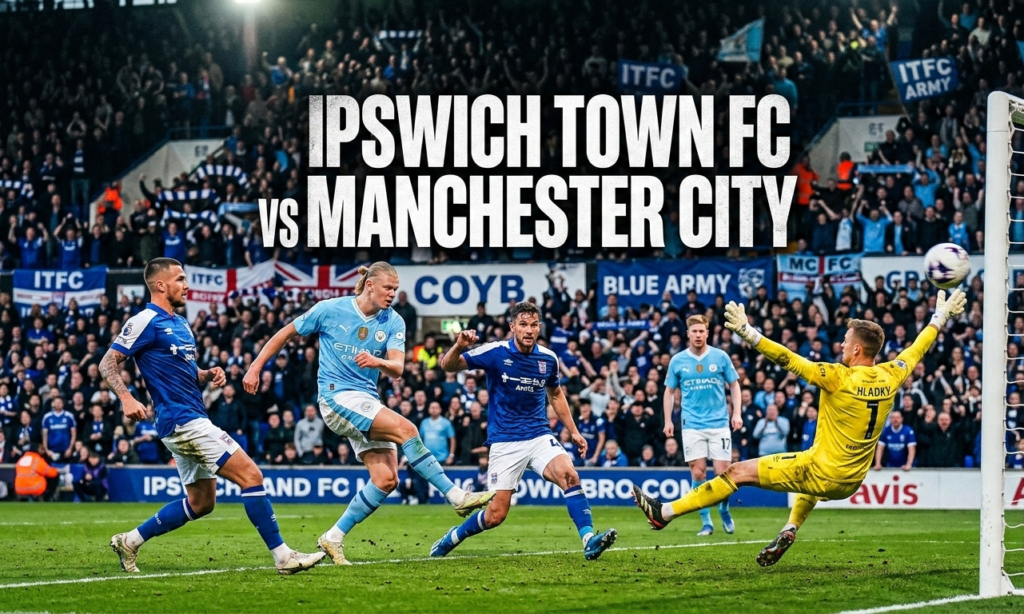
The matchup between Ipswich Town Football Club and Manchester City is always an intriguing contest for football fans. While these two clubs have different histories, budgets, and competitive statuses, whenever they meet on the pitch, the clash brings tactical excitement, individual brilliance, and strategic football decisions to the forefront. Whether in cup competitions, pre-season friendlies, or historical league encounters, a game between Ipswich Town and Manchester City showcases the contrast between a historic community-based club and a global football powerhouse.
Historical Background of Ipswich Town Football Club
Ipswich Town Football Club, founded in 1878, has a rich footballing tradition and is based in Ipswich, Suffolk. Known as “The Tractor Boys,” Ipswich Town has a storied history that includes winning the English league title, FA Cups, and achieving success in European competitions during the 1970s and 1980s. The club has consistently emphasized youth development, community involvement, and creating strong connections with local fans.
Despite its smaller budget compared to top Premier League clubs, Ipswich Town has a reputation for resilience, tactical organization, and producing talented footballers who often move on to larger clubs.
Historical Background of Manchester City
Manchester City, on the other hand, is one of the most successful clubs in modern English football. Founded in 1880, the club has undergone a transformation over the past two decades, becoming a global powerhouse. With substantial investments in players, facilities, and coaching staff, Manchester City has dominated English football, winning multiple Premier League titles, domestic cups, and competing at the highest level in Europe.
Manchester City is renowned for its possession-based style of play, tactical flexibility, and world-class talent across all positions. Under the management of Pep Guardiola, the team has developed a distinctive philosophy focused on control, high pressing, and fluid attacking movements.
Head-to-Head Encounters
Historically, meetings between Ipswich Town and Manchester City have been limited due to the clubs playing in different divisions for most of their existence. When they do meet, however, the matches are often dominated by Manchester City because of their financial resources and squad depth. Despite this, Ipswich Town has occasionally produced memorable performances, especially in cup competitions, by emphasizing defensive organization and exploiting counter-attacking opportunities.
These matches highlight the gap between a community-oriented club like Ipswich and a global powerhouse like Manchester City, creating intriguing tactical battles where strategy often outweigh individual talent.
Tactical Analysis: Ipswich Town vs Manchester City
Ipswich Town’s Approach
Ipswich Town typically focuses on a compact, organized defensive structure when facing superior teams. Key tactical principles include:
Defensive discipline: Maintaining a tight backline to reduce space for City’s attackers
Counter-attacking strategy: Exploiting the space left behind when City commits players forward
Set-piece utilization: Using corners and free-kicks to create scoring opportunities
Ipswich Town’s manager often prioritizes teamwork, pressing selectively, and forcing the opponent to make mistakes rather than engaging in open attacking play.
Manchester City’s Approach
Manchester City relies on possession-based football and tactical fluidity. Key aspects of their approach include:
High pressing: Winning the ball back quickly in the opposition half
Positional play: Creating passing triangles to maintain ball control and break defensive lines
Wide play and overlaps: Using full-backs to stretch defenses and deliver crosses
Creative midfielders: Players like Kevin De Bruyne (or his contemporaries) orchestrate attacks and find pockets of space
Against defensive teams like Ipswich Town, City often patiently circulates the ball, waiting for opportunities to exploit gaps with incisive passes or quick movements in the final third.
Key Players to Watch
Ipswich Town
Goalkeeper: Responsible for maintaining defensive stability against top-tier attacks
Central Defender: Key to organizing the backline and intercepting City’s attacking threats
Striker or Forward: Must capitalize on counter-attacking opportunities and set-pieces
Manchester City
Creative Midfielders: The team’s playmakers drive attacks and control tempo
Wingers and Full-Backs: Provide width, stretch the opposition, and deliver quality crosses
Striker: Clinical finishing is essential against organized defenses
Player performances can often determine the outcome of such mismatched fixtures, especially when underdogs like Ipswich Town seek to exploit any lapses in City’s play.
Psychological and Fan Perspectives
Matches like Ipswich Town vs Manchester City are important not only tactically but also emotionally for fans. For Ipswich supporters, it represents a chance to witness top-tier football in their home stadium, enjoy historic encounters, and rally behind their team in a David-versus-Goliath scenario.
For Manchester City fans, these matches can be an opportunity to showcase dominance, rotate players for squad depth, or prepare for more challenging fixtures in domestic and European competitions.
The psychological edge in these matches often favors City due to experience and confidence, but Ipswich’s team spirit and local support can make surprises possible, particularly in cup competitions.
Significance of the Match
For Ipswich Town
Exposure to high-level competition helps improve player development
Potential revenue from ticket sales, broadcasting, and sponsorships
Boosts club reputation and fan morale
For Manchester City
Provides a platform to rotate squad players and manage workload
Reinforces tactical strategies against defensive teams
Opportunity to maintain winning momentum in domestic competitions
Strategies for Ipswich Town to Compete
While Manchester City is usually favored, Ipswich Town can adopt strategies to improve competitiveness:
Compact Defensive Shape: Reduce gaps between defensive lines and midfield to frustrate City’s passing game
Counter-Attack Efficiency: Use pace and quick transitions to exploit space behind City’s full-backs
Set-Piece Optimization: Corners and free-kicks can offer scoring opportunities
Mental Resilience: Players must stay focused for 90 minutes, resisting early pressure
Execution of these strategies can sometimes result in surprising results, even against top-tier teams.
Impact on Club Development
Matches against elite teams like Manchester City are crucial for smaller clubs like Ipswich Town. Benefits include:
Financial gains: Increased ticket sales, sponsorship, and media coverage
Player growth: Young players gain experience facing top talent
Club recognition: Enhances the club’s profile nationally and internationally
These benefits can contribute to long-term development and stability for Ipswich Town Football Club.
Conclusion
The matchup between Ipswich Town Football Club and Manchester City highlights the contrast between a historic, community-based club and a global football powerhouse. While Manchester City often dominates on the field, Ipswich Town’s resilience, tactical discipline, and team spirit make these encounters intriguing for fans and analysts alike.
For Ipswich Town, these matches offer invaluable experience, revenue, and fan engagement, while for Manchester City, they provide opportunities to reinforce strategies, rotate the squad, and maintain competitive dominance.