
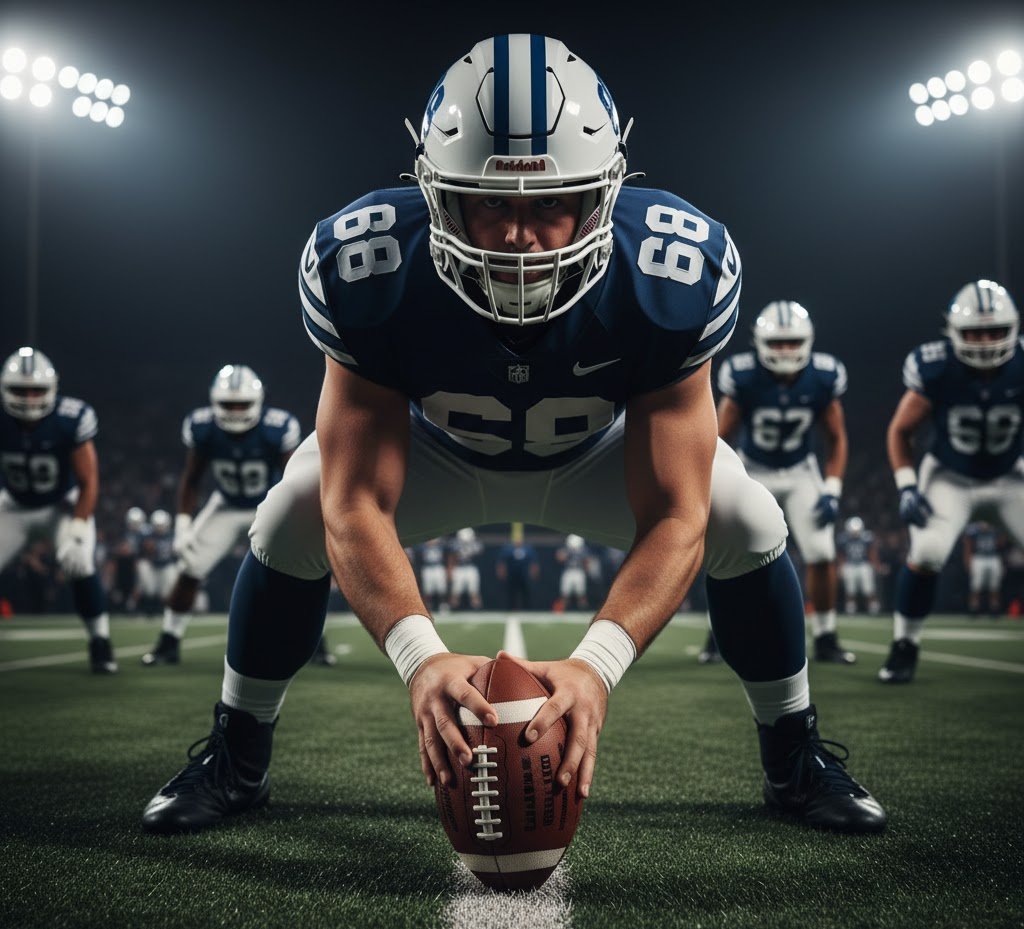
When it comes to American football, every position is vital — but few are as critical as the center. The game literally begins with this player. Learning how to play center in football means understanding the responsibilities, techniques, and mindset required to lead the offensive line and keep every play running smoothly.
Whether you’re a beginner learning the basics or a player aiming to master your craft, this guide breaks down everything you need to know about playing center — from stance and snapping to blocking and leadership.
What Is the Center Position in Football?
The center is the offensive lineman who lines up in the middle of the offensive line. Their primary responsibility is to snap the ball to the quarterback to start each play.
But that’s not all — the center also:
Calls blocking schemes for the offensive line.
Reads the defensive front before the snap.
Blocks defensive linemen and linebackers.
Helps protect the quarterback during passing plays.
The center is the anchor of the offensive line — strong, intelligent, and reliable. Without a good center, even the best offense can fall apart.
The Key Responsibilities of a Center
A center has both physical and mental duties on every play. Here’s a breakdown of their main responsibilities:
Snapping the Ball – Deliver the football accurately to the quarterback, either under center or in the shotgun position.
Blocking Defenders – Stop defensive players from reaching the quarterback or ball carrier.
Reading the Defense – Identify defensive formations and adjust blocking calls accordingly.
Leadership and Communication – Direct fellow linemen and ensure everyone knows their assignments.
A great center combines physical strength, mental toughness, and football intelligence.
The Proper Stance for a Football Center
Everything starts with a good stance. A balanced, powerful stance allows the center to snap cleanly and block immediately afterward.
How to Get Into a Proper Center Stance:
Feet Position: Place your feet shoulder-width apart.
Knee Bend: Slightly bend your knees and hips — this lowers your center of gravity.
Back Position: Keep your back flat and head up.
Hand Placement: Your non-snapping hand should rest on the ground for balance, while your snapping hand grips the ball firmly.
Tip: You should feel ready to move in any direction — stability and comfort are key.
How to Snap the Football
The most critical skill for a center is the ability to snap the football accurately and consistently.
There are two primary types of snaps:
1. Under Center Snap
Used when the quarterback is directly behind the center.
Steps:
Grip the football with your dominant hand.
The laces should face upward.
Snap the ball firmly and smoothly into the quarterback’s hands.
Keep your head up and prepare to block immediately.
Timing and coordination with your quarterback are crucial — both players should practice hundreds of reps to develop chemistry.
2. Shotgun Snap
Used when the quarterback lines up 4–6 yards behind the line of scrimmage.
Steps:
Hold the ball with both hands, thumbs pointing down.
Pull the ball back through your legs with a quick, controlled motion.
Aim for the quarterback’s chest area.
Snap with enough speed to reach him without wobbling or bouncing.
Accuracy matters more than speed. A bad snap can ruin a play instantly.
Blocking Techniques for a Center
Once the ball is snapped, the center immediately transitions into blocking mode.
There are two main types of blocking:
1. Run Blocking
Used on running plays to open lanes for the running back.
Step forward quickly after the snap.
Keep your pad level low.
Engage the defender with your hands inside their shoulders.
Drive your legs to push them backward.
2. Pass Blocking
Used on passing plays to protect the quarterback.
Take a quick step backward after snapping.
Keep your body square to the defender.
Use your arms to create space.
Anchor your lower body to resist bull rushes.
Pro Tip: “Low man wins.” Staying lower than your opponent gives you better leverage and control.
Reading the Defense
A great center doesn’t just block — they read the defense before the snap to predict where pressure might come from.
What to Look For:
Identify the nose tackle (the player directly across from you).
Watch for linebackers creeping toward the line.
Look for stunts or blitzes — defenders moving before the snap.
Once you recognize the formation, call out adjustments like:
“Mike right!” or “Mike left!” (to identify the middle linebacker)
“Slide left!” or “Slide right!” (to shift protection)
These calls help your entire offensive line adjust and protect effectively.
Communication and Leadership
Playing center isn’t just about strength — it’s about leadership. You’re the quarterback of the offensive line.
The center must:
Communicate blocking schemes clearly.
Keep linemen focused on the snap count.
Stay calm and confident under pressure.
A loud, steady voice and a calm presence help prevent penalties and confusion on the line.
Strength and Conditioning for Centers
To play center effectively, you must build total-body strength and endurance.
Best Exercises for Centers:
Squats & Deadlifts: For lower-body power.
Bench Press & Push-ups: To build upper-body strength.
Core Planks & Medicine Ball Twists: For stability.
Agility Ladder Drills: To improve footwork.
Resistance Band Work: To develop grip and shoulder endurance.
Train like a lineman — strength, balance, and quickness are your biggest assets.
Common Mistakes to Avoid
Even experienced centers can make costly errors. Here are a few to watch out for:
Bad Snap Technique – Always focus on accuracy and control.
Standing Too Tall – Losing leverage makes blocking harder.
Silent Communication – Always call out protections.
Poor Hand Placement – Keep hands inside the defender’s shoulders.
Mental Lapses – Stay focused, especially late in games.
Avoiding these mistakes separates good centers from great ones.
Pro Tips from Experienced Centers
Practice your snaps daily. Consistency is everything.
Build trust with your quarterback. Chemistry improves performance.
Stay low and strong. Leverage wins battles.
Study defenses. Know your opponents before the game.
Be vocal. Great communication makes great lines.
Remember — the center sets the tone for the entire offense.
Famous Centers in Football History
Learning from great players can help you visualize what success looks like. Here are some of the best to ever play the position:
Mike Webster (Pittsburgh Steelers): Known for strength and leadership.
Dwight Stephenson (Miami Dolphins): Dominated with technique and intelligence.
Jason Kelce (Philadelphia Eagles): Athletic, smart, and the modern-day prototype center.
Nick Mangold (New York Jets): Consistent, disciplined, and technically perfect.
These players succeeded because they combined brains, brawn, and balance — the three traits of an elite center.
Final Thoughts
Learning how to play center in football takes time, discipline, and leadership. As the first player to touch the ball on every offensive play, the center is responsible for setting the tone of the game.
By mastering your stance, perfecting your snap, improving blocking skills, and communicating clearly, you can become a reliable and respected leader on the field.
The best centers don’t just play with strength — they play with intelligence, precision, and heart. So grab your helmet, hit the practice field, and take command of the line. The game starts with you.