
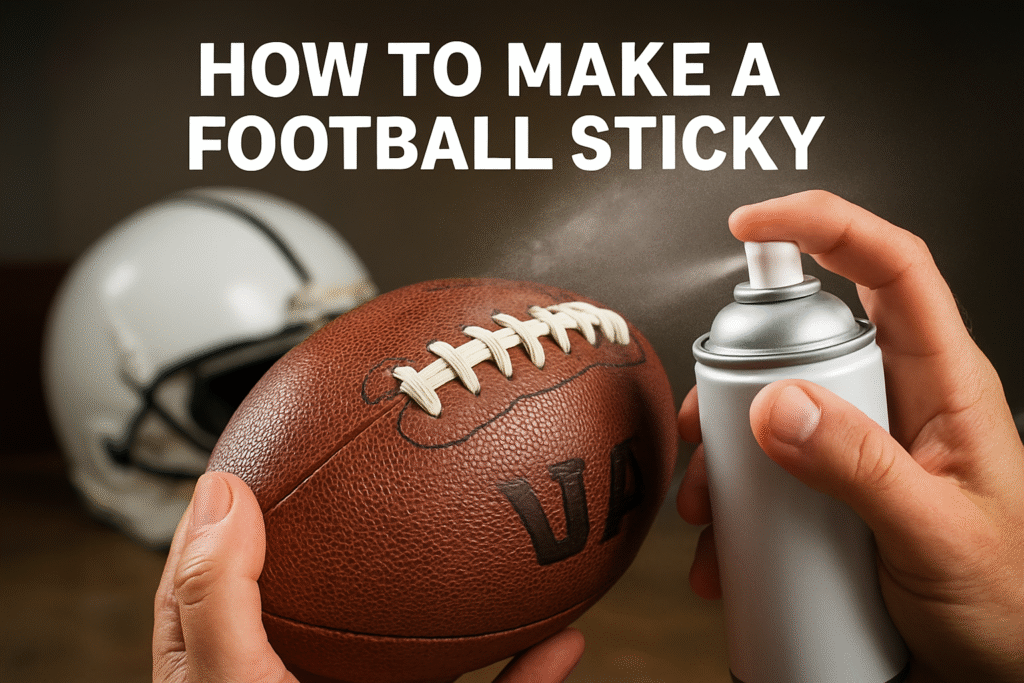
In football, grip can make all the difference. Whether you’re a quarterback throwing a perfect spiral, a receiver catching a deep pass, or a running back protecting the ball, having a secure hold is crucial. But with time and use, footballs can lose their tackiness and become slick, especially in cold, wet, or dusty conditions.
That’s when most players start wondering: how can you make a football sticky again?
In this complete guide, we’ll explain the best and safest ways to make your football sticky, improve your grip, and keep it game-ready without damaging the leather or rubber.
Why You Need a Sticky Football
Before learning the methods, it’s important to understand why grip matters so much in football.
Better Control: A tacky surface helps you hold onto the ball in any weather condition.
Improved Accuracy: For quarterbacks, grip affects throwing mechanics, spin, and precision.
Fewer Fumbles: Running backs and receivers with sticky hands and footballs reduce turnovers.
Confidence: When you trust your grip, you play faster and with more focus.
Professional players and teams spend time before every game prepping their footballs for ideal tackiness — so you’re not overdoing it by doing the same.
Understanding Football Materials
Not all footballs are created equal, and how you make them sticky depends on their material:
Leather footballs: Used in professional and college-level games. They’re durable and naturally tacky when maintained.
Composite or synthetic footballs: Common in youth and recreational play. They need extra help to improve grip.
Rubber footballs: Often used for training or casual play. These can be made sticky easily but lose tackiness faster.
Now, let’s look at different proven methods for restoring grip.
1. Clean the Football First
Before trying to make your football sticky, always start with cleaning. Dirt, dust, and oils from your hands build up and make the surface slick.
How to Clean It Properly:
Mix warm water and mild soap in a bowl.
Use a soft brush or towel to gently scrub the surface.
Wipe off excess moisture with a clean towel.
Let it air dry completely (do not use a hairdryer or direct sunlight).
Once your football is clean and dry, it’s ready for conditioning or tackifying products.
2. Use Football Tack Spray
Tack spray is one of the easiest and most effective ways to make a football sticky. It’s specifically made for improving grip on footballs, gloves, and other sports equipment.
Steps to Apply Tack Spray:
Shake the can well before use.
Hold it about 6–8 inches from the ball.
Spray an even coat over the entire surface.
Wait 1–2 minutes for it to dry.
Once it dries, the football should feel slightly tacky but not sticky enough to pick up dirt easily.
Recommended Use:
Apply before every game or practice.
Avoid over-spraying—it can attract dust and shorten the football’s life.
3. Try Tackifying Towels or Gels
If you prefer a reusable solution, tack towels or tack gels are great options. These are used in professional leagues and are legal under most game regulations.
How They Work:
Tack towels are pre-treated with a resin-like substance.
You simply rub the towel over the ball to instantly restore grip.
Tack Gels:
Squeeze a small amount on your hands and rub it on the football.
Wipe off excess to avoid residue buildup.
Popular brands include Wilson, Grip Boost, and Spalding tackifiers.
4. Use Leather Conditioner (For Leather Footballs Only)
If you’re working with a real leather football, you can use leather conditioner or mink oil to restore its natural tackiness.
How to Apply:
Place a small amount of conditioner on a soft cloth.
Rub it evenly into the leather surface.
Let it sit for 15–20 minutes.
Buff with a clean towel.
Leather conditioners don’t just improve grip—they also protect the football from cracking or drying out.
Tip: Avoid over-conditioning, as too much oil can make the surface greasy instead of tacky.
5. Scuff the Surface Lightly
If your football is brand new, it might be too smooth to grip well. Lightly scuffing it can help.
Method:
Use a soft-bristle brush or a dry towel to rough up the surface slightly.
Rub it in circular motions until the texture feels less glossy and more matte.
This method works especially well for composite and leather footballs. It helps grip sprays and gels stick better.
6. Use Grip-Enhancing Gloves
Sometimes, the solution isn’t on the ball but on your hands. Wearing sticky football gloves can greatly enhance your grip without altering the football itself.
Modern gloves are made with silicone or tackified palm material that sticks perfectly to the ball. If your football is older or worn, gloves can make a huge difference.
Pro Tip: Keep your gloves clean—dust and dirt quickly ruin their tackiness.
7. DIY Home Solutions
If you don’t have access to tack spray or towels, here are a few home methods to try (for casual or training use only):
a. Honey and Water Mix
Mix a teaspoon of honey with warm water.
Lightly dab it on your hands or ball for temporary tackiness.
Wipe off before serious gameplay.
b. Pine Resin or Tree Sap
Some players use a tiny amount of pine resin to create natural grip (used in baseball too). However, be careful—many leagues ban sticky substances on equipment.
c. Baby Wipes and Dry Towels
Simply wiping your football clean and drying it vigorously can bring back some natural tack if the ball isn’t too worn out.
8. Avoid These Mistakes
While trying to improve grip, it’s easy to damage your football. Here’s what to avoid:
Never use petroleum jelly or cooking oil — they make the ball slippery.
Avoid harsh chemicals like alcohol or bleach.
Don’t overuse tack sprays — residue builds up fast.
Don’t expose to extreme heat or sunlight — it can crack leather or warp rubber.
9. How to Maintain the Stickiness
Once your football has the perfect grip, you’ll want to keep it that way.
Maintenance Tips:
Store properly: Keep your football in a cool, dry place.
Clean after every session: Wipe off dirt and sweat.
Reapply tackifier as needed: Usually every 2–3 games.
Avoid wet surfaces: Water reduces tackiness quickly.
Consistent care keeps your football game-ready and prolongs its lifespan.
10. Is It Legal to Make a Football Sticky?
A common question players ask is whether it’s legal to apply grip enhancers.
In most casual or school leagues, tack sprays and gels are allowed.
In official competitions (like NCAA or NFL), altering the ball with sticky substances may violate rules.
However, cleaning, conditioning, and natural maintenance are always legal.
So, if you play competitively, check your league’s rulebook before applying any substance.
Frequently Asked Questions (FAQ)
1. How often should I reapply tack spray?
Typically once every few games, depending on usage and weather conditions.
2. Can I use grip spray on gloves too?
Yes. Most tack sprays are safe for both footballs and gloves.
3. What’s the best way to make a rubber football sticky?
Clean it thoroughly and use a light coating of tack towel or grip gel before play.
4. Do new footballs need to be broken in first?
Yes. Brand-new footballs are often too smooth. Lightly scuffing and conditioning them helps.
5. Can I use sandpaper to rough up the ball?
No. Sandpaper can damage the leather or rubber. Use a soft towel or brush instead.
Final Thoughts
Making your football sticky doesn’t have to be complicated. Whether you’re preparing for a big game or just tossing the ball in the backyard, a little effort can drastically improve your performance.
By cleaning, conditioning, and using the right tack-enhancing products, you can make any football feel brand new again. Remember—control starts with grip, and grip starts with care.
So, grab your football, follow these steps, and get ready to throw, catch, and carry with total confidence.