
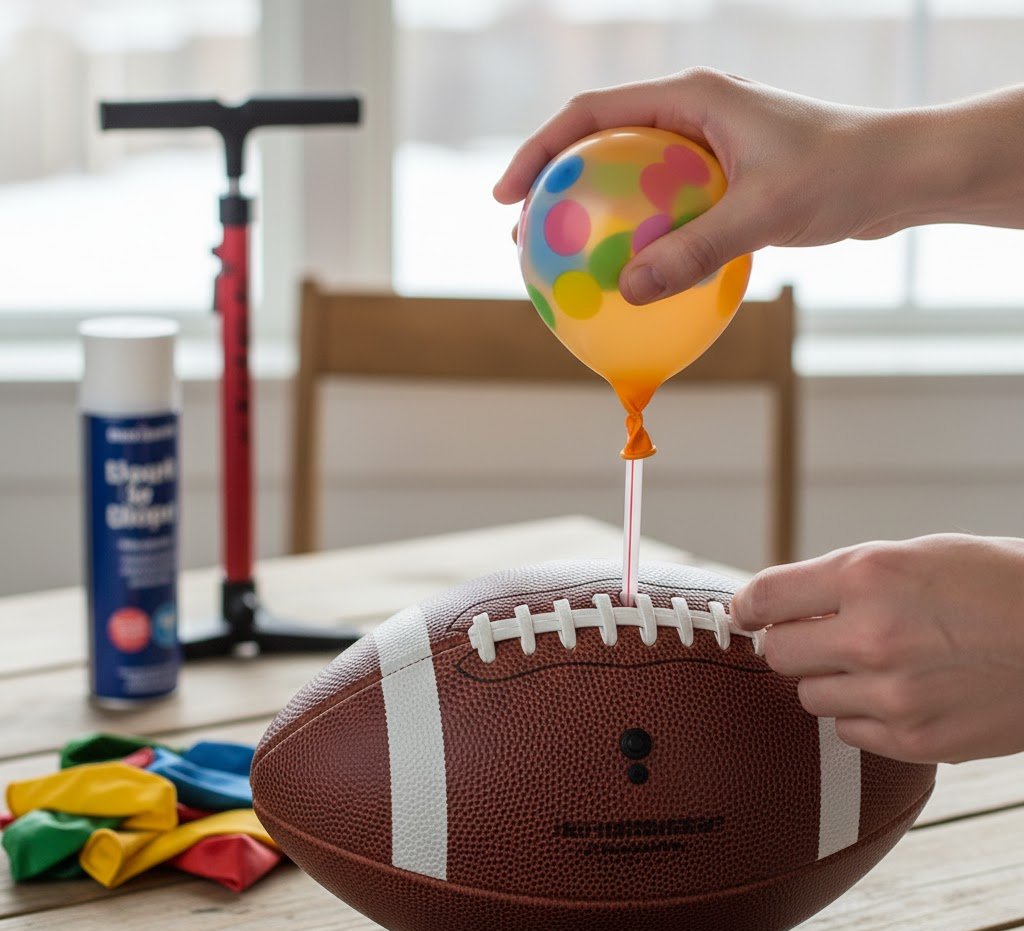
Nothing ruins a good game faster than realizing your football is flat — and you don’t have a pump nearby. Whether you’re at the park, at home, or getting ready for a pickup game, knowing how to inflate a football without a pump can save the day.
In this guide, we’ll show you several easy methods to inflate a football without a traditional air pump, using simple household tools or improvised techniques. We’ll also cover safety tips, inflation pressure recommendations, and how to avoid damaging your ball.
Why Proper Inflation Is Important
Before learning how to inflate your football without a pump, it’s important to understand why correct air pressure matters.
A properly inflated football ensures:
Better grip and control when throwing or catching.
Consistent bounce and shape during gameplay.
Improved durability — prevents the outer leather or rubber from cracking.
Accurate flight path for passes and kicks.
An underinflated football feels soft and heavy, while an overinflated one can be too hard, slippery, and even dangerous.
Ideal Pressure for a Football:
NFL standard: 12.5 to 13.5 psi
Youth/Practice balls: around 10.5 to 12 psi
Always aim for this range when inflating your ball, even if you’re doing it without a standard pump.
Tools and Materials You May Need
Even if you don’t have a pump, there are several alternative ways to inflate your football. You just need a few basic tools that you probably already have at home:
A ball needle (optional but recommended)
Compressed air can (like those used for cleaning keyboards)
Bicycle pump adapter or tube
Plastic straw or pen tube
Balloon
Air mattress or bike tire valve
Lubricant (such as water or petroleum jelly, to protect the valve)
Now let’s go through the different methods step by step.
Method 1: Inflate a Football Using a Compressed Air Can
This is one of the quickest and safest alternatives if you don’t have a pump.
Steps:
Get a compressed air can — usually found at electronics or office supply stores.
Attach a small nozzle or straw to direct the air.
Insert the straw gently into the football’s air valve.
Spray the air in short bursts until the ball starts to feel firm.
Check the firmness with your hands or a pressure gauge.
Tip:
Avoid spraying continuously — short bursts prevent overinflation and freezing damage to the valve.
Method 2: Inflate a Football Using a Balloon
Believe it or not, a balloon can hold enough air to inflate your football if used correctly.
Steps:
Blow up a large balloon until it’s full of air.
Hold the balloon closed so the air doesn’t escape.
Attach a straw or ball needle to the football’s valve.
Insert the other end of the straw into the balloon opening.
Gently release the balloon’s air into the ball.
You may need to repeat this a few times with multiple balloons until your football reaches proper firmness.
Pro Tip:
Use a rubber band or tape to hold the straw tight against the balloon’s opening for better air transfer.
Method 3: Use a Bicycle Pump or Tire Valve
If you have access to a bicycle pump, even without a football needle, you can still use it to inflate your football with a little creativity.
Steps:
Remove the valve cap from your bike tire or pump hose.
Insert a short plastic tube or straw into the valve opening.
Push the other end of the tube into your football’s valve.
Begin pumping slowly to push air into the football.
You’ll need to hold both ends tightly to prevent air leakage.
Optional:
If you have a Presta or Schrader adapter, it can make this method more efficient.
Method 4: Inflate a Football Using a Pen Tube
If you don’t have any special equipment, this DIY method can work surprisingly well in emergencies.
Steps:
Remove the ink refill from a ballpoint pen, leaving just the hollow tube.
Use this as a makeshift needle.
Blow air through the pen tube using your mouth, or connect it to a compressed air can or balloon.
Keep blowing air in short bursts until the football starts to firm up.
Caution:
This method requires patience — and you may need to repeat it several times. Always clean the pen tube and avoid overinflating the ball.
Method 5: Use an Air Mattress or Inflator
If you have an air mattress or inflatable pool pump, it can be an excellent replacement for a football pump.
Steps:
Find a nozzle adapter that fits the size of your football’s air valve.
Connect it to your mattress pump.
Hold the adapter firmly against the football’s valve.
Turn on the pump briefly to fill the ball with air.
Keep checking the firmness — these pumps are powerful and can overinflate the ball quickly.
Method 6: Blow Air Into the Football Manually (Last Resort)
If none of the above tools are available, you can inflate the ball using your breath — it’s not the most effective, but it works in emergencies.
Steps:
Find a plastic straw or pen tube that fits snugly into the valve.
Wet the tip slightly (for a better seal).
Blow air into the tube slowly and steadily.
Seal the valve immediately after removing the straw.
This method won’t fully inflate the ball to regulation pressure, but it can make it usable for casual play.
Important Tips for Safe Inflation
No matter which method you use, always follow these safety precautions to avoid damaging your football:
Never use sharp objects like needles without adapters — they can puncture the bladder.
Lubricate the valve before inserting anything to prevent tearing.
Do not overinflate — a ball that’s too hard can split at the seams.
Avoid extreme temperatures — hot air expands and can distort the shape.
Check firmness by hand — the football should feel solid but still slightly squeezable.
How to Test if the Football Is Properly Inflated
Once your ball feels firm, check for proper inflation using these quick tests:
Bounce Test: Drop the ball from shoulder height — it should bounce back up about two-thirds of the way.
Thumb Press Test: Press the ball gently with your thumbs; it should depress slightly but not too easily.
Gauge Test: If available, use a pressure gauge to confirm it’s between 12.5–13.5 psi (for NFL-style footballs).
If it feels rock-hard or overly soft, release or add a little air accordingly.
Maintenance Tips to Keep Your Football in Great Shape
Once your football is inflated, here’s how to maintain it for long-lasting use:
Store it in a cool, dry place.
Keep it away from direct sunlight when not in use.
Check the pressure weekly — footballs naturally lose air over time.
Clean dirt and moisture off after every game.
Avoid sitting or standing on the ball.
These small habits can extend the life of your football significantly.
Final Thoughts
Learning how to inflate a football without a pump is a valuable skill for any player or coach. Whether you use a balloon, compressed air, bike pump, or even your breath, these simple hacks can get you back in the game quickly.
To recap:
Always aim for proper inflation pressure (12.5–13.5 psi).
Use safe, clean tools like straws or pen tubes if you don’t have a needle.
Avoid overinflation or forcing air through damaged valves.
With a bit of creativity and care, you’ll never be stuck with a flat football again!