
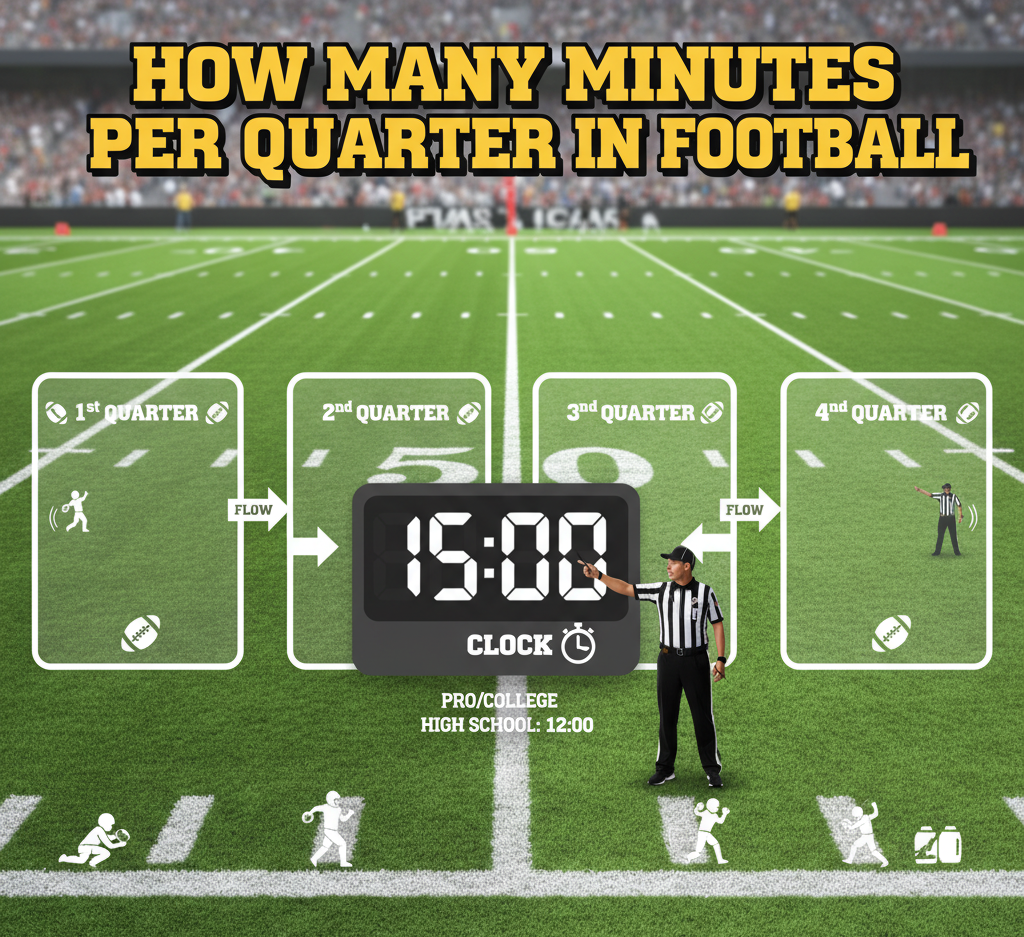
Whether you are a casual fan, a new player, or someone learning the rules of football, understanding how many minutes per quarter in football is fundamental. The structure of a football game is built around four quarters, each with its own timing rules, strategies, and clock management implications. Knowing the timing system not only helps you enjoy the game more but also enhances your understanding of game tactics, player stamina, and coaching decisions.
This comprehensive guide will explain the duration of quarters in different types of football, how the clock works, and why timing is so important for both players and fans.
Standard Quarter Length in Football
In traditional American football, whether in the NFL (National Football League) or NCAA college football, a game is divided into four quarters. Each quarter has a set duration:
NFL: 15 minutes per quarter
College Football (NCAA): 15 minutes per quarter
High School Football: 12 minutes per quarter (some variations exist based on state rules)
So in most standard formats, a football game has four 15-minute quarters, totaling 60 minutes of regulation play. High school football typically has shorter quarters to accommodate younger players and limited field time.
How the Clock Works in Football
While the quarters are set, the actual duration of a football game is much longer due to clock stoppages. Understanding how the football clock works is essential.
When the Clock Stops
The game clock stops in several situations, including:
Incomplete pass: The clock stops immediately when the ball hits the ground.
Out of bounds: When a player carrying the ball steps out of bounds.
Penalties: Certain penalties may stop the clock temporarily.
First downs (college only): In NCAA games, the clock stops temporarily to move the chains.
Timeouts: Each team has three timeouts per half in college football and NFL, which stop the clock.
Change of possession: After a punt, turnover, or kickoff, the clock may stop until the next snap.
Because of these stoppages, a 60-minute game often lasts 3 to 3.5 hours in real time.
Timing Differences Between NFL, College, and High School
While all football games use quarters, there are subtle differences:
1. NFL Football
Four quarters, 15 minutes each
Two-minute warning at the end of the second and fourth quarters
Play clock: 40 seconds between plays
Overtime rules differ, affecting game length
2. College Football (NCAA)
Four 15-minute quarters
Clock stops temporarily after first downs to move chains
Overtime uses alternating possessions until a winner is determined
3. High School Football
Four quarters, 12 minutes each (varies by state)
Shorter halftime, usually 15–20 minutes
Clock rules may differ based on league or local association
Why Understanding Quarter Length Matters
Knowing how many minutes per quarter in football is more than trivia—it affects gameplay and strategy:
Player Stamina
Coaches need to manage substitutions and fatigue. Knowing quarter duration allows them to plan rotations and maintain peak performance.Game Strategy
Timing affects play-calling, especially in the final minutes of a quarter or game. Teams may hurry or slow the clock based on score and situation.Fan Experience
Watching a football game is more enjoyable when you understand how much time is left in a quarter and the impact of stoppages.
Halftime and Intermission
In addition to the four quarters:
NFL Halftime: Usually 12 minutes
College Halftime: Typically 20 minutes
High School Halftime: Around 15 minutes
Halftime allows players to rest, coaches to adjust strategies, and fans to enjoy entertainment.
Clock Management and the Two-Minute Drill
One of the most exciting aspects of football comes in the final two minutes of each half:
Two-Minute Drill: Teams often use fast-paced play calling to maximize scoring opportunities before the end of a quarter or half.
Understanding the quarter timing is crucial for executing the drill effectively.
Players and coaches must manage timeouts, play clock, and substitutions carefully during this period.
Impact of Quarters on Scoring
End-of-Quarter Plays: Teams often try to score before the quarter ends.
Momentum Shifts: Scoring just before halftime can psychologically impact both teams.
Game Flow: The structure of quarters helps maintain a rhythm and balance of offense and defense.
Special Situations Affecting Quarters
Overtime
NFL: Overtime is a 10-minute period (regular season) after four quarters if the game is tied.
College: Alternating possessions continue until a winner emerges.
High school: Overtime rules vary by state.
Delays
Weather, injuries, and official reviews can extend actual game length beyond the scheduled 15 minutes per quarter.
Tips for Fans Watching Football
Track the Game Clock: Always check the official clock on the field or broadcast.
Understand Stoppages: Knowing why the clock stops improves understanding of strategy.
Follow Quarters Closely: Excitement often peaks near the end of each quarter.
Plan Viewing Time: With halftime, stoppages, and commercials, a 60-minute game can last three hours on TV.
Key Takeaways
NFL and College Football: 15 minutes per quarter
High School Football: Typically 12 minutes per quarter
The game clock stops for various reasons, making actual games longer
Quarter timing affects strategy, substitutions, scoring, and fan experience
Understanding how many minutes per quarter in football is essential for players, coaches, and fans alike. It helps you anticipate game flow, appreciate strategy, and fully enjoy every exciting moment.