
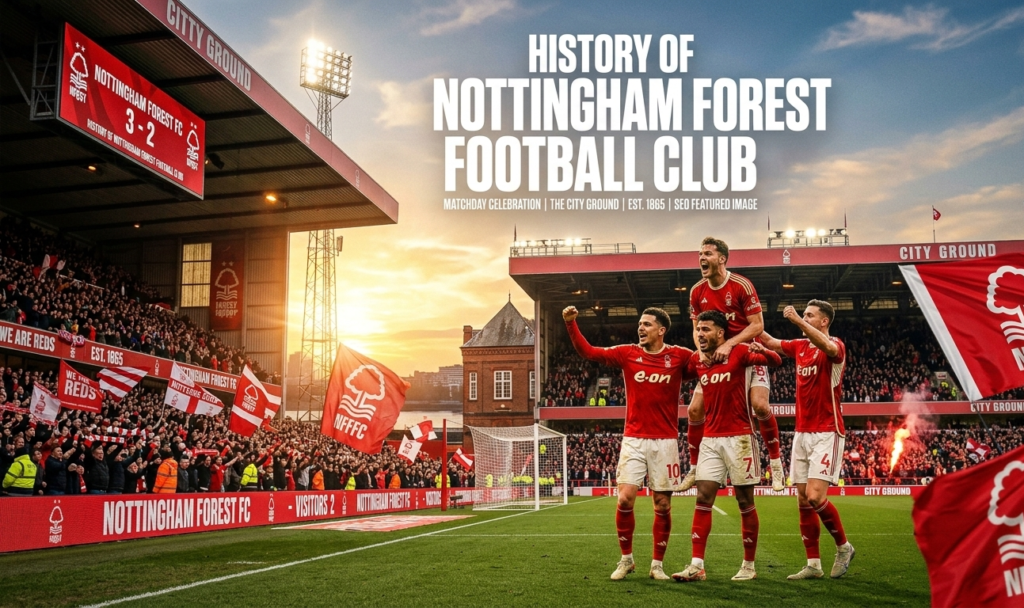
Nottingham Forest Football Club, one of the most storied clubs in English football, has a rich history spanning over a century. Based in Nottingham, England, the club has experienced moments of domestic glory, European triumphs, and periods of rebuilding that have shaped its identity. Known for its passionate supporters, legendary managers, and iconic players, Nottingham Forest remains an important figure in football history.
Founding and Early Years
Nottingham Forest Football Club was founded in 1865, making it one of the oldest professional football clubs in England. Its establishment was driven by the growing popularity of football in the Nottingham area during the 19th century.
Key Early Developments
Originally founded by a group of local men in Nottingham
Joined regional competitions to establish competitive presence
Adopted traditional red and white club colors that remain iconic today
Played early matches at various local grounds before settling at The City Ground
In the early years, Forest focused on building a solid foundation, nurturing local talent, and gaining recognition in regional football circles.
Domestic Success and League Achievements
Nottingham Forest has experienced significant success in domestic competitions, particularly under the management of legendary figures.
1. Early League Competitions
Entered the Football League in 1892
Experienced fluctuating league positions but established itself as a competitive club
Developed local rivalries, particularly with Notts County, enhancing community engagement
2. Notable Domestic Triumphs
First Division Champions (1977-78): Under Brian Clough, Forest won the top-flight league title, marking one of the most remarkable achievements in English football
FA Cup and League Cup Success: Forest has lifted domestic cups, demonstrating consistency in knockout competitions
Promotion and Rebuilding Phases: The club has navigated promotions and relegations while maintaining a strong fan base
Domestic success solidified Nottingham Forest’s status as a competitive club in English football.
European Glory
One of the most remarkable aspects of Nottingham Forest’s history is its European achievements, particularly under Brian Clough and his long-time assistant Peter Taylor.
European Cup Triumphs
1978-79 European Cup Winners: Nottingham Forest achieved an extraordinary feat by winning the European Cup, just a year after being promoted to the First Division
1979-80 European Cup Winners: Forest retained their European crown, becoming one of the few clubs in history to achieve back-to-back European titles
Legacy of European Success
These victories not only elevated Nottingham Forest internationally but also demonstrated the tactical brilliance of Brian Clough and the resilience of the squad. Key players, including Trevor Francis, John Robertson, and Peter Shilton, became household names and legends of the club.
Legendary Managers and Figures
The history of Nottingham Forest is intertwined with iconic managers and players who left a lasting mark.
Brian Clough (Manager)
Managed Forest from 1975 to 1993
Led the club from the Second Division to European champions
Known for tactical intelligence, leadership, and man-management
Revolutionized the club’s culture and global reputation
Peter Taylor (Assistant Manager)
Provided scouting expertise and tactical support
Instrumental in player recruitment and team cohesion
Key partner in Forest’s European and domestic successes
Notable Players
Trevor Francis: First £1 million British player, crucial in European campaigns
John Robertson: Legendary winger known for assists and goals
Peter Shilton: Record-breaking goalkeeper with immense experience
Stuart Pearce: Iconic defender and club captain
These figures contributed to Nottingham Forest’s unique identity and enduring legacy.
Stadium and Fan Culture
The City Ground, home to Nottingham Forest since 1898, has been central to the club’s history.
Stadium Features
Located on the banks of the River Trent in West Bridgford, Nottingham
Capacity exceeding 30,000, accommodating passionate supporters
Renovated multiple times to meet modern standards
Fan Culture
Forest supporters are renowned for their loyalty, vibrant chants, and community spirit. The rivalry with Notts County and other regional clubs has created memorable matches and a strong sense of identity. Fans celebrate club traditions, including annual events and European legacy commemorations.
Tactical Evolution
Over its history, Nottingham Forest has evolved tactically, influenced by managers and player capabilities.
Key Tactical Eras
Clough-Taylor Era (1975-1993):
Emphasized attacking football, disciplined defense, and counter-attacking strategy
Flexible formations adapting to opponents in domestic and European competitions
Post-Clough Period:
Tactical adaptations to modern football, including more possession-based approaches
Focus on youth development and integration of academy players
Recent Years:
Emphasis on fitness, pressing, and structured defensive lines
Recruitment strategies balancing experience and emerging talent
These tactical approaches reflect the club’s commitment to competitiveness and adaptability.
Challenges and Rebuilding Phases
Like many historic clubs, Nottingham Forest has faced challenges:
Relegations from the Premier League and the need for restructuring
Financial constraints and the pressures of modern football economics
Balancing domestic ambitions with European aspirations
Despite these hurdles, the club has remained resilient, often returning to top-flight football and maintaining a loyal supporter base.
Youth Development and Academy
Nottingham Forest has a respected academy, producing talented players for both the first team and professional careers elsewhere.
Academy Highlights
Focus on technical skill, tactical understanding, and mental resilience
Provides clear pathways from youth teams to senior squads
Emphasizes local talent recruitment and integration with the community
Recent graduates include players who have competed domestically and internationally
The academy ensures that Nottingham Forest remains competitive while honoring its tradition of nurturing talent.
Cultural and Historical Impact
The history of Nottingham Forest Football Club extends beyond trophies and matches:
Symbol of resilience and ambition in English football
Iconic European victories elevated the club’s global reputation
Contribution to football culture through legendary players and memorable matches
Inspires generations of footballers and fans in Nottingham and worldwide
The club’s rich heritage continues to influence football culture and community engagement.
Recent Developments
Promotion to the Premier League and rebuilding strategies under modern management
Emphasis on youth recruitment, tactical modernization, and financial sustainability
Expanding global fan engagement and brand visibility
These developments demonstrate Nottingham Forest’s commitment to evolving while respecting its historical identity.
Conclusion
The history of Nottingham Forest Football Club is a story of ambition, resilience, and triumph. From its founding in 1865 to European glory under Brian Clough, and the nurturing of legendary players, Forest has left an indelible mark on football history.
Its legacy is defined by tactical innovation, loyal supporters, iconic stadium moments, and a commitment to both domestic and international success. Nottingham Forest remains not only a football club but a symbol of enduring passion, community pride, and sporting excellence in England and beyond.