
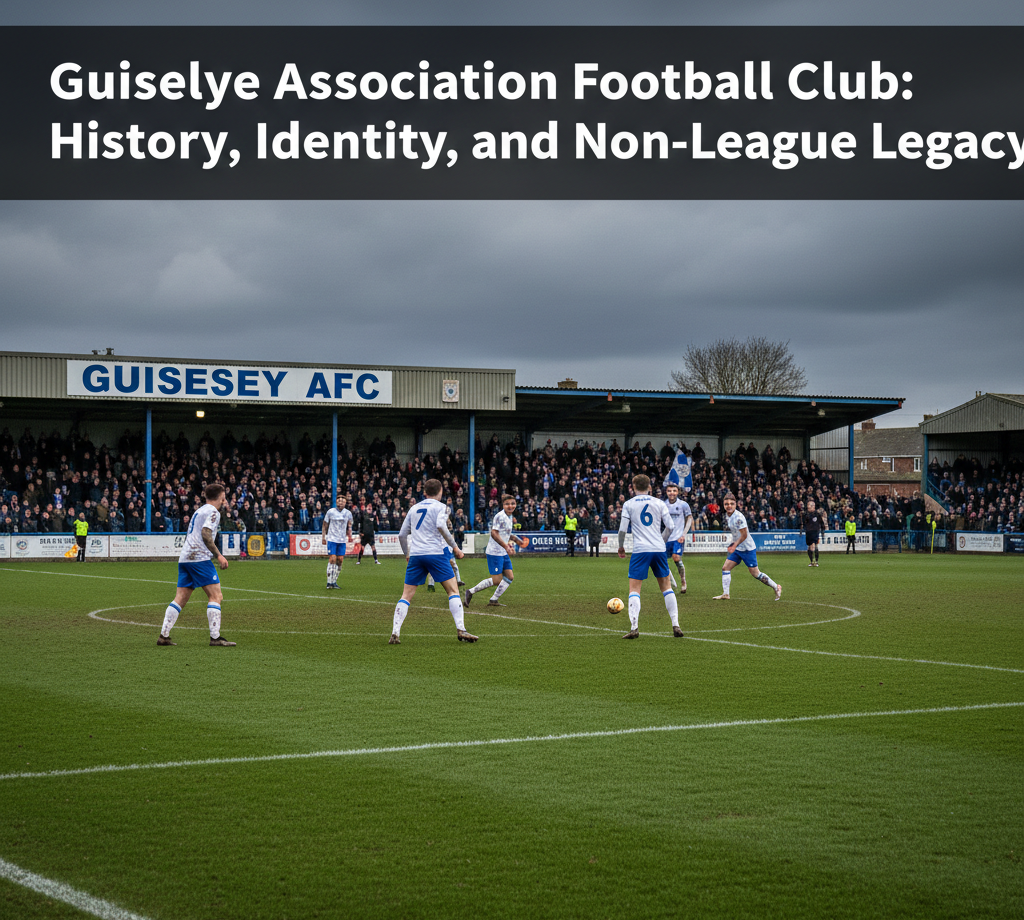
Guiseley Association Football Club, commonly known as Guiseley AFC, is a respected semi-professional football club based in Guiseley, West Yorkshire, England. Despite competing outside the top tiers of English football, Guiseley AFC has built a strong reputation through resilience, community connection, and competitive performances in non-league football.
This in-depth article explores the history, identity, achievements, stadium, fan culture, and future ambitions of Guiseley Association Football Club, highlighting why it remains an important part of English grassroots football.
Introduction to Guiseley Association Football Club
Guiseley AFC represents the heart of non-league football in England, where community values, passion, and tradition are just as important as trophies. The club has steadily progressed through the English football pyramid while maintaining financial responsibility and local engagement.
Key Club Information
Full Name: Guiseley Association Football Club
Founded: 1909
Location: Guiseley, West Yorkshire
Nickname: The Lions
Stadium: Nethermoor Park
Club Colors: White and Blue
League System: English Non-League Football
History of Guiseley AFC
Early Years (1909–1950s)
Guiseley AFC was founded in 1909, during a period when football clubs were emerging across England as community institutions. The club initially competed in local amateur leagues, representing the town of Guiseley with pride.
During these early years:
The club relied on local players
Matches were community events
Football was closely tied to local identity
The foundation of Guiseley AFC laid the groundwork for over a century of footballing tradition.
Development Through Regional Leagues
Throughout the mid-20th century, Guiseley AFC progressed through various regional and county leagues, gaining experience and recognition.
Key milestones included:
Entry into the West Yorkshire League
Promotion to stronger regional competitions
Gradual improvement in facilities and organization
These years helped establish Guiseley as a competitive and stable club within the English non-league system.
Rise in Non-League Football
Northern Premier League Success
Guiseley AFC’s most notable progress came through the Northern Premier League (NPL), where the club enjoyed consistent performances and built a reputation as a tough opponent.
Highlights of this period:
League promotions through merit
Strong defensive football
Development of talented semi-professional players
The club’s disciplined approach allowed it to compete with more established non-league sides.
Promotion to the National League North
One of the club’s greatest achievements was reaching the National League North, the sixth tier of English football.
This achievement:
Increased national visibility
Attracted higher-quality players
Boosted attendances and sponsorship
Competing at this level placed Guiseley AFC among the top semi-professional clubs in England.
Club Identity and Branding
Club Name and Symbolism
The name Guiseley Association Football Club reflects traditional English football naming conventions, emphasizing community and association-based sport.
Nickname: “The Lions”
The club’s nickname, The Lions, symbolizes:
Strength and courage
Competitive spirit
Pride and leadership
This identity is embraced by players, fans, and the local community.
Club Colors and Crest
Colors: White and Blue
Crest: Features a lion motif representing bravery and resilience
The visual identity of Guiseley AFC is simple, recognizable, and closely tied to the club’s heritage.
Nethermoor Park: Home of Guiseley AFC
Stadium Overview
Guiseley AFC plays its home matches at Nethermoor Park, a traditional non-league football ground with a strong community atmosphere.
Stadium Features:
Capacity of approximately 3,000 spectators
Covered seating and standing areas
Clubhouse and hospitality facilities
Training and administrative spaces
Nethermoor Park offers an intimate and authentic football experience, bringing fans close to the action.
Fan Base and Community Support
Guiseley AFC enjoys loyal support from local fans, volunteers, and families who have followed the club for generations.
Supporter Culture:
Matchday chants and banners
Friendly, family-oriented atmosphere
Strong volunteer involvement
Local businesses backing the club
Fans play a vital role in sustaining the club both financially and emotionally.
Youth Development and Grassroots Football
Guiseley AFC places importance on youth football and grassroots development, aligning with its community-focused philosophy.
Youth System Goals:
Develop local young talent
Teach football fundamentals
Promote discipline and teamwork
Create pathways to senior football
Youth involvement strengthens the club’s long-term future and reinforces its role as a community institution.
Coaching Philosophy and Playing Style
Guiseley AFC traditionally adopts a practical and disciplined playing style, well-suited to non-league football.
Key Tactical Principles:
Strong defensive organization
Physical fitness and work rate
Quick counter-attacks
Team cohesion over individual flair
This approach allows the club to remain competitive against financially stronger teams.
Financial Model and Club Management
Operating in non-league football requires careful financial management, and Guiseley AFC follows a sustainable model.
Revenue Sources:
Matchday ticket sales
Sponsorships and partnerships
Club events and hospitality
Merchandise sales
Financial Priorities:
Responsible wage structure
Investment in facilities
Youth development
Long-term sustainability
The club avoids financial risk while maintaining competitive ambition.
Rivalries and Competitive Matches
Guiseley AFC has developed local rivalries with nearby clubs in West Yorkshire and surrounding regions.
Importance of Rivalries:
Increased matchday attendance
Stronger fan engagement
Heightened competitive atmosphere
Derby matches often represent the high point of the season for players and supporters.
Challenges in Non-League Football
Like many semi-professional clubs, Guiseley AFC faces challenges such as:
Limited financial resources
Player turnover
Travel demands
Balancing ambition with sustainability
Despite these challenges, the club continues to compete with determination and adaptability.
Guiseley AFC in the Modern Era
In recent seasons, Guiseley AFC has focused on:
Stabilizing league position
Developing young and local players
Strengthening community ties
Enhancing digital presence
The club’s modern strategy balances footballing ambition with realism.
Digital Presence and Fan Engagement
Guiseley AFC uses digital platforms to connect with fans:
Official website for news and fixtures
Social media updates and match coverage
Community announcements and promotions
Digital engagement helps the club reach new supporters beyond the local area.
Role of Guiseley AFC in English Football
Guiseley AFC represents the essence of English non-league football, where passion and community matter as much as success.
The club contributes by:
Providing opportunities for semi-professional players
Supporting grassroots football
Preserving traditional football culture
Acting as a community hub
Future Vision and Ambitions
Guiseley Association Football Club aims to:
Remain competitive in non-league football
Develop homegrown talent
Improve facilities at Nethermoor Park
Expand fan engagement and sponsorship
Maintain financial sustainability
The club’s future vision prioritizes steady growth over short-term risk.
Why Guiseley Association Football Club Matters
Guiseley AFC is more than a football club—it is:
A symbol of local pride
A platform for aspiring players
A gathering place for the community
A guardian of traditional football values
Its longevity and resilience highlight the importance of grassroots and semi-professional football in England.
Conclusion
Guiseley Association Football Club stands as a proud example of English non-league football. With over a century of history, strong community roots, and a commitment to sustainability, the club continues to play a vital role in the football landscape of West Yorkshire.
From Nethermoor Park to competitive league campaigns, Guiseley AFC represents passion, perseverance, and pride. As the club looks to the future, it remains dedicated to its core values—community, commitment, and competitive football.