
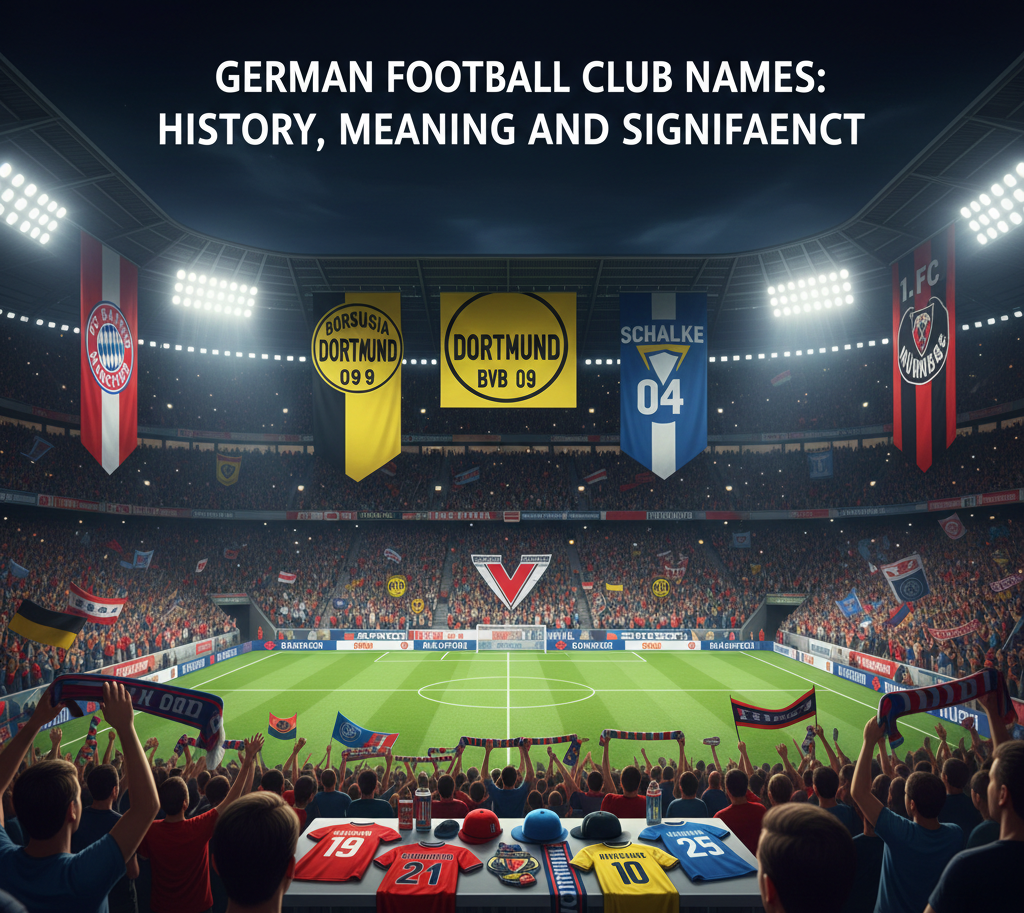
German football is famous worldwide, not just for its clubs’ success on the pitch but also for the rich history and meaning behind their names. From Bayern Munich to Borussia Dortmund, every club name carries tradition, regional identity, or historical significance. Understanding German football club names gives insight into the country’s culture, football evolution, and branding.
This comprehensive guide explores German football club names, their origins, meanings, and how they influence identity, fan culture, and international recognition.
What Are German Football Club Names?
A football club name is the official identity of a club, used in competitions, marketing, and branding. German club names often include:
City or region – representing the club’s home
Club type or organization – e.g., Sportverein (SV), Fußball-Club (FC)
Founding year or historical references
For example, FC Bayern München combines the type (Football Club), region (Bavaria), and city (Munich).
Why Club Names Matter
Club names are more than just labels—they are symbols of identity and pride.
Key Reasons Club Names Are Important:
Represent local or regional heritage
Foster fan loyalty and cultural connection
Influence brand recognition nationally and globally
Serve as marketing and merchandise assets
A club name like Borussia Dortmund immediately connects fans to the city of Dortmund and the historical term “Borussia,” derived from Prussia.
Common Components of German Football Club Names
Many German clubs share common patterns in their names.
1. City or Regional Identifier
Most club names include their home city or region, reflecting local pride. Examples:
Bayern Munich – Munich, Bavaria
Schalke 04 – Gelsenkirchen district of Schalke
VfL Wolfsburg – Wolfsburg city
This emphasizes the club’s local roots and builds community support.
2. Organizational Terms
Common German football terms in club names:
FC (Fußball-Club): Football Club
SV (Sportverein): Sports Association / Club
VfL (Verein für Leibesübungen): Club for Physical Exercise
TSV (Turn- und Sportverein): Gymnastics and Sports Club
SC (Sport-Club): Sports Club
For example, VfB Stuttgart stands for Verein für Bewegungsspiele Stuttgart, meaning “Club for Movement Games Stuttgart.”
3. Year of Establishment
Many German clubs include their founding year, often as part of the name. Examples:
Schalke 04 – founded in 1904
1. FC Nürnberg – “1.” indicates the first football club in the city
1. FC Kaiserslautern – first football club in Kaiserslautern
This highlights heritage and history.
4. Historical or Regional References
Some names include historical or geographical terms:
Borussia Dortmund – “Borussia” is the Latin term for Prussia
FC Erzgebirge Aue – refers to the Ore Mountains (Erzgebirge) region
RB Leipzig – “Red Bull” branding with Leipzig city
Historical references connect fans to local or national pride.
Famous German Football Club Names and Their Meanings
Here are some well-known examples:
1. Bayern Munich (FC Bayern München)
Type: Fußball-Club
City/Region: Bavaria (Bayern), Munich
Meaning: Represents Bavaria’s pride and football excellence
2. Borussia Dortmund (BVB)
Type: Ballspiel-Verein (BVB)
City: Dortmund
“Borussia” = Latin for Prussia, honoring historical identity
3. Schalke 04
Type: Fußball-Club
City/District: Schalke, Gelsenkirchen
Founded in 1904
4. VfB Stuttgart
Type: Verein für Bewegungsspiele
City: Stuttgart
Focused originally on gymnastics and sports, now primarily football
5. 1. FC Nürnberg
Type: Football Club
City: Nürnberg
“1.” indicates it was the first football club in the city
6. RB Leipzig
Type: FC
City: Leipzig
Owned by Red Bull, showing modern branding influences
How German Football Club Names Reflect History and Culture
German football names often reveal cultural and historical context:
1. Regional Identity
Names connect clubs to cities, districts, and regions, fostering local support.
Example: VfL Wolfsburg represents the Wolfsburg city community.
2. Historical Influence
Names often reflect early 20th-century sports culture, gymnastics, and community clubs.
Example: TSV 1860 Munich started as a gymnastics and sports club in 1860.
3. Fan Connection
Fans identify strongly with names that reflect heritage, pride, and tradition, creating lifelong loyalty.
Trends in Modern German Football Club Names
1. Corporate Influence
Some modern clubs reflect sponsorship in their names:
RB Leipzig – Red Bull branding
TSG Hoffenheim – TSG stands for a multi-sport club, modern corporate support
2. Shorter, Global-Friendly Names
Clubs simplify names for international branding:
Bayern Munich instead of FC Bayern München
Borussia Dortmund retains iconic “BVB” initials for global recognition
3. Emphasis on Branding
Names are now part of marketing, merchandising, and social media strategy to attract international fans.
Importance of Club Names in Branding and Merchandising
Club names drive revenue and recognition:
Merchandise Sales: Fans buy jerseys, scarves, and hats with official club names
Digital Branding: Social media handles, apps, and websites rely on recognizable names
Sponsorships: Strong, well-known names attract national and global brands
Global Expansion: International fans recognize and associate with iconic club names
How German Clubs Choose Names Today
Modern German clubs consider:
Historical Legacy: Retain tradition while modernizing branding
Regional Identity: Keep city or regional association
Fan Recognition: Easy to remember, chant, and market
Digital Strategy: Short, clean, and globally understandable
Merchandising Appeal: Works on jerseys, hats, scarves, and merchandise
Unique Naming Patterns in Germany
Some German clubs have unusual naming features:
Numerical Prefix: 1. FC Nürnberg – “1.” shows first football club
Latin or Historical Names: Borussia Dortmund – “Borussia” = Prussia
Merged Clubs: TSG Hoffenheim – reflects sports club merger
These patterns often make German football club names distinctive and memorable.
Common Abbreviations in German Club Names
Understanding abbreviations helps international fans decode names:
| Abbreviation | Meaning |
|---|---|
| FC | Fußball-Club (Football Club) |
| SV | Sportverein (Sports Club) |
| VfB | Verein für Bewegungsspiele (Club for Physical Exercise) |
| TSG | Turn- und Sportgemeinschaft (Gymnastics & Sports Association) |
| SC | Sport-Club (Sports Club) |
| BVB | Ballspiel-Verein Borussia (Borussia Ball Game Club) |
Global Recognition of German Football Club Names
German clubs are widely known worldwide due to:
Success in domestic leagues (Bundesliga)
International competitions (Champions League, Europa League)
Merchandise and fan culture
Iconic club names that are easy to recognize
Names like Bayern Munich and Borussia Dortmund are synonymous with German football excellence.
Why Understanding Club Names Matters
Knowing German football club names helps fans:
Connect with history and culture
Understand club identity and values
Engage with global football discussions
Appreciate branding and marketing strategies
For new fans, learning names is the first step to becoming part of the football community.
Future Trends in German Football Club Names
Corporate Branding: More clubs may incorporate sponsors in names
Simplified International Branding: Shorter names for global appeal
Digital Optimization: Names suitable for websites, apps, and social media
Heritage Preservation: Balancing tradition with modernity
German clubs aim to remain both historically rooted and globally marketable.
Conclusion
German football club names are more than just identifiers—they reflect history, heritage, regional pride, and branding strategy. From Bayern Munich to Schalke 04, each name tells a story, connects fans to a community, and represents a club’s identity both locally and globally.
Understanding these names provides insight into German football culture, fan loyalty, and the business of modern football. Clubs that carefully preserve tradition while embracing modern branding continue to thrive both on and off the pitch.