
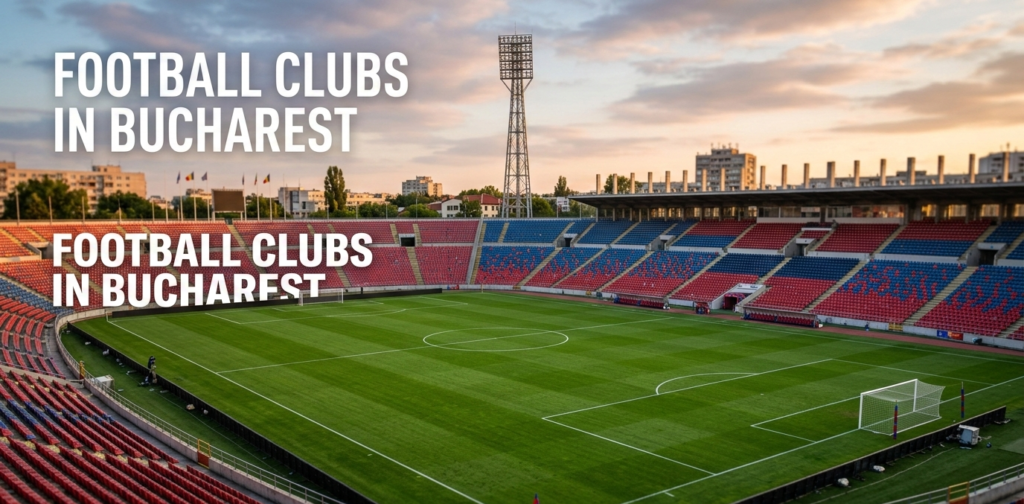
Bucharest is the undisputed heart of Romanian football. The capital city has produced legendary teams, unforgettable European nights, and some of the fiercest rivalries in Eastern Europe. When people search for football clubs in Bucharest, they are not just looking for team names — they are exploring a football culture shaped by history, passion, and competition.
This comprehensive guide explains the major football clubs in Bucharest, their achievements, stadiums, rivalries, and why the city continues to dominate Romanian football.
Why Bucharest Is the Football Capital of Romania
Bucharest is home to Romania’s most successful and historically important football clubs. The city’s teams have won the majority of national league titles and represented the country in European competitions for decades.
Football in Bucharest is deeply connected to community identity. Each club has its own history, social background, and loyal supporter base. Derby matches bring intense emotions, full stadiums, and national attention.
Major Football Clubs in Bucharest
FCSB (Formerly Steaua București)
Founded in 1947, FCSB is the most successful football club in Romania. The club achieved international fame after winning the European Cup in 1986, becoming the first Eastern European team to win the competition during that era.
Key achievements include:
Numerous Romanian Liga I titles
Multiple Romanian Cup victories
European Cup and European Super Cup triumph
FCSB plays its home matches at Arena Națională, the largest stadium in Romania. The club consistently competes for domestic titles and regularly participates in European competitions.
Dinamo București
Established in 1948, Dinamo București is another historic powerhouse in Romanian football. The club has won multiple national championships and has a strong tradition of developing talented players.
Dinamo’s identity has long been associated with determination and competitive spirit. Although the club has faced financial and sporting challenges in recent years, it remains one of the most supported teams in the country.
The rivalry between Dinamo and FCSB is known as the “Eternal Derby,” one of the most intense football rivalries in Romania.
Rapid București
Rapid București, founded in 1923, is one of the oldest clubs in the city. Known for its passionate supporters, Rapid has a strong working-class identity and deep roots in the local community.
The club has won several domestic trophies and has experienced periods of financial difficulty followed by impressive comebacks. Rapid now plays at the modern Giulești Stadium, which reflects the club’s ambition and renewed strength.
Rapid’s supporters are considered among the most loyal in Romania, creating unforgettable atmospheres during home matches.
Other Football Clubs in Bucharest
Apart from the three giants, Bucharest has hosted several other clubs throughout its history. Some have competed in Romania’s top division, while others focus on youth development and lower-league football.
These smaller clubs contribute to the city’s vibrant football ecosystem and help develop young talent for the future.
The Eternal Derby: A Clash of Giants
The match between FCSB and Dinamo București is the biggest football event in the capital. This derby represents more than competition for points; it reflects decades of rivalry and contrasting club identities.
During derby matches:
Stadiums are packed with passionate fans
Choreographed displays create visual spectacles
Media coverage reaches national attention
Emotions run high on and off the pitch
Even when one team is not competing for the title, the derby remains the highlight of the season.
Stadiums in Bucharest
Arena Națională
This is the largest stadium in Romania and hosts major domestic and international matches. With a capacity of over 50,000 spectators, it represents modern Romanian football infrastructure.
Giulești Stadium
Home of Rapid București, this newly built stadium provides a modern football experience and reflects the club’s revival.
Dinamo Stadium (Planned Development)
Plans for a new stadium aim to modernize facilities and restore Dinamo’s competitive image.
Youth Academies and Talent Development
Football clubs in Bucharest invest heavily in youth development. Many Romanian national team players began their careers in academies located in the capital.
Youth programs focus on:
Technical development
Tactical awareness
Physical conditioning
Professional discipline
The city continues to produce promising footballers who compete both domestically and internationally.
European Influence and International Recognition
Bucharest clubs have consistently represented Romania in European competitions. The 1986 European Cup victory remains the pinnacle of Romanian club football history.
Participation in European tournaments has helped increase the international visibility of Bucharest football and provided valuable experience for players and coaches.
The Cultural Importance of Football in Bucharest
Football in Bucharest is more than sport — it is identity. Supporter groups maintain traditions passed down through generations. Chants, banners, and club loyalty shape the city’s football culture.
Match days transform neighborhoods into vibrant gatherings of fans. For many residents, supporting a club is part of family tradition.
Challenges Facing Bucharest Clubs
Despite their rich history, football clubs in Bucharest face modern challenges, including:
Financial management issues
Competition from European leagues
Infrastructure modernization
Youth retention and player transfers
However, strategic investments and modern management practices are helping clubs rebuild and strengthen their positions.
The Future of Football Clubs in Bucharest
The future looks promising. With improved stadium facilities, stronger youth academies, and increased digital engagement, Bucharest clubs are adapting to modern football standards.
The continued focus on player development and smart management could help restore Romanian football’s strong presence in European competitions.
Why Football Clubs in Bucharest Matter
Bucharest dominates Romanian football history. The capital’s clubs have won most national titles and provided some of the country’s most memorable football moments.
They contribute to:
National team development
Domestic league competitiveness
European representation
Cultural identity and sports heritage
For football fans, historians, and sports analysts, Bucharest remains one of Eastern Europe’s most fascinating football cities.
Conclusion
Football clubs in Bucharest represent tradition, rivalry, success, and passion. From FCSB’s historic European triumph to Dinamo’s fierce competitiveness and Rapid’s loyal fan base, the capital city continues to shape Romanian football.
With modern stadiums, strong youth systems, and passionate supporters, Bucharest remains the beating heart of the nation’s football scene. As the game evolves, the city’s clubs are determined to maintain their legacy while building a stronger future.