
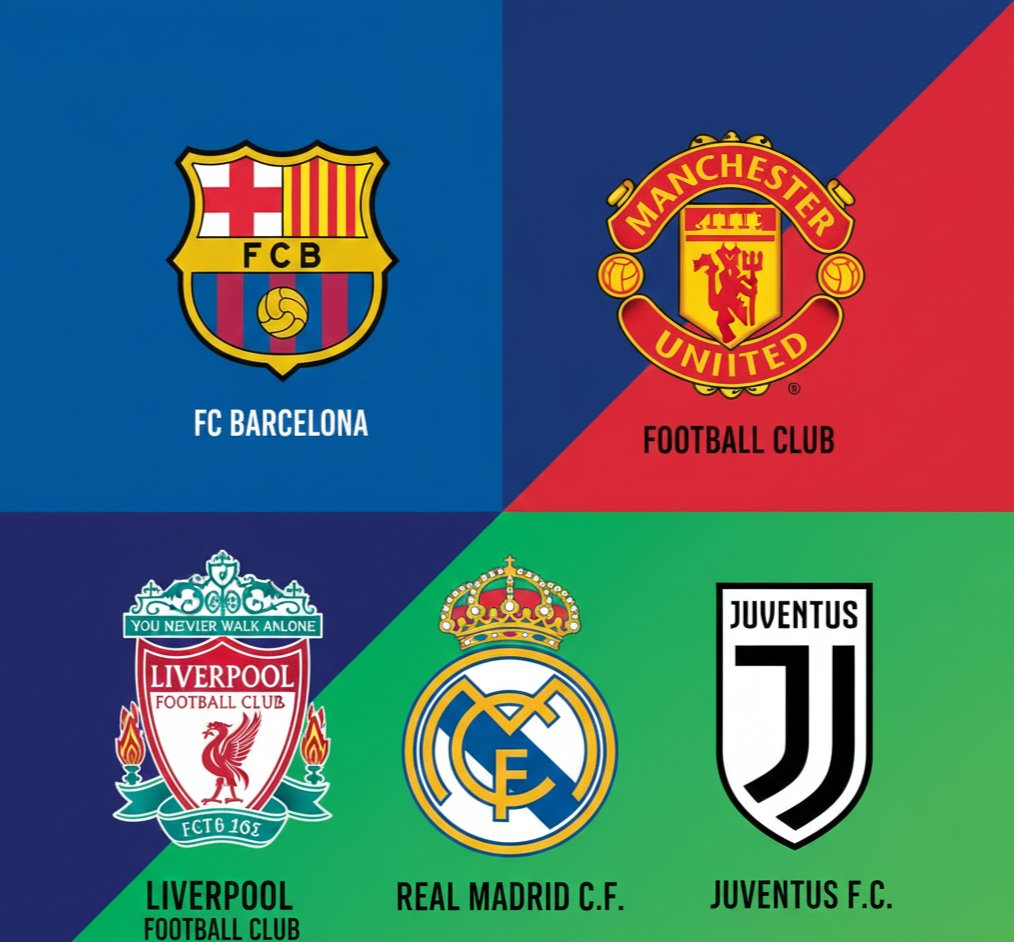
Football is more than just a game; it is a global phenomenon that unites fans across continents. At the heart of every football club’s identity is its logo. Football club logos are not just symbols—they represent history, culture, pride, and the passion of millions of fans. Pairing these logos with the club’s name creates a strong brand that resonates both on and off the pitch. This article explores the importance of football club logos with names, design elements, iconic examples, and their role in marketing and fan engagement.
The Importance of Football Club Logos
A football club logo is much more than an image. It serves multiple purposes:
Symbol of Identity
The logo visually represents the club’s history, achievements, and values. It is a symbol that fans instantly recognize and associate with loyalty and pride.
Marketing and Branding
Logos paired with the club’s name are central to merchandise, social media, sponsorships, and promotional campaigns.
Fan Engagement
A well-designed logo builds emotional connections with supporters, creating a sense of belonging.
Historical Significance
Many football logos reflect the city, region, or cultural heritage of the club, connecting past and present generations of fans.
Key Elements of Football Club Logos
Understanding the components of a football logo helps in appreciating their design and significance:
Colors
Red often represents passion and energy
Blue symbolizes loyalty and trust
Green reflects growth and harmony
Black and white signify simplicity and tradition
Shapes
Shields: Represent protection, tradition, and strength
Circles: Symbolize unity and completeness
Animals: Lions, eagles, and other mascots show courage and pride
Typography
Fonts must be readable and reflect the club’s personality
Serif fonts may convey tradition
Modern sans-serif fonts often represent innovation and youth
2.4 Symbols and Icons
Footballs: Directly link to the sport
Stars: Indicate championships or success
City landmarks: Reflect club’s local heritage
Popular Football Club Logos with Names
Below are some iconic clubs where logos and names create strong brand recognition:
FC Barcelona
Logo: Shield with red and blue stripes, cross of Saint George, and football icon
Name: FC Barcelona
Significance: Represents Catalonia’s culture and footballing excellence
Manchester United
Logo: Red devil holding a trident inside a circular badge
Name: Manchester United
Significance: Iconic globally; symbolizes strength and winning tradition
Real Madrid
Logo: Crowned circular emblem with “M” for Madrid
Name: Real Madrid CF
Significance: Royal heritage, elegance, and success
Juventus
Logo: Minimalist black and white “J”
Name: Juventus FC
Significance: Modern design reflecting innovation and tradition
Liverpool FC
Logo: Liver bird inside a shield with club name
Name: Liverpool Football Club
Significance: Represents the city’s maritime history and passionate supporters
Bayern Munich
Logo: Red circular badge with blue and white diamond pattern
Name: FC Bayern Munich
Significance: Symbolizes Bavarian pride and football dominance
The Evolution of Football Logos
Over the decades, football club logos have evolved:
Early 1900s: Simple crests with initials or city symbols
Mid 1900s: Incorporation of footballs, mascots, and team colors
Modern Era: Minimalist designs, digital-friendly logos, and global marketing focus
Evolution shows how clubs balance tradition with modern branding needs.
Designing a Football Club Logo with Name
Designing an effective logo requires several key considerations:
Reflect the Club’s Identity
The logo should visually convey the club’s history, culture, and values.
Simplicity and Recognition
Simple designs are easier to recognize and reproduce on merchandise, jerseys, and digital platforms.
Scalability
The logo must look good on small items (like keychains) and large banners (stadiums).
Timelessness
Avoid overly trendy designs that may quickly become outdated.
Color Psychology
Colors influence emotions and perception; choose hues that resonate with fans and convey the right message.
Role of Logos in Merchandise and Marketing
Football logos paired with club names are central to commercial success:
Jerseys and Apparel: Fans purchase official kits showcasing logos
Digital Media: Logos ensure brand recognition on social platforms and websites
Sponsorships: Logos help attract corporate partnerships
Collectibles: Posters, mugs, and souvenirs feature iconic logos
A strong logo increases revenue while strengthening fan loyalty.
Famous Logo Redesigns and Updates
Some clubs have modernized their logos for branding:
Juventus (2017): Shifted to a minimalist “J” logo for a modern appeal
Manchester City (2016): Returned to a circular badge with simplified design
Paris Saint-Germain (2013): Minor tweaks to enhance digital visibility
These redesigns demonstrate the balance between tradition and innovation.
Logos and Fan Identity
A football club’s logo creates a deep emotional bond:
Fans wear logos to show support
Logos symbolize victories, history, and shared experiences
Merchandise featuring logos becomes a badge of loyalty
The combination of the club’s logo and name ensures instant recognition worldwide.
Football Logos and Digital Presence
In today’s digital era, logos are more important than ever:
Mobile apps and websites require scalable, clean logos
Social media platforms use logos as profile images and promotional graphics
E-sports and digital campaigns leverage logos to attract younger audiences
A modern logo ensures clubs remain relevant globally.
Tips for Collectors and Fans
For fans who collect football logos:
Focus on authentic merchandise
Display logos with proper care to preserve colors
Explore historical badges and limited editions
Learn the meaning behind symbols and colors for each club
Collecting logos helps fans connect deeply with club history and identity.
Conclusion
Football club logos with names are more than just design elements—they represent history, culture, and identity. A logo paired with a club name strengthens branding, enhances fan loyalty, and plays a crucial role in marketing and merchandise. From classic shields to modern minimalist designs, football logos capture the essence of clubs around the world.
Understanding the importance of logos, their evolution, and their design elements helps fans, designers, and marketers appreciate football’s cultural and commercial impact. Whether you are a fan, a collector, or a designer, football logos remain central to the beautiful game.