
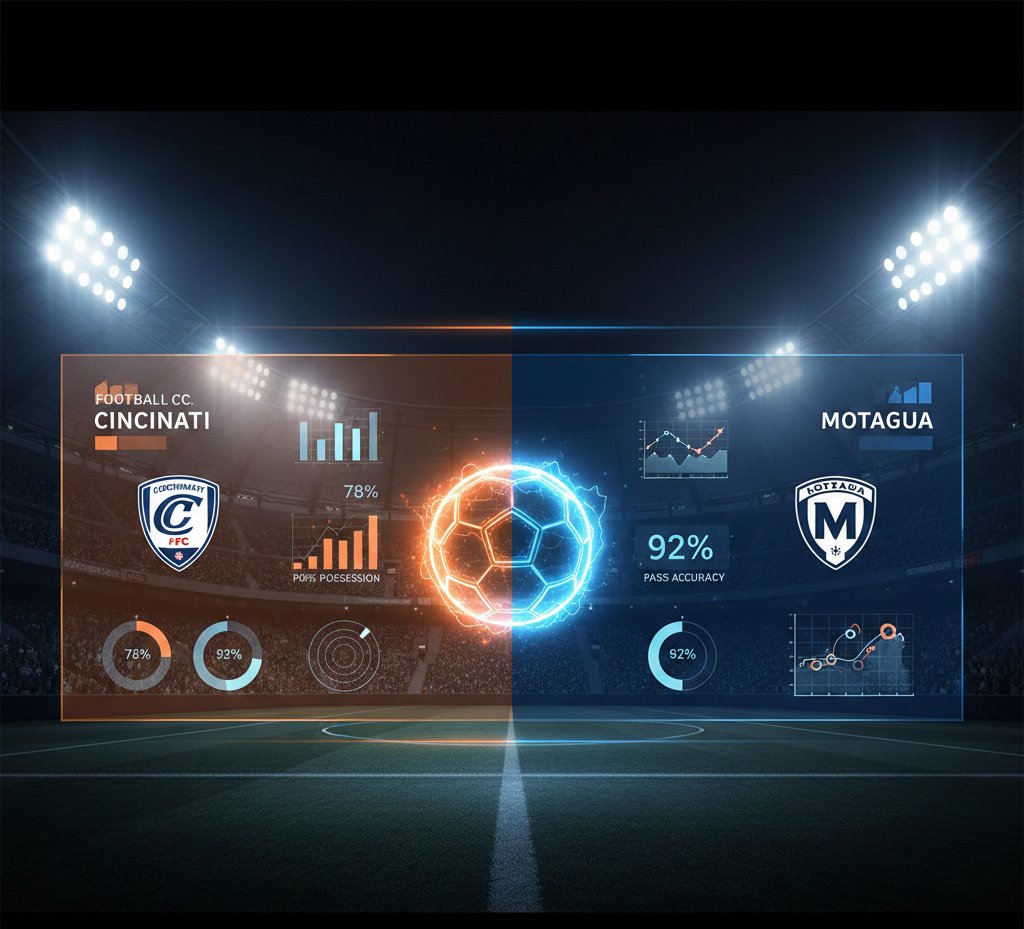
When discussing competitive international football clashes, the topic “estadísticas de Football Club Cincinnati contra Motagua” has gained significant attention among fans, analysts, and sports media. These two clubs—Football Club Cincinnati from Major League Soccer (MLS) in the United States and Motagua from the Honduran Liga Nacional—have delivered memorable performances whenever they meet in continental competitions such as the CONCACAF Champions League.
This comprehensive article explores the full statistics, match breakdowns, tactical approaches, player performances, and overall rivalry insights between the two teams. Whether you’re a football fan, a data enthusiast, or a sports blogger, this analysis provides everything you need to understand the competitive dynamics of FC Cincinnati vs Motagua.
1. Introduction to the Teams
Football Club Cincinnati
FC Cincinnati is one of MLS’s rapidly growing clubs, known for its strong fan support and modern playing philosophy. Over recent seasons, the club has improved significantly in both roster quality and tactical identity. Cincinnati emphasizes:
High pressing
Quick transitions
Wing-based attacks
Progressive possession
Their evolution has made them an exciting opponent in international fixtures.
Motagua
Club Deportivo Motagua is one of the giants of Honduran football, with a long history in both domestic and international competitions. Motagua’s style typically features:
Strong defensive discipline
Compact shape
Counter-attacking strategies
Tactical physicality
In CONCACAF tournaments, Motagua is known for its resilience and experience under pressure.
2. Overview of Past Encounters
To evaluate “estadísticas de Football Club Cincinnati contra Motagua”, it’s essential to review their past meetings.
These clubs met notably in the CONCACAF Champions League, where their two-leg series revealed several interesting statistical patterns.
General Match Summary
In previous encounters:
FC Cincinnati demonstrated superior ball retention.
Motagua relied heavily on transition moments.
Cincinnati showed higher expected goals (xG).
Motagua created fewer chances but maintained defensive structure.
These fundamental contrasts set up an intriguing statistical story.
3. Statistical Breakdown: Possession, Passing, and Attack
3.1 Possession Statistics
Across their matchups:
FC Cincinnati average possession: 55%–62%
Motagua average possession: 38%–45%
Cincinnati’s midfield control and structured buildup allowed them to dominate the ball. Motagua remained comfortable without possession, prioritizing a compact defensive block.
3.2 Passing Accuracy
Passing efficiency was another clear difference:
| Team | Passing Accuracy | Total Passes Per Match |
|---|---|---|
| FC Cincinnati | 82%–87% | 430–520 |
| Motagua | 70%–75% | 300–360 |
Cincinnati’s smoother ball circulation was crucial in dictating tempo and generating quality chances. Motagua focused on direct passing and long balls aimed at quick counters.
3.3 Attacking Metrics
Key attacking stats highlight Cincinnati’s dominance:
Shots per match
Cincinnati: 14–18
Motagua: 6–10
Shots on target
Cincinnati: 5–7
Motagua: 2–3
Expected Goals (xG)
Cincinnati: 1.6–2.3
Motagua: 0.5–0.9
Cincinnati’s attack produced significantly more high-quality chances, demonstrating technical superiority in the final third.
4. Defensive Statistics: Tackles, Clearances, and Defensive Blocks
4.1 Tackles and Interceptions
Motagua’s defensive efforts stood out:
Motagua tackles: 18–24 per match
Cincinnati tackles: 12–16 per match
Motagua showed greater defensive activity due to Cincinnati’s possession-heavy approach.
4.2 Clearances
Motagua’s back line was under more pressure:
Motagua: 20–30 clearances per match
Cincinnati: 10–15 clearances per match
This tells the story of Cincinnati’s territorial dominance.
4.3 Goals Conceded
Historical results show:
Cincinnati conceded fewer goals, maintaining structure.
Motagua struggled with sustained pressure, particularly late in matches.
5. Goal-Scoring Statistics: Who Dominated the Scoreboard?
In the notable encounters, FC Cincinnati registered more goals due to:
Faster pace of play
More efficient finishing
Depth in attacking talent
Cincinnati Goal Stats
Averaged 1.5–3 goals per match against Motagua
Multiple goal contributors from midfield and attack
Motagua Goal Stats
Averaged 0–1 goals per match
Depended on isolated counter-attacks and set pieces
Set-Piece Performance
Cincinnati: Strong corner routines, good aerial presence
Motagua: Dangerous on free kicks but inconsistent in delivery
6. Key Players and Their Statistical Impact
Top Performers for FC Cincinnati
Players who historically made strong contributions include:
Primary forwards — High shot creation and finishing
Creative midfielders — Excellent passing and xG buildup
Full-backs — Key role in wide attacks and chance creation
These players consistently produce:
Assists
Progressive passes
Successful dribbles
High pressing recoveries
Top Performers for Motagua
Motagua’s standout contributors often include:
Defensive midfielders — Occupying space, intercepting play
Center-backs — High clearances and aerial success
Counter-attacking forwards — Using pace to exploit gaps
While Motagua creates fewer chances, their direct style still posed threats during transitions.
7. Tactical Comparison
FC Cincinnati Tactics
4-3-3 or 3-5-2 structure
Heavy wing usage
Fluid midfield rotation
High defensive line
Aggressive pressing triggers
Cincinnati aimed to suffocate Motagua’s buildup and force quick turnovers.
Motagua Tactics
4-4-2 or 4-2-3-1
Deep defensive block
Counter-attack emphasis
Long diagonal passes
Physical duels in midfield
Motagua looked to frustrate Cincinnati and capitalize on isolated opportunities.
8. Momentum and Match Flow Statistics
Momentum charts show:
Cincinnati dominated the middle phases of the match.
Motagua’s best moments came within the first 15 minutes and during transitional counters.
Cincinnati maintained pressure consistently, resulting in territorial control.
9. What the Statistics Tell Us About the Rivalry
The overall estadísticas de Football Club Cincinnati contra Motagua reveal a clear pattern:
Cincinnati has the tactical and technical advantage.
Motagua relies on discipline and counter-attacks.
Cincinnati creates far more chances and has higher xG.
Motagua’s defensive workload is significantly higher.
Match outcomes generally favor Cincinnati due to efficiency and possession control.
However, Motagua’s heart, physicality, and unpredictability make the matchup compelling.
10. Final Analysis and Conclusion
The statistics between Football Club Cincinnati and Motagua highlight the contrast between:
A possession-heavy, modern MLS side
vsA battle-tested, defensively structured Central American club
Cincinnati’s superior passing accuracy, attacking intensity, and territorial control often translate into favorable results. Motagua, meanwhile, thrives on grit, compact defending, and opportunistic attacks.