
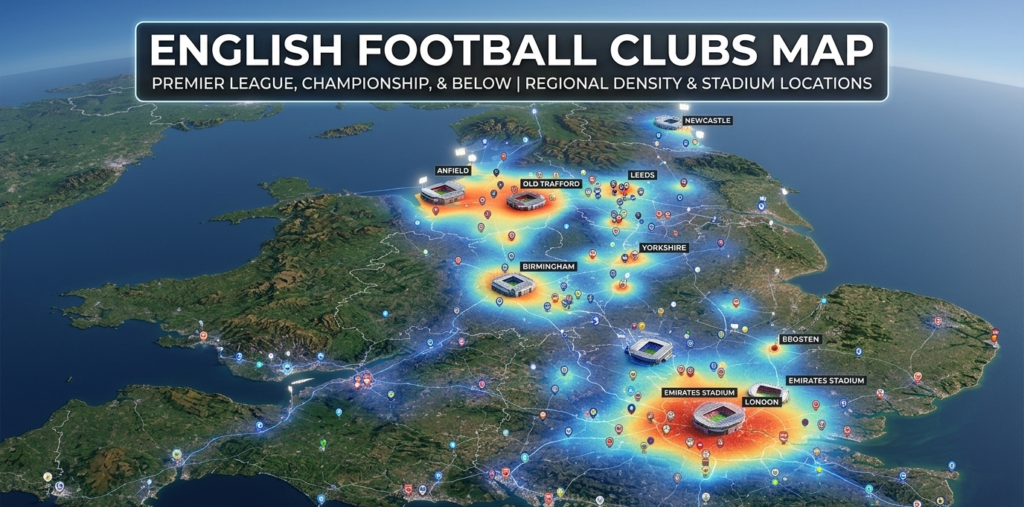
Football is more than a sport in England – it’s a way of life. From small towns to big cities, football clubs are scattered across the country, shaping communities and local culture. The English football clubs map helps visualize where clubs are located, how they developed, and why certain regions are football hotspots.
The Origins of Football Clubs in England
English football clubs have a long history. The first clubs were founded in the 19th century in industrial towns where communities wanted organized recreation.
Sheffield FC (founded 1857) is recognized as the oldest football club in the world.
Notts County FC (founded 1862) is the oldest professional club in England.
The creation of the Football League in 1888 formalized competition and encouraged the growth of clubs in towns and cities across England.
Early football clubs were deeply connected to local identity. Communities rallied around their teams, which became symbols of pride and belonging.
Distribution of Football Clubs Across England
The English football clubs map shows that clubs are not evenly spread. Certain areas, especially large cities and industrial towns, have many clubs. Others, like rural counties, have fewer.
Northern England
Cities like Manchester, Liverpool, Newcastle, and Sheffield have multiple clubs.
Industrial history contributed to football culture, with factories and mining towns supporting local teams.
Southern England
London is a football hub, home to Arsenal, Chelsea, Tottenham Hotspur, and many smaller clubs.
Coastal towns like Brighton and Southampton also host professional clubs.
Midlands
Cities such as Birmingham, Nottingham, and Derby are rich in football heritage.
Rivalries like Aston Villa vs Birmingham City reflect historical and regional pride.
Rural Areas
Rural towns and villages often have semi-professional or amateur clubs.
These clubs focus on grassroots football and youth development, keeping the sport alive locally.
Understanding Regional Football Culture
Football culture varies by region. The map helps us see patterns in rivalries, traditions, and fan intensity.
North West Rivalries: Liverpool vs Everton, Manchester United vs Manchester City.
Midlands Rivalries: Aston Villa vs Birmingham City, Derby County vs Nottingham Forest.
North East Rivalries: Newcastle United vs Sunderland.
London Rivalries: Arsenal vs Tottenham, Chelsea vs West Ham.
Regional rivalries are a mix of history, community pride, and competition. Maps of clubs make these patterns clear.
Why Mapping Football Clubs Matters
Visualizing football clubs geographically helps in many ways:
Identify Hotspots: See regions with the highest concentration of clubs.
Understand History: Relate football growth to industrialization and population centers.
Fan Engagement: Shows where passionate fan bases are located.
Strategic Planning: Useful for leagues, tournaments, and youth development programs.
Mapping also highlights areas with potential for new clubs or development initiatives.
Levels of English Football Clubs
England has a tiered football system. The map reflects clubs at every level:
Premier League: Top professional clubs like Manchester United, Liverpool, Chelsea, and Arsenal.
Championship: Strong professional clubs like West Bromwich Albion and Nottingham Forest.
League One and Two: Smaller professional clubs that develop talent and maintain local fanbases.
Non-League Clubs: Semi-professional and amateur clubs that support grassroots football.
Mapping clubs by tier shows how football in England is structured and interconnected.
Football Clubs and Community Impact
Football clubs are more than sports teams. They support local communities in many ways:
Youth Development: Clubs run academies and training programs for children.
Economic Contribution: Clubs provide jobs, attract tourism, and generate revenue.
Social Integration: Clubs bring people together, fostering community pride.
Cultural Significance: Local clubs often represent towns or cities at national and regional levels.
Maps help identify which communities benefit most from football clubs.
Patterns Seen on the English Football Clubs Map
Urban Density: Cities like London, Manchester, Liverpool, and Birmingham have many clubs close together.
Northern Strongholds: Historically industrial regions have high concentrations of clubs.
Rural Areas: Fewer clubs exist, but they are vital for local participation.
Transport Influence: Many clubs are near major roads and railways for accessibility.
These patterns show football’s connection to geography, economy, and culture.
Football Tourism and Mapping
Football attracts millions of visitors each year. The English football clubs map helps fans plan trips:
Historic Stadium Tours: Fans visit clubs like Old Trafford, Anfield, and Stamford Bridge.
Rivalry Matches: Maps guide fans to local derbies and classic fixtures.
Regional Exploration: Fans discover lesser-known clubs and stadiums in smaller towns.
Tourism supported by football maps strengthens local economies and promotes cultural exchange.
Digital Maps and Fan Engagement
Modern technology enhances the way fans interact with football clubs:
Interactive Maps: Fans can explore club locations, stadiums, and historical data online.
Mobile Apps: Provide location-based updates on matches, tickets, and events.
Social Media: Clubs can reach regional fanbases using geo-targeting.
Digital maps help fans feel connected to clubs, no matter where they are.
Conclusion
The English football clubs map is a valuable tool to understand the geography, culture, and history of football in England. It shows where clubs thrive, where rivalries are strongest, and how football impacts communities.
From northern industrial towns to southern cities and rural villages, football is woven into the fabric of English life. Mapping clubs visually reinforces the idea that football is more than a sport – it is a national passion that unites people, drives local economies, and inspires generations.
England’s football landscape is diverse, historic, and vibrant. A well-crafted map not only shows locations but also tells the story of football across the country.