
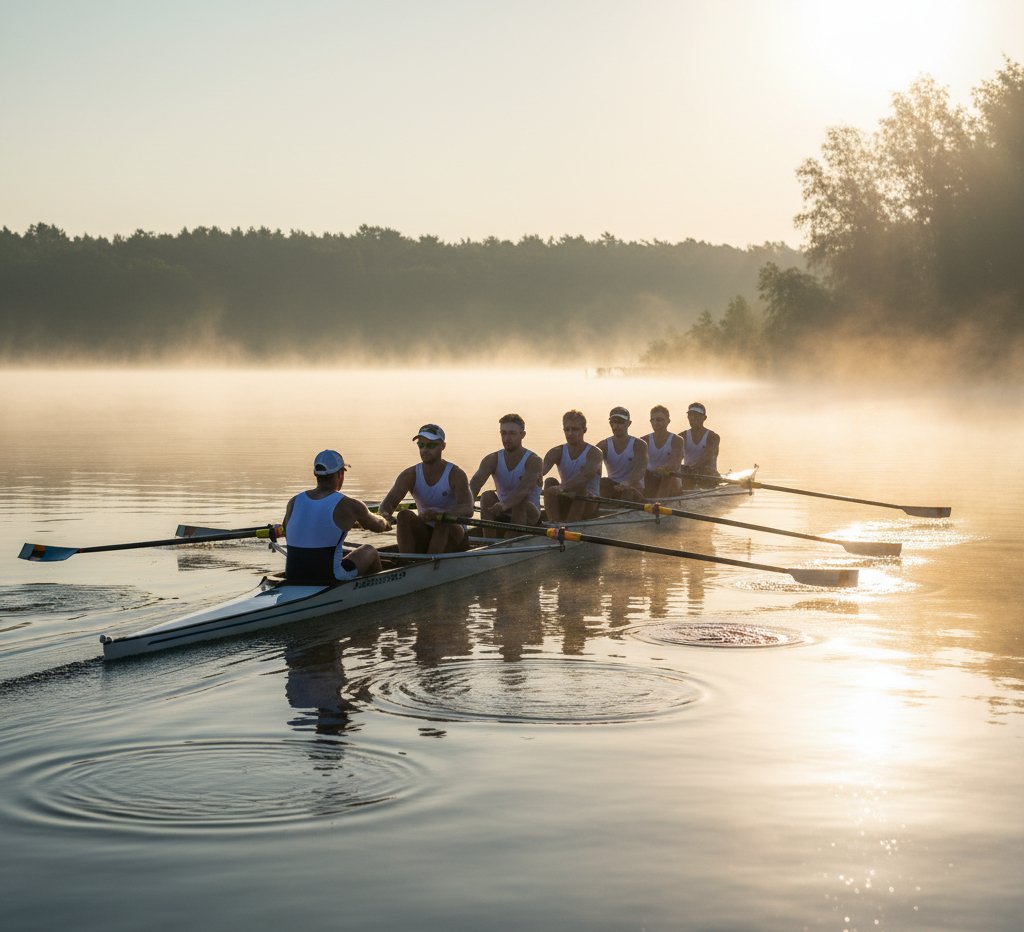
In the world of athletics, few sports capture teamwork and synchronization as beautifully as crew sports — also known as rowing. The crew sports team is a symbol of strength, endurance, and unity. Whether it’s on calm rivers, Olympic courses, or college championships, these athletes demonstrate that success comes from perfect harmony between power, rhythm, and teamwork.
This article dives deep into the fascinating world of the crew sports team — its history, techniques, major competitions, training regimens, and the powerful sense of community that fuels every rower’s spirit.
1. What Is a Crew Sports Team?
A crew sports team is a group of athletes who compete in rowing — a sport where individuals or teams propel a boat through water using oars. It’s not just a test of physical power but also of precision, coordination, and mental focus.
Each team consists of multiple rowers, usually divided into two main categories:
Sweep rowing: Each rower uses one oar.
Sculling: Each rower uses two oars.
Depending on the race type, a crew can range from a single scull (one person) to an eight-person boat with a coxswain — the person responsible for steering and motivating the team.
2. The Spirit of Teamwork in Crew Sports
In most sports, teamwork is vital — but in rowing, it’s everything. The success of a crew sports team depends on every member moving in perfect synchronization.
If even one rower is off rhythm, the boat loses speed and balance.
The essence of the crew sport is about:
Trust: Each member relies completely on the others.
Timing: Every stroke must align with the crew’s rhythm.
Discipline: Countless hours of training are spent to achieve near-perfect motion.
Unity: The crew moves, breathes, and thinks as one body.
A true crew sports team is not just a group of athletes — it’s a family bound by rhythm, respect, and shared ambition.
3. A Brief History of Crew Sports
Rowing has ancient roots. It was first used for transportation and warfare in ancient Egypt, Greece, and Rome. But it evolved into a competitive sport in England during the 18th century.
1715: The earliest recorded rowing competitions took place on the River Thames.
1829: The famous Oxford vs. Cambridge Boat Race began — one of the world’s oldest sporting rivalries.
Late 1800s: Rowing spread to the United States and became a prominent college sport, particularly in Ivy League schools.
1896: Rowing was included in the first modern Olympic Games, becoming a staple ever since.
Today, rowing is enjoyed worldwide, from high schools to elite international championships, all celebrating the crew sports team spirit.
4. Anatomy of a Crew Sports Team
A crew team can have different sizes depending on the boat type. Here’s how they’re typically structured:
| Boat Type | Number of Rowers | Includes Coxswain | Type |
|---|---|---|---|
| Single Scull | 1 | No | Sculling |
| Double Scull | 2 | No | Sculling |
| Quad Scull | 4 | No | Sculling |
| Pair | 2 | Sometimes | Sweep |
| Four | 4 | Optional | Sweep |
| Eight | 8 | Yes | Sweep |
The Coxswain’s Role
The coxswain (often pronounced cox-in) is the brain of the boat. They:
Steer the boat’s direction.
Maintain rhythm and pace.
Motivate the team with commands and encouragement.
While the rowers provide muscle and energy, the coxswain provides leadership and focus.
5. Training Like a Crew Sports Team Athlete
Rowing may look graceful, but it’s among the most physically demanding sports in the world. A successful crew sports team trains year-round — both on and off the water.
A Typical Training Routine Includes:
Water Practice: Learning technique, timing, and teamwork.
Ergometer Workouts (Erg): Simulated rowing machines build endurance and monitor performance.
Strength Training: Core, legs, and back exercises enhance power per stroke.
Cardio Conditioning: Long runs, cycling, or swimming for stamina.
Mental Preparation: Visualization and mindfulness help maintain focus under pressure.
Core Skills Developed:
Explosive leg power
Balance and posture
Synchronization
Breath control
Endurance and resilience
Crew athletes are some of the fittest in the sporting world — combining strength, agility, and precision.
6. Major Crew Sports Competitions Around the World
The global rowing scene is rich with tradition and excitement. Here are some of the most famous events featuring top crew sports teams:
The Boat Race (Oxford vs. Cambridge) – UK
Held annually on the River Thames since 1829, this is one of the oldest and most prestigious rowing rivalries. The entire nation watches as two elite university teams battle for glory.
Henley Royal Regatta – England
Known for its elegance and pageantry, Henley attracts rowers from around the world. Winning here is a mark of elite status in rowing.
World Rowing Championships
Organized by World Rowing (FISA), this event gathers the best national teams to compete in multiple categories, from singles to eights.
The Head of the Charles Regatta – USA
Held in Boston, it’s the world’s largest two-day rowing event, featuring thousands of rowers from schools, clubs, and national teams.
Olympic Games
Rowing has been part of the Olympics since 1900 for men and 1976 for women. The event showcases the pinnacle of crew sports team excellence, featuring powerhouses like Great Britain, New Zealand, and the USA.
7. College and High School Crew Sports Teams
In the United States, rowing thrives at the collegiate and high school levels.
Universities like Harvard, Yale, Princeton, and Washington have long been rowing powerhouses.
Why Rowing Appeals to Students
It teaches teamwork and leadership.
It builds endurance and mental strength.
It opens opportunities for scholarships and college admissions.
It fosters lifelong friendships and sportsmanship.
High school programs feed talent into college teams, where many rowers go on to compete nationally and even internationally.
8. Women in Crew Sports Teams
Women’s rowing has grown rapidly since the late 20th century, earning its rightful place on the global stage.
Today, women’s crew sports teams compete at the same level of intensity and prestige as men’s.
Historic Milestones
1976: Women’s rowing debuted at the Olympic Games in Montreal.
1981: The first women’s Boat Race between Oxford and Cambridge took place.
Today: Women rowers are dominating at collegiate, national, and world championship levels.
The rise of female participation has made rowing one of the most inclusive and empowering sports worldwide.
9. The Equipment That Drives Crew Sports Teams
Rowing requires precision-crafted equipment designed for balance and speed.
Essential Equipment Includes:
Shell (Boat): Long and narrow, made from carbon fiber for maximum speed.
Oars: Lightweight, aerodynamic blades that propel the boat.
Sliding Seats: Allow rowers to use leg power efficiently.
Rigging System: Connects oars to the shell for proper leverage.
Uniforms: Tight-fitting rowing suits reduce drag and improve movement.
Proper care of equipment ensures smooth performance — a crucial part of every crew sports team’s preparation.
10. The Psychology of Crew – Mind Over Matter
Rowing is often described as 90% mental, 10% physical — not because the body isn’t challenged, but because the mind dictates endurance.
During intense races, rowers push beyond their limits, relying on mental strength, focus, and teamwork to keep moving.
Key psychological aspects include:
Focus on rhythm rather than fatigue.
Trust in teammates — every pull counts.
Visualization and motivation — seeing victory before it happens.
Resilience — the ability to bounce back after tough races or losses.
This mental toughness is what transforms a group of rowers into an unstoppable crew sports team.
11. Famous Crew Sports Teams and Legends
Over the years, several teams and athletes have become legends in the rowing world:
Great Britain Men’s Eight: Multiple Olympic gold medalists and world champions.
USA Women’s Eight: Dominated the Olympics from 2008 to 2016.
New Zealand Pair (Murray and Bond): Undefeated for nearly a decade.
Harvard and Yale Rowing Teams: Icons of American collegiate sports tradition.
These athletes represent what the crew sports team stands for — commitment, endurance, and the relentless pursuit of excellence.
12. The Future of Crew Sports Teams
With advancements in technology, fitness science, and global participation, the future of rowing looks brighter than ever.
Emerging trends include:
Smart rowing machines that track real-time performance.
Diversity programs encouraging broader participation.
Environmental awareness, with sustainable regattas and eco-friendly materials.
Virtual competitions, connecting rowers across continents.
The crew sports team is evolving — blending tradition with innovation while keeping its timeless spirit of teamwork intact.
Conclusion: Rowing Together Toward Greatness
The crew sports team embodies everything that makes sports powerful — teamwork, dedication, discipline, and unity. Each race is more than just a test of speed; it’s a journey of human synchronization, trust, and shared effort.
From the calm waters of training to the roar of international competitions, every stroke tells a story of perseverance and passion. Whether you’re a competitive rower or a fan watching from the shore, the beauty of rowing lies in its message: we go further when we move together.