
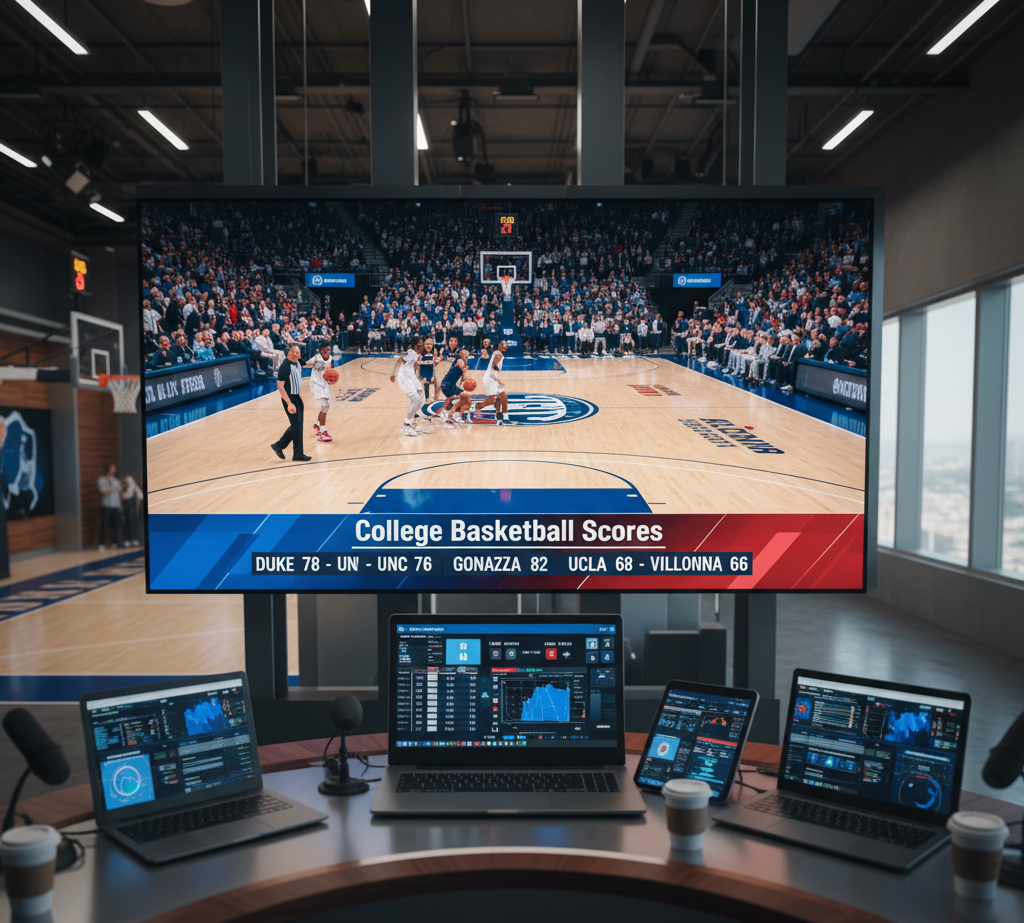
College basketball is one of the most thrilling sports in the United States. Fans live for buzzer-beaters, March Madness upsets, and epic rivalries. But to enjoy the game, you need to keep track of college basketball scores.
In this guide, we’ll explain how to follow scores, understand results, and make the most out of every game—without getting lost in stats.
Why College Basketball Scores Matter
Scores aren’t just numbers. They tell the story of a game. Here’s why you should follow them closely:
- Track Your Favorite Teams: See how teams perform week by week.
- Analyze Players: Box scores show which players are excelling.
- Predict Outcomes: Fans and fantasy players use scores to make predictions.
- Stay Connected: Discuss games with friends or online communities.
How to Follow College Basketball Scores
There are several easy ways to stay updated:
1. Official NCAA Websites
The NCAA website gives official scores, stats, and game recaps. It’s reliable and updated in real-time.
2. Sports News Websites
Websites like ESPN, CBS Sports, and Bleacher Report provide:
- Live scores
- Game highlights
- Expert analysis
They also track rankings and player stats.
3. Mobile Apps
Apps make following scores simple. Popular choices include:
- ESPN App: Get live alerts for your favorite teams.
- CBS Sports App: Check schedules, scores, and summaries.
- Yahoo Sports App: Track stats and results in one place.
4. Social Media
Teams often post live scores on Twitter, Instagram, and Facebook. Following official accounts is a fast way to get updates.
Understanding College Basketball Scores
Knowing the score is important, but understanding it is better.
1. Game Length
- Standard Game: Two halves, 20 minutes each.
- Overtime: If tied, 5-minute periods are added until a winner emerges.
2. Box Scores
Box scores show more than points—they break down player performance:
- Points scored
- Field goal percentages
- Rebounds, assists, steals
- Turnovers and fouls
3. Team Stats
Scores often come with stats like:
- Offensive efficiency: Points per possession.
- Defensive efficiency: Points allowed per possession.
- Shooting percentages: Field goals, three-pointers, free throws.
- Rebounds and turnovers: Shows control of the game.
Factors That Affect College Basketball Scores
Several things can influence the final score:
- Team Talent: Skilled players can score more.
- Coaching Strategy: Offensive or defensive styles impact totals.
- Home-Court Advantage: Teams perform better at home.
- Player Injuries: Missing key players lowers scoring chances.
- Pace of Play: Fast-paced teams usually have higher scores; defensive teams may score less.
Key College Basketball Leagues & Tournaments
1. NCAA Division I
Division I is the top level. March Madness is the most famous tournament. Fans track scores closely as teams compete for the national title.
2. NCAA Division II & III
These divisions get less media coverage, but scores are equally important. Scouts, fans, and players follow results closely.
3. Conference Play
Major conferences like the ACC, Big Ten, SEC, and Pac-12 have rivalries that fans live for. Conference games affect standings and tournament seeding.
4. Other Tournaments
Besides March Madness, there are:
- NIT (National Invitation Tournament)
- CBI (College Basketball Invitational)
- CIT (CollegeInsider.com Postseason Tournament)
Fans watch scores to see who advances.
Tips to Stay Updated on Scores
- Set Alerts: Use apps to get notifications for your favorite teams.
- Watch Live Streams: Follow games live for instant scores.
- Check Multiple Sources: Cross-check scores to ensure accuracy.
- Track Box Scores: Box scores reveal more than final points.
- Use Hashtags: #MarchMadness or #CollegeBasketball helps find live updates.
How Analytics Impact College Basketball
Modern basketball uses stats to understand scoring trends:
- Player Efficiency Rating (PER): Shows a player’s impact.
- Advanced Metrics: Includes offensive and defensive efficiency.
- Predictive Analytics: Helps forecast outcomes and trends.
These numbers make scores more meaningful and help fans and coaches analyze games.
Common Mistakes Fans Make
- Relying on One Source: Scores can be delayed; verify with multiple platforms.
- Ignoring Box Scores: Final points don’t tell the full story.
- Overlooking Injuries: Missing players affect scoring trends.
- Confusing Divisions: Division I, II, and III have different competition levels.
Why Fans Love College Basketball Scores
- Rivalries: Scores fuel excitement in historic matchups.
- Player Performance: Fans watch top players before they turn pro.
- Bracket Predictions: March Madness scores are key for fantasy brackets.
- School Pride: Scores create connection with alumni, students, and local communities.
Conclusion
College basketball scores are more than just numbers—they tell the story of every game. Whether it’s March Madness, conference matchups, or smaller divisions, staying updated is essential for fans.
With apps, websites, and social media, tracking scores has never been easier. Staying on top of scores keeps you connected to your favorite teams, helps analyze players, and makes every game more exciting.
FAQs
Q1: Where can I find live college basketball scores?
Official NCAA websites, ESPN, CBS Sports, and mobile apps provide real-time updates.
Q2: How long is a college basketball game?
Two 20-minute halves, plus 5-minute overtime if tied.
Q3: Do scores affect rankings?
Yes, wins and losses determine standings and tournament eligibility.
Q4: Can I track individual player stats?
Yes, box scores provide points, assists, rebounds, and shooting percentages.
Q5: Are online scores updated instantly?
Most major sports sites and apps update in real-time; smaller sites may lag slightly.