
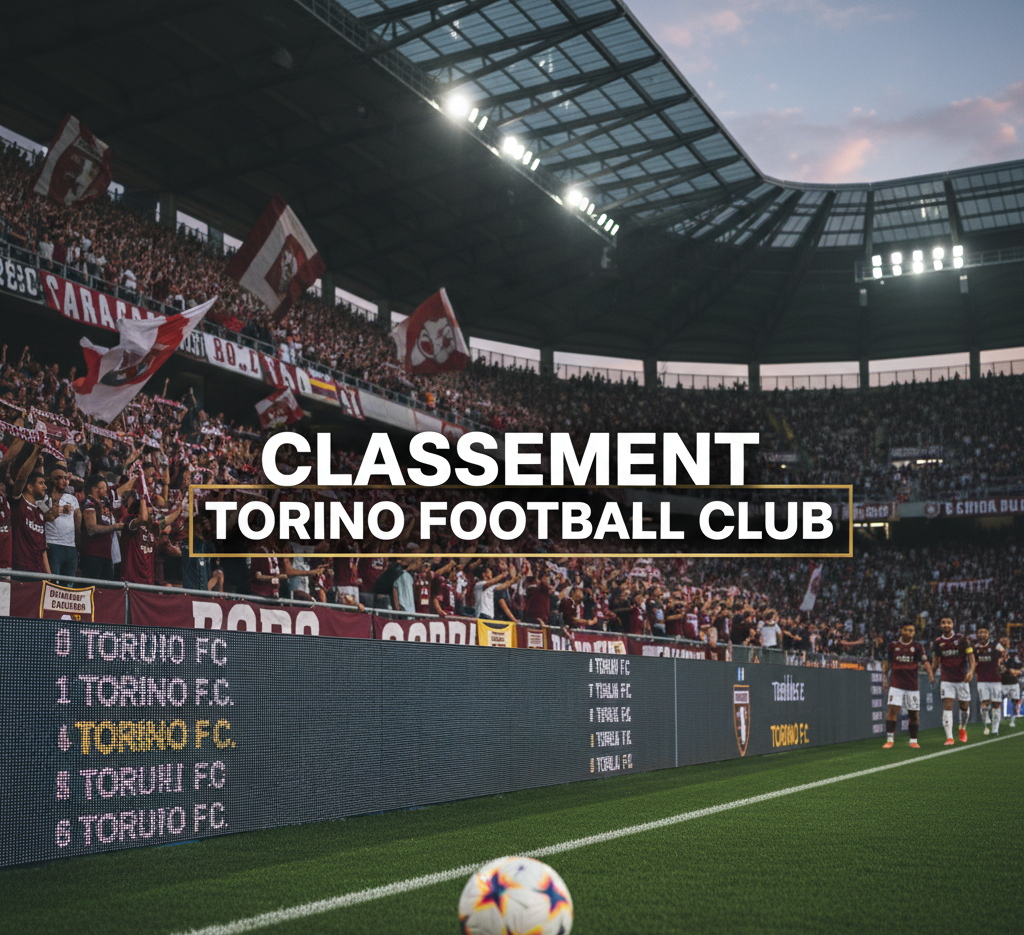
The keyword classement torino football club is widely searched by football fans who follow Serie A closely. Torino Football Club is one of Italy’s most historic clubs, with a long tradition of resilience, passion, and competitive spirit. Its league position each season reflects not only on-field performance but also long-term planning, tactical efficiency, and squad management.
In this article, we will explore the classement torino football club in depth, covering historical achievements, modern performances, tactical identity, squad development, financial factors, and future ambitions. Introduction to Torino Football Club
Torino Football Club was founded in 1906 in Turin, Italy. Commonly known as “Il Toro,” the club is recognized for its iconic maroon colors and strong connection to the city of Turin. The team plays its home matches at the Stadio Olimpico Grande Torino, which has become a symbol of the club’s identity and passion.
Torino has a rich football history. The legendary “Grande Torino” of the 1940s dominated Italian football and won multiple Serie A titles. Unfortunately, the team was struck by the Superga air disaster in 1949, which deeply affected the club and Italian football as a whole. This era, however, still defines the spirit and culture of Torino today.
Currently, the classement torino football club reflects the club’s ability to maintain stability in Serie A, with ambitions to compete for higher positions and occasionally qualify for European competitions.
Why the Classement Torino Football Club Matters
The classement torino football club is more than just a number in the league table. It has multiple implications:
Determines eligibility for European competitions such as the UEFA Europa League or Conference League
Reflects the club’s financial health, including broadcasting revenue and sponsorship opportunities
Indicates the team’s competitiveness against other Serie A clubs
Influences fan satisfaction and long-term club reputation
Affects player recruitment and retention
Serie A is highly competitive, with elite clubs like Juventus, AC Milan, Inter Milan, and AS Roma. Competing against these teams makes every point critical for Torino and impacts its league standing throughout the season.
Historical Classement Torino Football Club
The Grande Torino Era
During the 1940s, Torino’s classement consistently placed the team at the top of Serie A. The Grande Torino squad is remembered as one of the strongest teams in European football history, winning multiple league titles and establishing a legacy of dominance.
Rebuilding After Superga
After the Superga disaster, Torino faced decades of rebuilding. The club gradually shifted from title contender to mid-table competitor. The classement torino football club during this period often reflected rebuilding seasons, with occasional highs but mostly stability-focused campaigns.
Modern Era
In recent decades, Torino has maintained a solid presence in Serie A. While not consistently competing for the league title, the club has avoided long-term relegation struggles and often finishes in mid-table positions. The modern classement torino football club demonstrates stability, competitiveness, and occasional ambition for European qualification.
Recent Performance in Serie A
In the last few seasons, Torino has generally finished between 7th and 12th in Serie A. This mid-table performance highlights:
Defensive discipline and tactical structure
Competitive consistency against similarly ranked teams
Moderate offensive output limiting chances of breaking into higher positions
Ability to avoid relegation battles
The team’s focus on compact defense and organization has been key in securing points, while the need to improve attacking efficiency remains a challenge for climbing the league table.
Tactical Identity and Its Impact on Classement
Defensive Organization
Torino is known for prioritizing defensive stability. A well-organized backline and compact midfield reduce the risk of heavy losses and help secure draws or narrow wins. This directly contributes to a stable classement torino football club.
Midfield and Control
The midfield plays a vital role in maintaining balance. Controlling the tempo and disrupting opponents’ attacks ensures Torino can compete against stronger teams and secure crucial points.
Offensive Strategy
While defensive structure is important, improving goal-scoring efficiency is critical for climbing higher in the league. Converting scoring opportunities into goals can directly impact the classement torino football club, turning mid-table seasons into top-six finishes.
Squad Development and Recruitment
Torino’s budget is moderate compared to Italy’s top clubs. Strategic recruitment, youth development, and scouting are essential for strengthening the squad.
Developing young players provides long-term benefits, including:
Reducing transfer costs
Strengthening the team internally
Generating financial returns through player sales
Maintaining competitiveness in Serie A
A balanced squad with experienced and young talent is vital to improving the classement torino football club season after season.
Financial Impact of League Position
The classement torino football club also influences the club’s financial stability. Higher positions lead to:
Increased television revenue
Improved sponsorship opportunities
Greater market visibility
Enhanced player value
Lower standings reduce financial opportunities and make investment in the squad more challenging. Maintaining a strong league position is therefore both a sporting and economic priority.
The Role of Supporters
Torino’s passionate fans play a critical role in the club’s performance. Home matches at the Stadio Olimpico Grande Torino often provide motivation and energy for the players, especially during crucial league games.
Fan support can directly influence results, which in turn affects the classement torino football club, particularly in tight mid-table battles or during promotion pushes toward European competition.
Future Ambitions
Torino’s long-term objective is to move beyond mid-table stability and compete for European qualification more consistently. To achieve this, the club must focus on:
Strengthening offensive capabilities
Maintaining defensive organization
Building squad depth to handle injuries and fatigue
Investing in youth development
Ensuring coaching stability
Achieving these objectives can help Torino improve its league standing and gradually shift from mid-table security to top-tier competitiveness.
Conclusion
The classement torino football club reflects more than just a table position. It represents Torino’s history, tactical philosophy, financial planning, and ambition. From the legendary Grande Torino to modern mid-table campaigns, the club has demonstrated resilience, stability, and the ability to compete against stronger opponents.
For supporters, each season provides new hope. Every point gained contributes to climbing the league table and improving the club’s standing in Serie A. With careful planning, tactical discipline, and strategic recruitment, Torino can aim for higher classement torino football club in the years to come, balancing tradition with modern competitiveness.