
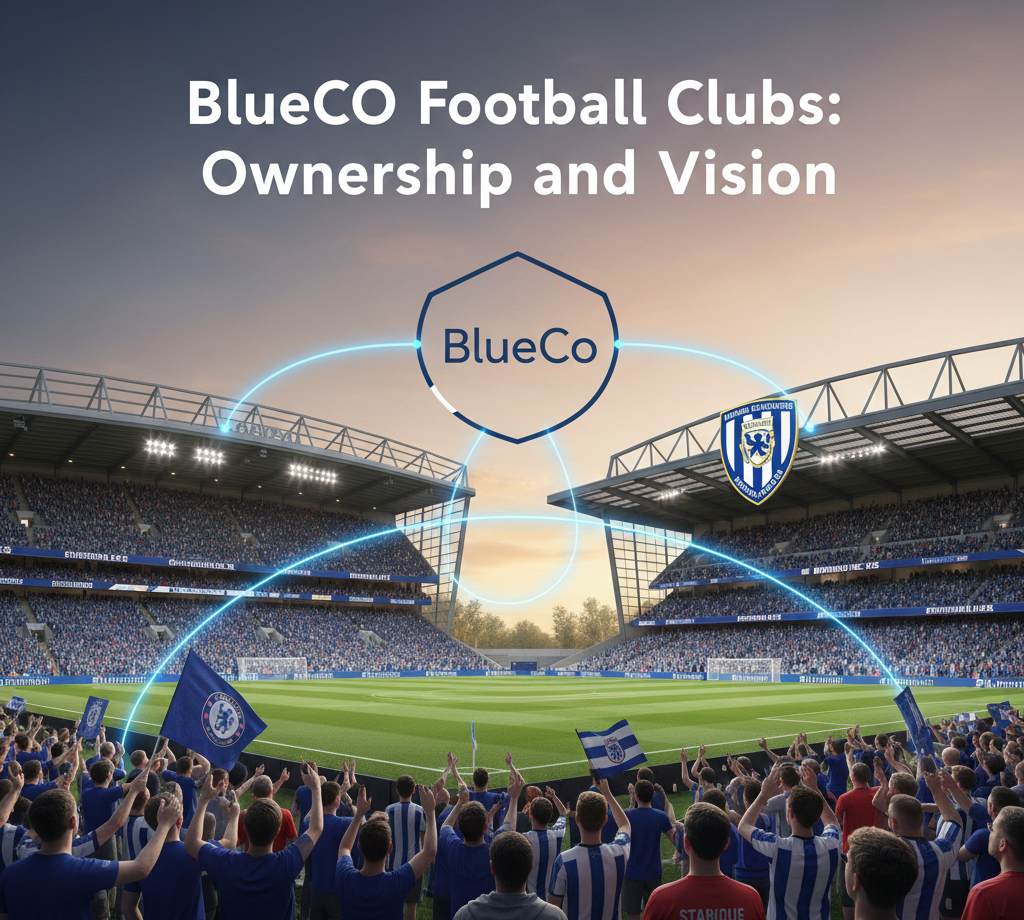
Football has entered a new era where ownership structures are changing dramatically. One of the most talked‑about developments in recent years is the rise of multi‑club ownership groups. These groups buy and manage multiple professional teams across different leagues and countries, creating interconnected football networks.
Among the leading players in this trend is BlueCo — a relatively new holding company that has quickly become a major force in European football. In this article, we’ll take a deep look at BlueCo, the clubs it owns, how it operates, its transfer strategies, fan reactions, and what this means for the future of football.
What Is BlueCo? A New Power in Football Investment
BlueCo is a British‑based holding company formed in 2022 by a group of American and international investors — including Todd Boehly, Clearlake Capital, Mark Walter, and Hansjörg Wyss. The company was created as an investment vehicle with a very clear purpose: to buy and manage major football clubs at the highest level.
The name BlueCo is inspired by the colour most associated with its flagship club, signifying the company’s roots in football tradition while also representing broader ambitions to build a global football network.
Almost immediately after its formation, BlueCo stepped onto the world football stage with a high‑profile acquisition that signalled its long‑term intentions and financial muscle.
Chelsea FC: BlueCo’s Flagship Football Club
The biggest and most well‑known club under BlueCo’s ownership is Chelsea Football Club, one of the most successful teams in English and European football.
When BlueCo completed its takeover of Chelsea in mid‑2022, it marked the end of nearly two decades of ownership by Roman Abramovich. This transfer of ownership was a major moment for both the club and the Premier League, as new leadership brought fresh investment, strategic changes, and a vision for the future.
Under BlueCo, Chelsea embarked on ambitious plans to revitalise both the men’s and women’s teams, invest in infrastructure, and expand its presence in European football.
The BlueCo era at Chelsea was not without challenges, but it quickly became clear that the consortium intended to build a long‑term project, rather than simply maintain the status quo.
Racing Club de Strasbourg Alsace: BlueCo’s French Expansion
Shortly after securing Chelsea, BlueCo expanded into French football by acquiring Racing Club de Strasbourg Alsace, one of the storied teams in Ligue 1.
This move marked the start of BlueCo’s multi‑club ownership strategy. By owning both Chelsea and Strasbourg, the group aimed to create synergies between clubs in different leagues — combining resources, infrastructure insights, and player development opportunities.
For Strasbourg, the acquisition brought increased financial backing, enhancements in training facilities, and access to a broader scouting and recruitment network. This expansion also included plans to strengthen the club’s academy and increase competitive performance in domestic and European competitions.
However, this strategy also generated controversy and debate among supporters and football observers, particularly around the role of multi‑club ownership and the balance between financial investment and club identity.
How BlueCo’s Multi‑Club Model Works
BlueCo’s multi‑club structure is built on a simple concept: by owning more than one club in Europe’s top leagues, the holding company can share best practices, streamline scouting efforts, and optimise player development across different markets.
At its heart, the model involves:
1. Shared Resources and Strategy
Clubs under the same ownership can benefit from shared scouting networks, coaching knowledge, analytics systems, and training expertise. This helps smaller clubs access resources they might not otherwise afford.
2. Player Movement and Development
One of the key benefits of multi‑club ownership is the ability to move players between clubs. For example, a talented young player might begin their professional career at a smaller club like Strasbourg, develop in a competitive league environment, and later move to a bigger club like Chelsea when ready.
This pipeline approach can accelerate player growth and offer clearer pathways from youth football to elite competition.
3. Investment in Facilities and Staff
Shared ownership can lead to investment in infrastructure — such as training grounds, medical facilities, and analytics departments — that benefit all clubs within the network.
Transfer Strategy and Shared Football Vision
Transfers are a major part of how BlueCo operates across its clubs, and they reflect a broader strategy aimed at long‑term success.
At Chelsea, significant funds have been invested in bringing in quality players at both established and rising superstar levels. Meanwhile, at Strasbourg, the focus has often included developing young talent and integrating them into competitive first‑team football.
Some transfers have involved players moving between the clubs themselves, where promising talents who perform well in Ligue 1 can eventually play for Chelsea.
This transfer approach — combining strategic purchases with development pathways — has the potential to increase the value of players while strengthening the clubs involved at different levels.
Benefits of BlueCo’s Multi‑Club Ownership
The multi‑club strategy adopted by BlueCo offers several genuine benefits:
1. Financial Stability and Investment
Smaller clubs gain access to the financial muscles of a larger organisation. This means investment in facilities, youth development, and competitive squads without risking financial collapse.
2. Enhanced Talent Development
Young players can progress through a defined system where they gain experience at appropriate levels before reaching elite competition.
3. Shared Football Knowledge
Clubs benefit from advanced coaching methods, analytics systems, and broader strategic insights that come from a high‑performing organisation.
4. Broader Competitive Presence
By operating in different countries and leagues, BlueCo increases its influence in European football and allows clubs to compete internationally more effectively.
Challenges and Fan Reactions
While multi‑club ownership has its advantages, it doesn’t come without criticism. Some supporters are concerned that clubs under the same ownership can lose their distinct identity or be treated as feeder teams to larger clubs.
At Strasbourg, for example, a faction of fans has expressed frustration over transfer decisions and strategic direction, believing that the club has become more valuable as a source of talent than as an independent football institution. Some supporters have even staged protests to voice their concerns about the future direction of the club and its autonomy within the BlueCo structure.
These reactions highlight a key tension in modern football: how to balance commercial investment and competitive ambition with the traditional identity and culture that supporters cherish.
The Debate Around Multi‑Club Ownership
BlueCo’s strategy fuels a broader discussion in football about multi‑club ownership. Critics argue that it can distort competition if the same owners influence multiple teams in connected leagues. They also worry that the financial might of such groups could widen the gap between wealthy clubs and traditional community clubs.
On the other hand, proponents say that multi‑club models provide financial stability, professionalisation, and development pathways that can benefit smaller clubs and improve overall football quality.
This debate isn’t unique to BlueCo — it’s part of a wider shift in football economics where investment from major global groups is increasingly common.
Looking Ahead: What’s Next for BlueCo Football Clubs
As the world of football continues to evolve, BlueCo is likely to remain a major presence. Whether it involves further expansion, new acquisitions, or strategic changes in transfer and development philosophy, the group’s actions will continue to influence both domestic and international football.
At Chelsea, the focus will be on returning to competitive greatness in the Premier League and Europe. At Strasbourg, the priority remains strengthening competitive standing while balancing tradition and fan expectations.
Future developments — including potential interest in other clubs around the world — may expand BlueCo’s footprint even further, shaping a truly global football network.
Final Thoughts
The rise of BlueCo football clubs represents a significant chapter in modern football history. By combining ambitious investment, multi‑club ownership, and a strategic transfer approach, BlueCo has created new opportunities for clubs under is umbrella.
However, this model also brings challenges — especially around identity, fan expectations, and competitive equity. As the football world continues to navigate changes brought by financial investment and global ownership groups, the story of BlueCo offers a clear example of how the sport is evolving.
For fans, players, and football observers alike, understanding the impact of BlueCo helps explain how modern football blends tradition with the realities of today’s global game — and how clubs must adapt in an ever‑changing landscape.