
Introduction to Ascoli Football Club
Ascoli Football Club, commonly known as Ascoli Calcio 1898 F.C., is one of Italy’s historic football institutions, representing the city of Ascoli Piceno in the Marche region. Established in 1898, the club has built a legacy marked by resilience, community pride, and competitive spirit.
Known for its passionate supporters and rich history, Ascoli FC has played a significant role in Italian football, competing in Serie A, Serie B, and contributing to the development of Italian talent. From historic promotions to modern-day challenges, Ascoli remains a symbol of regional identity and sporting ambition.
Origins and Foundation
Early Beginnings
Ascoli Football Club was founded in 1898, making it one of Italy’s oldest football clubs. Originally created as a sporting society, the club’s early focus included multiple sports before football became the central discipline.
The club’s colors, black and white, were chosen to reflect simplicity and elegance, which would remain part of Ascoli’s identity throughout its history.
Regional Significance
From its foundation, Ascoli FC was more than a sports team—it represented the cultural and civic pride of Ascoli Piceno. The club became a focal point for local communities, uniting fans through the love of football.
Ascoli in Italian Football Leagues
Serie C and Early Development
Ascoli spent much of its early competitive history in Serie C, Italy’s third tier. The club worked tirelessly to develop local talent, build infrastructure, and establish a reputation for disciplined football.
Promotion to Serie B
Through consistent performance and community support, Ascoli achieved promotion to Serie B, Italy’s second tier. This was a milestone in the club’s history, demonstrating its potential to compete at higher levels.
Historic Serie A Appearances
Ascoli FC has had multiple campaigns in Serie A, Italy’s top football division. Notable achievements include:
Competing against legendary Italian clubs like Juventus, AC Milan, and Inter Milan
Gaining respect for tactical discipline and organized play
Producing memorable matches and moments in Italian football history
Though often facing challenges against financially stronger clubs, Ascoli earned recognition for its fighting spirit and team cohesion.
Stadium and Home Ground
Stadio Cino e Lillo Del Duca
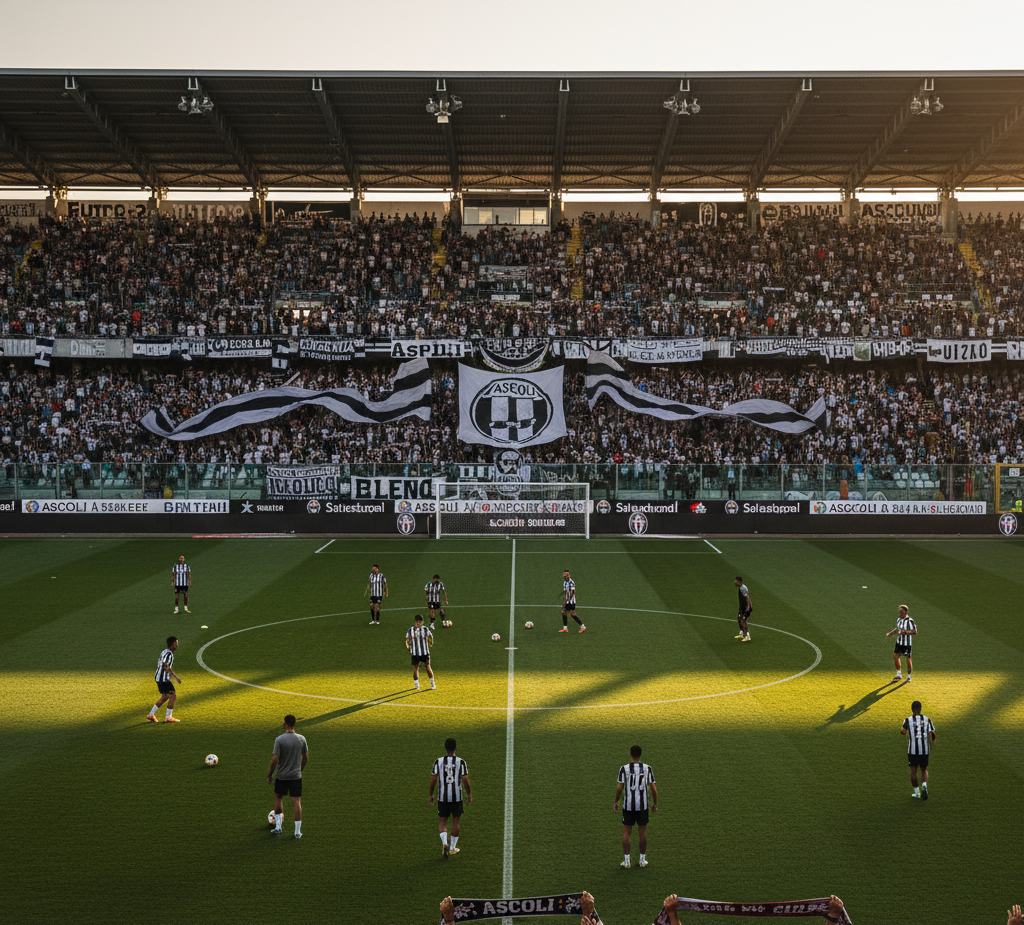
Ascoli FC plays its home matches at the Stadio Cino e Lillo Del Duca, located in Ascoli Piceno. The stadium, with a capacity of over 12,000 spectators, serves as a hub for local fans and matchday events.
Atmosphere and Fan Culture
Fans of Ascoli FC, known as “Bianconeri” supporters, are renowned for their passionate support. Matchdays at Del Duca stadium are vibrant, with chants, banners, and local pride creating a formidable atmosphere for visiting teams.
The stadium also hosts youth tournaments and community events, reinforcing Ascoli’s role as a central cultural institution in the region.
Club Colors and Identity
Black and White Tradition
Ascoli’s black and white kits symbolize elegance, tradition, and continuity. The home kit has largely remained consistent over decades, fostering strong brand identity and fan loyalty.
Club Crest and Symbolism
The club crest reflects its heritage and regional pride, often featuring stylized elements of the city of Ascoli Piceno. These symbols reinforce the club’s connection to the local community.
Notable Achievements and Highlights
Domestic Achievements
Serie B Promotions: Multiple promotions to Serie A
Serie C Success: Champions in several Serie C campaigns
Coppa Italia Performance: Historic cup runs showcasing competitive spirit
Memorable Seasons
The 1970s and 1980s were landmark decades for Ascoli, as the club consolidated its position in Serie B and occasionally challenged for top-flight survival, earning recognition across Italy.
Legendary Players and Coaches
Iconic Players
Ascoli has produced and featured numerous talented players who left lasting impressions, including:
Luigi Cennamo
Giuseppe Greco
Walter Novellino
These players became club legends due to their skill, loyalty, and leadership on the field.
Coaching Influence
Strong coaching staff over the decades emphasized:
Tactical discipline
Defensive organization
Youth development
This approach enabled Ascoli to compete against bigger clubs despite limited resources.
Youth Academy and Talent Development
Commitment to Young Players
Ascoli FC has historically invested in youth development, producing players who contribute to both the senior team and Italian football at large.
Contribution to Italian Football
Many academy graduates have gone on to play in Serie A and other European leagues, highlighting Ascoli’s role as a talent incubator in Italian football.
Community and Cultural Impact
Local Identity
Ascoli FC is deeply embedded in the culture of Ascoli Piceno. The club represents the city’s pride, unity, and sporting ambition. Fans view the club as a symbol of regional identity.
Community Engagement
The club organizes initiatives such as:
Youth football programs
Charity events
Local festivals and sports education
These programs ensure that Ascoli FC remains relevant beyond just football performance.
Modern Era: Challenges and Opportunities
Recent Performance
Ascoli FC continues to compete in Serie B, aiming for promotion to Serie A. The club faces challenges like:
Financial competition from larger clubs
Retaining top talent
Balancing youth development with immediate results
Strategic Vision
The modern vision for Ascoli includes:
Strengthening youth pathways
Investing in facilities
Enhancing fan engagement
Expanding commercial partnerships
These strategies aim to secure the club’s stability and competitive future.
Fanbase and Support
Passionate Followers
Ascoli’s fanbase, though regional, is intensely loyal. Fans are known for:
Vibrant matchday chants
Emotional support regardless of league position
Active involvement in club events
Global Recognition
While primarily local, Ascoli FC enjoys international attention due to:
Historic Serie A campaigns
Participation in Italian football tournaments
Alumni players succeeding in larger European leagues
Ascoli FC and Italian Football Culture
Respect in Italian Football
Despite being a smaller club, Ascoli FC commands respect for:
Tactical discipline
Consistency in league performance
Development of Italian football talent
The club is a testament to how smaller teams can create significant impact through organization and community support.
Legacy and Tradition
Ascoli FC’s commitment to tradition, black-and-white identity, and regional pride ensures its legacy continues, even amidst evolving football dynamics.
Conclusion
Ascoli Football Club is a historic, resilient, and culturally significant institution in Italian football. With a proud history spanning over a century, memorable Serie A campaigns, talented players, and an engaged fanbase, the club represents more than just football—it embodies the identity and pride of Ascoli Piceno.
As the club continues to compete in Serie B and nurture future talent, Ascoli FC remains a symbol of ambition, unity, and sporting tradition. For fans and football enthusiasts alike, Ascoli is a club that stands for resilience, heritage, and the enduring spirit of Italian football.