
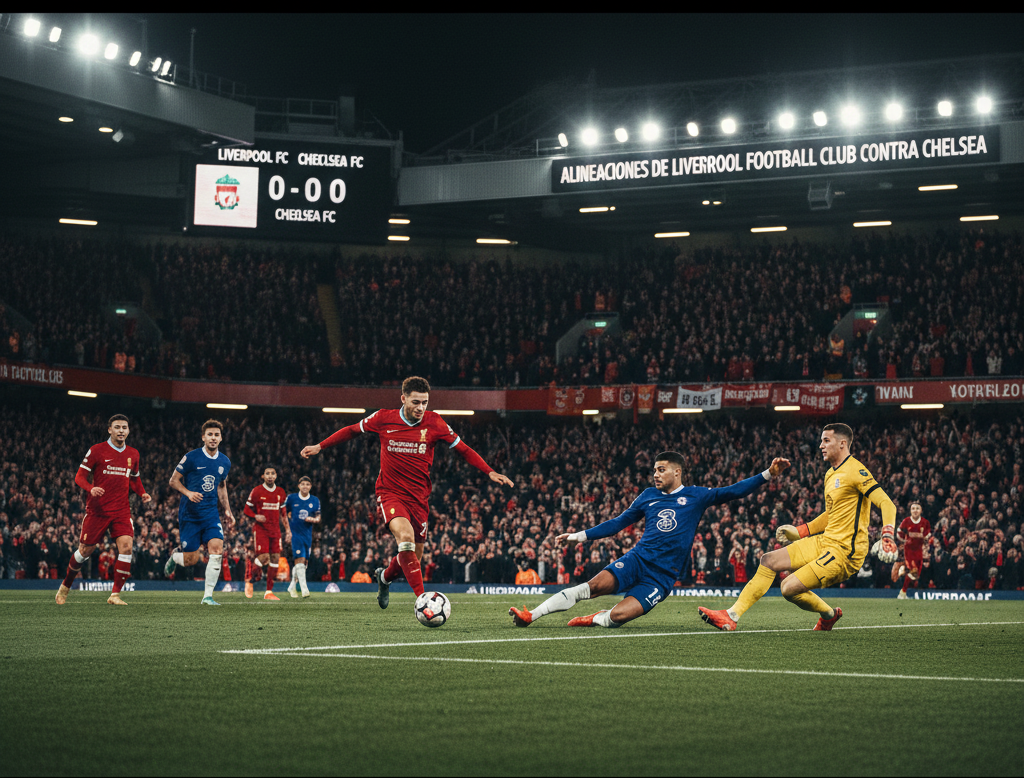
The Premier League clash between alineaciones de liverpool football club contra chelsea was one of the most anticipated fixtures of the 2024‑25 season. Played at Anfield, this match carried significant importance for both clubs. Liverpool, seeking to maintain a top position in the league, aimed to capitalize on home advantage, while Chelsea aimed to challenge the Reds with tactical discipline and attacking threat. The game ended in a 2‑1 victory for Liverpool, showcasing the impact of lineup choices, strategic planning, and key individual performances.
This article provides an in-depth look at the alineaciones de liverpool football club contra chelsea, including tactical setups, player performances, match highlights, and overall team strategies that shaped the result.
Match Context and Importance
The fixture between Liverpool and Chelsea is always a marquee match in the Premier League calendar. For Liverpool, the focus was on securing maximum points at home to maintain pressure on league rivals. Chelsea, despite a mixed season, aimed to disrupt Liverpool’s rhythm and prove their quality against one of the top contenders.
The alineaciones de liverpool football club contra chelsea highlighted both managers’ tactical approaches. Liverpool focused on aggressive pressing, fluid attacking transitions, and exploiting wide areas, while Chelsea emphasized defensive organization, midfield control, and counter-attacking opportunities.
This game was also critical in the context of the league table, as both sides were competing for top-four positions, making every point essential.
Liverpool Starting XI
Liverpool selected a lineup designed to control possession, dominate the midfield, and provide width in attack. Their alineaciones de liverpool football club contra chelsea were:
Goalkeeper: Alisson Becker
Defenders: Trent Alexander-Arnold, Virgil van Dijk, Ibrahima Konaté, Andrew Robertson
Midfielders: Fabinho, Jordan Henderson (Captain), Thiago Alcântara
Forwards: Mohamed Salah, Darwin Núñez, Luis Díaz
Tactical Setup
Liverpool lined up in a 4‑3‑3 formation, emphasizing:
Full-back support: Alexander-Arnold and Robertson provided width, overlapping in attack and supplying crosses into the box.
Midfield balance: Fabinho offered defensive cover, Henderson controlled tempo, and Thiago provided creative distribution.
Front three: Salah, Núñez, and Díaz combined pace, movement, and technical skill to stretch Chelsea’s defense and create scoring opportunities.
Liverpool’s formation allowed them to press aggressively, recover possession quickly, and transition efficiently from defense to attack.
Chelsea Starting XI
Chelsea approached the game with a balanced lineup designed to absorb pressure while exploiting counter-attacking opportunities. Their alineaciones de liverpool football club contra chelsea included:
Goalkeeper: Kepa Arrizabalaga
Defenders: Reece James, Thiago Silva, Wesley Fofana, Ben Chilwell
Midfielders: Enzo Fernández, N’Golo Kanté, Mason Mount
Forwards: Raheem Sterling, Kai Havertz, Mykhailo Mudryk
Tactical Setup
Chelsea used a 4‑3‑3 formation, focusing on:
Defensive structure: Silva and Fofana formed a solid central partnership, with James and Chilwell covering the wings.
Midfield control: Kanté offered defensive cover and ball recovery, Mount connected midfield and attack, and Fernández contributed creativity.
Attacking trio: Havertz, Sterling, and Mudryk aimed to exploit space on the break and challenge Liverpool’s high defensive line.
Chelsea’s tactical approach sought to remain compact defensively while launching fast counters using the pace and technical ability of their forwards.
First Half: Liverpool Dominance
Liverpool began the match with aggressive pressing and high possession, controlling the game from the start:
12th Minute: Mohamed Salah opened the scoring with a composed finish after excellent buildup play through midfield.
27th Minute: Luis Díaz doubled Liverpool’s lead with a curling effort from the left flank.
Liverpool’s dominance was evident through their pressing, quick ball circulation, and intelligent movement from the front three. Chelsea struggled to gain momentum early, finding it difficult to penetrate Liverpool’s midfield and defensive lines.
Despite this, Chelsea’s disciplined defensive shape limited further clear-cut chances in the first half.
Second Half: Chelsea Response
Chelsea regrouped at halftime, adjusting tactics to increase pressure on Liverpool:
58th Minute: Raheem Sterling scored to reduce the deficit, capitalizing on a defensive lapse by Liverpool.
65th Minute: Chelsea increased possession and attempted to exploit spaces behind the full-backs, creating several chances.
However, Liverpool maintained composure and structure, absorbing pressure while continuing to threaten on the counter. Alisson Becker made critical saves to deny Chelsea further goals, while Liverpool’s midfield and front three ensured control over the tempo.
Key Player Performances
Liverpool
Alisson Becker: Crucial saves kept Liverpool ahead, showing excellent positioning and reflexes.
Mohamed Salah: Scored the opening goal and constantly threatened Chelsea’s defense with pace and movement.
Luis Díaz: Provided width, creativity, and scored a stunning goal.
Fabinho: Shielded the defense effectively and contributed to transitions from defense to attack.
Chelsea
Kepa Arrizabalaga: Made important saves to limit Liverpool’s margin.
Raheem Sterling: Scored Chelsea’s goal and offered speed on the counter.
N’Golo Kanté: Controlled midfield battles and disrupted Liverpool’s build-up play.
Kai Havertz: Provided movement and link-up play, creating space for other attackers.
Match Statistics
The final score was Liverpool 2‑1 Chelsea, but the underlying statistics highlighted Liverpool’s superiority:
Liverpool held 62% possession, controlling the match tempo.
Chelsea attempted 10 counter-attacks, creating two significant chances.
Liverpool registered 12 shots on target versus Chelsea’s 5, reflecting their attacking efficiency.
Passing accuracy and ball circulation favored Liverpool, allowing them to dominate territory and limit Chelsea’s opportunities.
Tactical Analysis
Liverpool Strengths
High pressing disrupted Chelsea’s build-up.
Wide play and overlapping full-backs stretched the defensive line.
Clinical finishing from Salah and Díaz secured the early advantage.
Midfield balance allowed both defensive cover and attacking support.
Chelsea Strengths and Weaknesses
Strengths: Counter-attacking speed, midfield resilience, occasional penetration into Liverpool’s third.
Weaknesses: Difficulty breaking through Liverpool’s compact midfield, vulnerability to wide attacks, reliance on individual brilliance to score.
Liverpool’s tactical discipline ensured they controlled the game’s rhythm, while Chelsea struggled to adjust to the high-intensity pressing and movement of Liverpool’s forwards.
Historical Context
The rivalry between Liverpool and Chelsea has produced many high-profile matches over the years. The alineaciones de liverpool football club contra chelsea in the 2024‑25 season showcased the tactical acumen, squad depth, and individual talent that make these fixtures highly anticipated in the Premier League. Both teams demonstrated quality, but Liverpool’s home advantage, lineup choices, and attacking execution proved decisive.
Conclusion
The alineaciones de liverpool football club contra chelsea were pivotal in Liverpool’s 2‑1 victory. Liverpool’s front three, supported by a balanced midfield and disciplined defense, dominated possession, created scoring opportunities, and maintained control throughout the match. Chelsea, despite showing resilience and tactical adjustments, were unable to overcome Liverpool’s strategic setup.
This match serves as a perfect example of how alineaciones de liverpool football club contra chelsea can shape the outcome of a high-stakes Premier League fixture, highlighting the importance of lineup decisions, tactical awareness, and individual performances in modern football.