
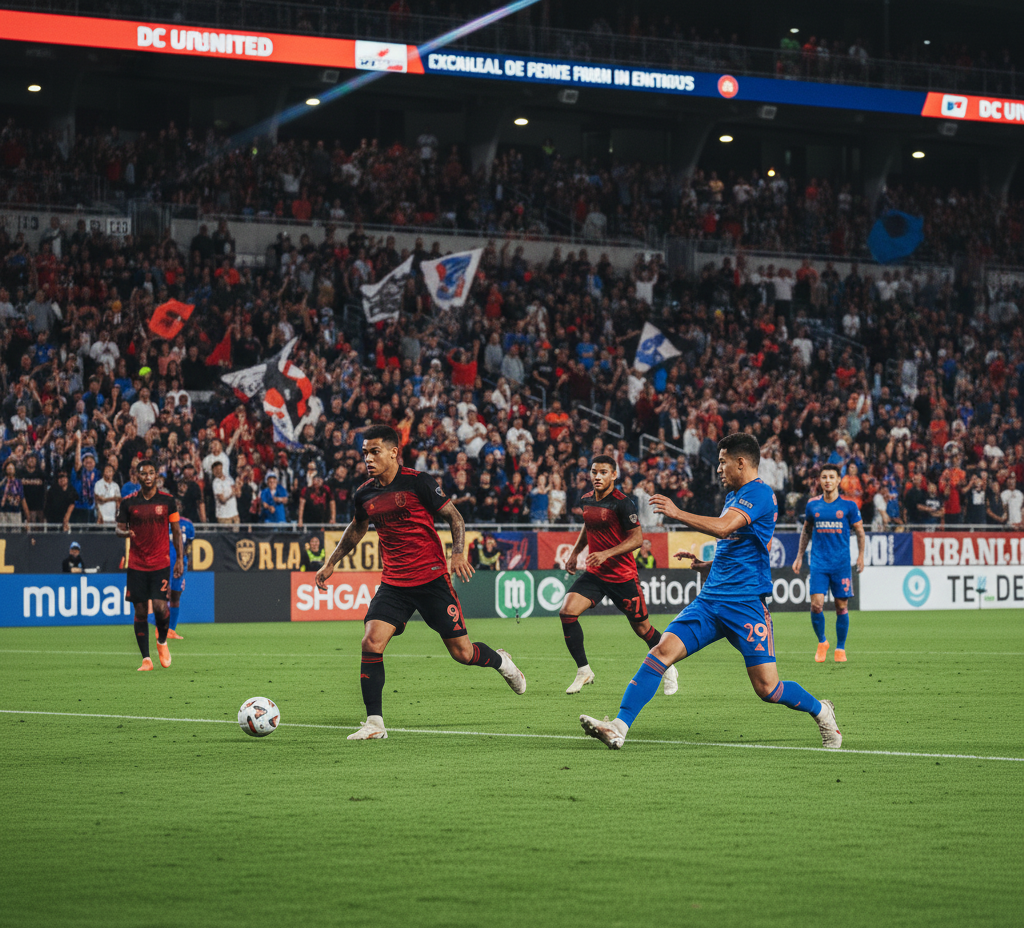
The matches between DC United and Football Club Cincinnati in Major League Soccer (MLS) always generate excitement due to tactical battles, individual brilliance, and competitive intensity. This article explores in depth the alineaciones de DC United contra Football Club Cincinnati, including formations, player roles, strategic adjustments, and their impact on match outcomes, particularly focusing on the 2025 MLS season.
Introduction: Rivalry Context and MLS Growth
MLS has seen rapid growth over the last decade, attracting top international talent while investing in youth academies and tactical innovation. Within this competitive landscape, DC United has a long-standing history of championships and a reputation for tactical discipline. Meanwhile, Football Club Cincinnati has developed into a strong competitor, blending youth, experience, and technical skill to challenge top-tier opponents.
The alineaciones de DC United contra Football Club Cincinnati often determine the pace, style, and success of each team. Understanding these lineups is key to analyzing how matches are won or lost in the MLS context.
The Importance of Lineups in Modern Football
A starting lineup is not just eleven players—it is a blueprint of the coach’s tactical vision, formation, and match strategy. In clashes like DC United vs Football Club Cincinnati, lineup choices influence possession, defensive structure, and attacking effectiveness. Coaches may adjust players, formations, or roles depending on opponent strengths, injuries, or the need to exploit tactical weaknesses.
D.C. United Lineup vs Football Club Cincinnati – May 31, 2025
In a key 2025 matchup, DC United defeated Football Club Cincinnati 2–1 at TQL Stadium, with their lineup reflecting a balance between defensive solidity and attacking creativity.
Tactical Formation: DC United
D.C. United used a structured 4‑2‑3‑1 formation, featuring two defensive midfielders shielding the backline while three attacking midfielders created opportunities for the forward:
Goalkeeper: Luis Barraza
Defenders: Lucas Bartlett, Kye Rowles, Aaron Herrera, [Left-back player]
Defensive Midfielders: Matti Peltola, Boris Enow
Attacking Midfielders: Hosei Kijima, Jacob Murrell, Peglow
Forward: Gabriel Pirani
This formation allowed D.C. United to defend compactly while providing the freedom for creative midfielders to connect with the striker. Pirani’s mobility and positioning were crucial in converting counterattacks into goals.
Football Club Cincinnati Lineup and Tactical Approach
Football Club Cincinnati deployed a 3‑4‑2‑1 formation, with flexibility to transition into a 3‑5‑2 depending on ball possession. Their goal was to control midfield and create attacking superiority:
Goalkeeper: Roman Celentano
Defenders: Matt Miazga, Miles Robinson, Teenage Hadebe / rotational central defender
Midfielders: Pavel Bucha, Tah Anunga, Lukas Engel, DeAndre Yedlin
Attacking Midfield/Forward Support: Creative link player
Forward: Kévin Denkey
The three-center-back system allowed Cincinnati to maintain ball possession, generate numerical superiority in midfield, and create spaces for wide players to exploit. Despite higher possession stats, they were less effective at finishing, which ultimately impacted the result.
Match Summary: DC United 2 – 1 Football Club Cincinnati
Goals: Gabriel Pirani (DC United), Conner Antley (DC United), Kévin Denkey (Football Club Cincinnati)
Possession: Cincinnati dominated possession, but DC United capitalized on counterattacks.
This result highlighted the effectiveness of DC United’s tactical discipline and strategic use of lineups, especially when playing away from home in a challenging stadium environment.
Tactical Insights from Previous Meetings
Previous encounters demonstrate how alineaciones de DC United contra Football Club Cincinnati can vary:
July 2024 Match
Result: Football Club Cincinnati 3–2 DC United
DC United: Opted for a more aggressive pressing system, allowing attacking midfielders to push higher.
Football Club Cincinnati: Focused on vertical transitions and quick attacks, emphasizing striker efficiency.
This illustrates how both clubs adjust formations, player roles, and strategies depending on context, squad availability, and previous results.
Strategic Analysis of DC United Lineups
Strengths:
Defensive Organization: The double pivot and back four create a solid defensive structure.
Counterattack Efficiency: Midfielders provide quick transitions into attacking plays.
Flexibility in Formation: Ability to switch between defensive and attacking setups mid-game.
Weaknesses:
Dependency on Individual Creativity: Scoring chances often rely on key players like Pirani or Kijima.
Limited Width: With a narrow central midfield, exploiting flanks can be challenging if fullbacks are occupied.
Strategic Analysis of Football Club Cincinnati Lineups
Strengths:
Ball Possession: Midfield structure ensures control of the game tempo.
Versatility: Three-center-back system allows wide players to advance aggressively.
Attacking Threats: Striker and creative midfielders generate goal opportunities.
Weaknesses:
Defensive Vulnerability on Counters: High possession can leave gaps behind for quick transitions.
Finishing Efficiency: Despite dominating possession, converting chances into goals remains inconsistent.
Conclusion: Key Takeaways from Lineup Decisions
The alineaciones de DC United contra Football Club Cincinnati are more than a tactical setup; they reflect philosophy, preparation, and adaptability. D.C. United’s disciplined approach, counterattacking efficiency, and strategic lineup choices have yielded key results, while Cincinnati’s possession-based system and attacking flexibility continue to make them a formidable opponent.
For fans, analysts, and fantasy soccer enthusiasts, understanding these lineups provides insights into player performance, match prediction, and tactical evolution in MLS. Future encounters between these clubs will continue to showcase the importance of lineup selection and in-game tactical adjustments.