
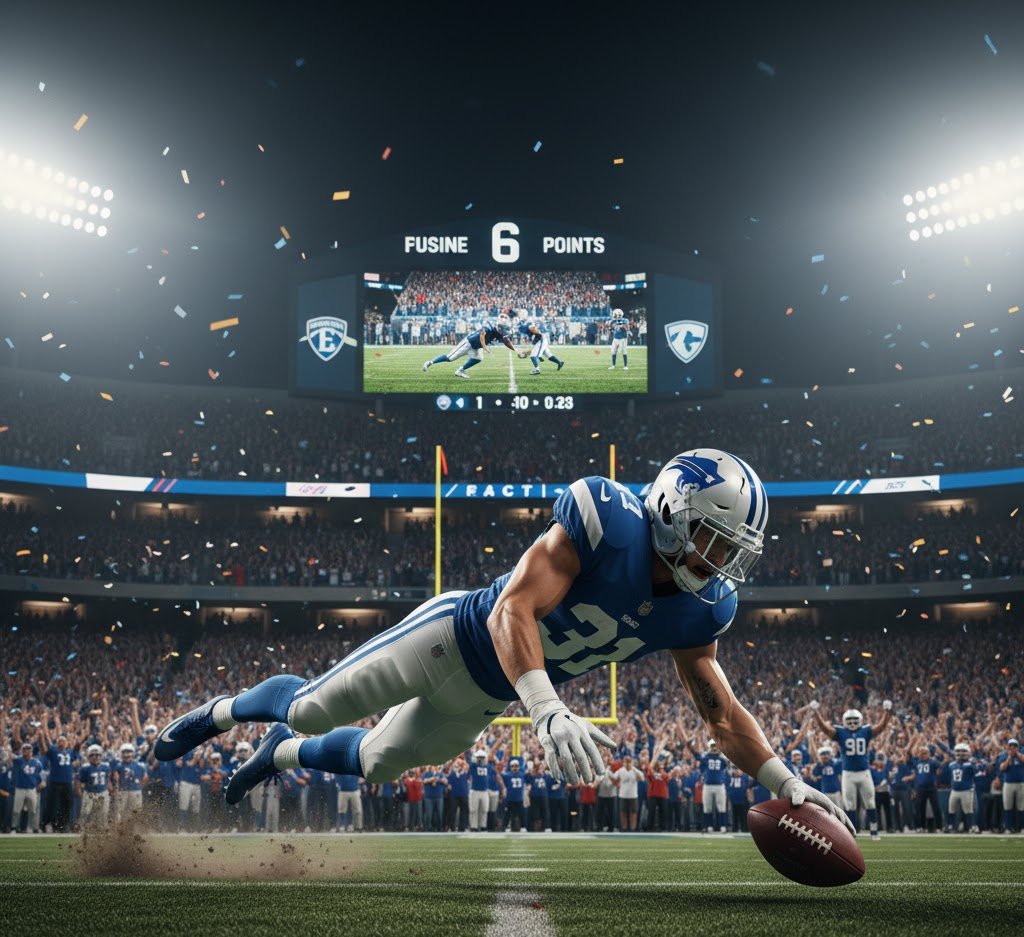
Football is one of the most thrilling and strategic sports in the world. Every play builds toward one goal — scoring a touchdown. If you’re new to football or simply want to understand the game more deeply, you’ve probably heard the phrase: “A touchdown in football counts for 6 points.”
But what exactly does that mean? Why is it worth six points? What happens after a touchdown? And how does it compare to other scoring plays?
In this complete guide, we’ll break down everything you need to know about how touchdowns work, why they’re so valuable, and how they shape the outcome of every football game.
Understanding the Basics: What Is a Touchdown?
In football, a touchdown is the ultimate scoring play. It occurs when a team advances the ball into the opponent’s end zone, either by:
Carrying it across the goal line (a rushing touchdown)
Catching a pass in the end zone (a receiving touchdown)
Recovering a fumble or blocked kick in the end zone (a defensive touchdown)
When this happens, the referee signals a touchdown by raising both arms straight above their head — one of the most iconic gestures in all of sports.
Why a Touchdown in Football Counts for 6 Points
A touchdown in football counts for 6 points, and that’s not by accident. The scoring system was designed in the early 1900s when football evolved from rugby. Back then, a “touchdown” literally meant touching the ball down in the opponent’s end zone to earn the right to attempt a kick.
Originally, field goals were considered more valuable than touchdowns, but as the game evolved, touchdowns became the centerpiece of offensive play. By 1912, the modern scoring system was introduced — assigning 6 points for a touchdown — to reward teams for successfully driving the ball down the field.
That 6-point rule remains one of the most fundamental parts of football today.
Football Scoring Summary
To understand why touchdowns are so critical, it helps to look at the entire football scoring system:
| Scoring Play | Points | Description |
|---|---|---|
| Touchdown | 6 | Crossing into the end zone with possession of the ball |
| Extra Point (PAT) | 1 | Kicking the ball through the uprights after a touchdown |
| Two-Point Conversion | 2 | Running or passing into the end zone after a touchdown |
| Field Goal | 3 | Kicking the ball through the uprights during open play |
| Safety | 2 | Tackling the opposing player with the ball in their own end zone |
From this chart, you can see why teams focus so heavily on scoring touchdowns — they’re worth twice as much as a field goal and provide opportunities for additional points.
The Strategy Behind Scoring a Touchdown
Touchdowns aren’t just about athleticism — they’re about strategy and precision. Here’s how teams approach it:
1. Offensive Drives
Teams typically move the ball in 10-yard increments. They have four downs (plays) to advance at least 10 yards. If successful, they earn a “first down” and get four new attempts. The goal of every drive is to reach the end zone.
2. Red Zone Efficiency
The “red zone” refers to the area between the opponent’s 20-yard line and the goal line. Offenses use specific plays and formations here because defenses tighten up. Great teams have strong red zone efficiency — meaning they turn opportunities into touchdowns instead of field goals.
3. Play Selection
Depending on field position, offenses mix between passing plays, running plays, and trick plays to keep the defense guessing. Scoring a touchdown often requires perfect timing, teamwork, and quick decision-making.
Types of Touchdowns
There’s more than one way to score a touchdown in football. Let’s break down the main types:
1. Rushing Touchdown
A rushing touchdown occurs when a player carrying the ball (usually a running back or quarterback) crosses the goal line while maintaining possession.
Example: A running back dives through defenders from the 2-yard line into the end zone.
2. Passing Touchdown
A passing touchdown happens when a quarterback throws the ball to a receiver who catches it in the end zone or crosses into it after the catch.
Example: A 20-yard pass to a wide receiver who breaks a tackle and steps over the goal line.
3. Defensive Touchdown
Defenses can score too! A defensive touchdown occurs when a player recovers a fumble, intercepts a pass, or blocks a kick and returns it to the opponent’s end zone. These are momentum-shifting plays that often change the outcome of games.
4. Special Teams Touchdown
Special teams can score during kickoffs, punts, or blocked field goals. A player returning a kickoff or punt for a touchdown is one of the most exciting moments in football.
After the Touchdown: Extra Points and Conversions
After scoring a touchdown (worth 6 points), the team has the opportunity to score more through a conversion attempt.
Option 1: Extra Point Kick (1 Point)
Most teams choose to kick the ball through the uprights for 1 extra point, bringing their total to 7. This is called a Point After Touchdown (PAT). It’s usually a short kick from about 33 yards in the NFL.
Option 2: Two-Point Conversion (2 Points)
Instead of kicking, a team can attempt to score another touchdown from the 2-yard line. If successful, they earn 2 additional points, totaling 8.
This play is riskier but can be crucial in close games or late-game strategy situations.
Touchdowns and Game Flow
Touchdowns define the rhythm of a football game. Teams often plan entire drives around maximizing scoring chances. Coaches use a mix of analytics and instinct to decide when to go for touchdowns versus field goals.
For example:
Early in the game, a team might settle for a field goal to get points on the board.
Later in the game, especially if they’re trailing, they’ll take bigger risks to reach the end zone for the full 6 points.
Touchdowns in Professional vs. College Football
Although both professional (NFL) and college football follow the same 6-point touchdown rule, there are some differences in how touchdowns are scored and reviewed.
| Aspect | NFL | College Football |
|---|---|---|
| Scoring Value | 6 points | 6 points |
| Ball Placement After Touchdown | 15-yard line for extra point | 3-yard line for two-point try |
| Replay Review | Automatic on all touchdowns | Automatic review as well |
| Overtime Rules | Each team gets a possession | Alternating possessions starting at the 25-yard line |
Despite the small differences, the excitement of a touchdown is universal at every level.
Why the Touchdown Is the Heart of Football
A touchdown represents teamwork, endurance, and strategy — the culmination of an entire drive’s effort.
It takes:
Strong offensive line blocking
Precise quarterback decision-making
Receiver route-running or running back vision
The emotion after scoring a touchdown — the crowd’s roar, the player celebrations, and the scoreboard lighting up — makes it the most thrilling part of the game.
Fun Facts About Touchdowns
The first recorded touchdown in football history was scored in the late 1800s, before the scoring system was even finalized.
The NFL record for most career touchdowns is held by Jerry Rice with 208 total.
A defensive lineman touchdown is one of the rarest plays in football.
The longest touchdown in history was a 109-yard return by Antonio Cromartie in 2007.
Touchdown celebrations were once banned but are now allowed within limits — adding fun and creativity to the game.
Touchdowns and Score Math: Why 6 Points Matters
Because a touchdown in football counts for 6 points, teams can use combinations of plays to reach different final scores. For example:
Touchdown + Extra Point = 7 points
Two Touchdowns + One Field Goal = 17 points
Three Touchdowns + Three PATs = 21 points
Touchdown + Two-Point Conversion = 8 points
This flexible scoring system makes football more strategic than most sports — a team trailing by 8 points can tie with one touchdown and one two-point conversion.
The Importance of the Touchdown in Modern Football
In today’s game, touchdowns are the ultimate measure of success for offenses. Coaches design complex playbooks around red zone efficiency, while defenses focus on bending without breaking.
Analytics now play a major role in touchdown strategy. Teams track:
Expected points per drive (EPD)
Touchdowns per red zone trip
Conversion success rates
This data-driven approach has made football more competitive and precise — but at its core, the thrill of scoring a touchdown remains the same.
The Emotion of a Touchdown
A touchdown is more than just 6 points on the board. It’s an emotional release — for players, coaches, and fans alike. Whether it’s a last-second game-winner, a goal-line power run, or a deep pass into the end zone, every touchdown tells a story.
The celebration that follows — from spikes to dances to crowd roars — shows why football continues to capture millions of hearts worldwide.
Final Thoughts
So, a touchdown in football counts for 6 points, but its value goes far beyond the scoreboard. It’s the reward for teamwork, planning, and resilience. Every offensive drive builds toward that moment — crossing the goal line and hearing the crowd erupt.
Understanding touchdowns helps you appreciate the strategy, risk, and precision that define football. Whether it’s a high school Friday night game, a college rivalry, or the Super Bowl, one thing never changes — the excitement of a touchdown.